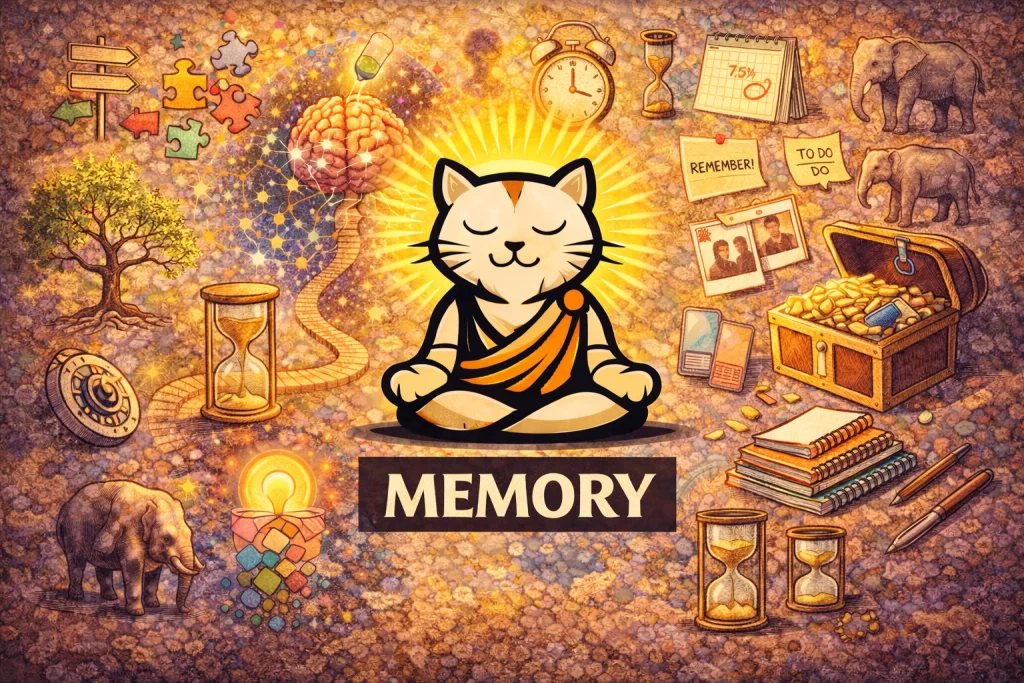
Memory is the faculty that allows us to encode, store, and retrieve information across time. It shapes identity, learning, relationships, and culture. Without memory, experience would dissolve into isolated moments, disconnected from past and future. Yet memory is not a perfect recording device. It is dynamic, selective, and reconstructive—more like an evolving narrative than an archive.
Cognitive science divides memory into multiple systems, each serving distinct functions. From fleeting sensory traces to lifelong autobiographical recollections, memory operates across timescales and neural networks. Understanding how it works reveals both its extraordinary power and its vulnerabilities.
Short-Term and Working Memory
Short-term memory refers to the temporary holding of information for immediate use. Psychologist George A. Miller famously proposed in 1956 that people can hold about “seven plus or minus two” items in short-term memory. Although later research refined this number downward, Miller’s work highlighted cognitive limits.
Working memory extends this concept, involving the active manipulation of information. For example, solving a math problem in your head requires holding numbers while performing operations. Research by Alan Baddeley introduced a model with components such as the phonological loop (for verbal information) and the visuospatial sketchpad (for visual data). These systems allow us to temporarily manage complex tasks.
Studies show that working memory capacity correlates with reasoning ability and academic performance. However, it is easily disrupted by distraction, reinforcing the importance of focused attention.
Long-Term Memory and Consolidation
Long-term memory stores knowledge, skills, and experiences over extended periods. It includes declarative memory (facts and events) and procedural memory (skills like riding a bicycle). The hippocampus, a structure in the medial temporal lobe, plays a critical role in forming new long-term memories.
One of the most famous case studies in neuroscience is Henry Molaison (known as H.M.). After surgical removal of his hippocampus to treat epilepsy, Molaison lost the ability to form new long-term memories, though his short-term memory and motor skills remained intact. His case demonstrated that memory systems are specialized and that the hippocampus is essential for consolidation.
Research on sleep further supports this. Studies show that sleep strengthens memory consolidation, particularly during slow-wave and REM stages. Sleep deprivation, by contrast, impairs recall and learning.
Reconstructive Memory and False Memories
Memory is not a flawless replay of the past. It is reconstructive, meaning that each act of recall reshapes the memory itself. Psychologist Elizabeth Loftus demonstrated this in studies on eyewitness testimony. In one experiment, participants who were asked how fast cars were going when they “smashed” into each other estimated higher speeds than those who heard the word “hit.” Subtle wording altered recollection.
In further research, Loftus showed that entirely false memories could be implanted through suggestion. Participants were led to believe they had been lost in a shopping mall as children—a fabricated event—yet many later described it with vivid detail. These findings reveal that confidence does not guarantee accuracy.
Reconstructive memory has profound implications for legal systems, therapy, and personal identity. It highlights the malleability of what we assume to be fixed recollections.
Emotional Memory and Trauma
Emotion strongly influences memory formation. Highly emotional events are often remembered more vividly, a phenomenon linked to activation of the amygdala. So-called “flashbulb memories” are detailed recollections of surprising or significant events. After major public events, many people report vivid memories of where they were and what they were doing.
However, research shows that while confidence in flashbulb memories remains high, accuracy can decline over time. Emotional intensity enhances the sense of certainty but does not guarantee precision.
Trauma provides another dimension. In post-traumatic stress disorder (PTSD), intrusive memories can recur with intense emotional charge. Neuroimaging studies suggest heightened amygdala activity and altered hippocampal function in trauma survivors. These findings illustrate how memory systems interact with emotion and stress.
Memory, Identity, and the Future
Memory is central to identity. Our sense of self depends on continuity across time. Philosophers have long argued that personal identity is rooted in remembered experience. Modern neuroscience supports this view: autobiographical memory integrates life events into coherent narratives.
Interestingly, memory is also tied to imagination. Studies show that recalling the past and envisioning the future activate overlapping brain regions. This suggests that memory is not only retrospective but prospective—it helps us simulate possibilities and plan ahead.
Memory training research further demonstrates plasticity. Techniques such as spaced repetition and retrieval practice significantly improve retention. Experimental studies confirm that actively recalling information strengthens neural pathways more effectively than passive review.
Conclusion
Memory is not a static repository but a living system. It encodes, reshapes, and sometimes distorts experience. From short-term storage limits to the reconstructive nature of recall, research reveals both the strength and fragility of human memory.
Study examples—from Henry Molaison’s amnesia to Elizabeth Loftus’s false memory experiments—demonstrate that memory is specialized, emotional, and fallible. Yet despite its imperfections, memory allows learning, connection, and identity. It anchors us in time while enabling us to imagine the future.
In understanding memory, we come to appreciate that the past we carry is not simply preserved—it is continually rewritten.