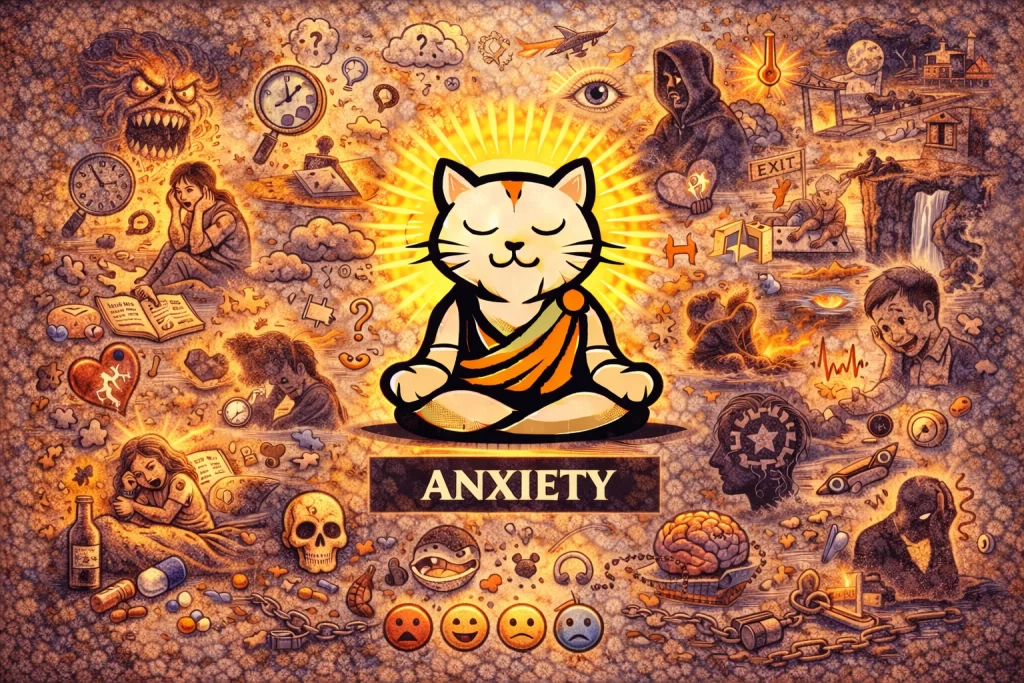
Anxiety is a natural emotional response to perceived threat or uncertainty. It prepares the body and mind to anticipate danger, increasing alertness and motivating protective action. In moderate levels, anxiety enhances performance and focus. However, when it becomes excessive, persistent, or disproportionate to the situation, it can interfere with daily functioning and well-being.
Psychologists and neuroscientists study anxiety as both an emotional experience and a biological process. Research shows that anxiety involves coordinated changes in cognition, physiology, and behavior—often unfolding automatically and outside conscious awareness.
The Biology of Anxiety
At the neurological level, anxiety is closely linked to the amygdala, a brain structure involved in detecting threat. When danger is perceived, the amygdala activates the hypothalamic-pituitary-adrenal (HPA) axis, triggering the release of stress hormones such as cortisol and adrenaline. These hormones increase heart rate, heighten attention, and prepare the body for action.
Research by Joseph LeDoux demonstrated that fear signals can travel through both a rapid, unconscious pathway and a slower, conscious pathway in the brain. This helps explain why individuals may feel anxious before fully understanding why.
Brain imaging studies show that individuals with high trait anxiety often exhibit heightened amygdala activation and reduced regulatory control from the prefrontal cortex. This imbalance may contribute to persistent worry and exaggerated threat perception.
Cognitive Processes and Worry
Anxiety is not only biological; it is deeply cognitive. It often involves anticipatory thinking—imagining potential negative outcomes. Research suggests that anxious individuals tend to overestimate risk and underestimate coping ability.
One influential framework, developed by Aaron T. Beck, emphasizes cognitive distortions such as catastrophizing and selective attention to threat. Experimental studies show that anxious participants are quicker to detect threatening words or images, demonstrating attentional bias.
The Yerkes-Dodson law illustrates that moderate levels of arousal enhance performance, while excessive anxiety impairs it. In laboratory tasks, participants with moderate stress often perform better than those experiencing either very low or very high stress. This inverted-U relationship shows that anxiety becomes problematic when it exceeds adaptive levels.
Anxiety and Learning
Anxiety can develop through learning processes. Classical conditioning research—originating with Ivan Pavlov—demonstrated that neutral stimuli can become associated with fear when paired with aversive events. For example, a person who experiences a panic attack in a crowded space may later feel anxious in similar environments.
Observational learning also contributes. Studies show that children can acquire fears by observing anxious reactions in caregivers. In one experimental design, children exposed to negative information about unfamiliar animals developed heightened fear responses, even without direct experience.
Avoidance plays a critical role in maintaining anxiety. When individuals avoid feared situations, they reduce discomfort temporarily but fail to learn that the threat may be manageable. Exposure-based research demonstrates that gradual confrontation reduces anxiety over time by allowing new, corrective learning to occur.
Coping and Regulation
Anxiety can be managed through psychological and behavioral strategies. Cognitive-behavioral therapy (CBT) helps individuals identify distorted thinking patterns and test their predictions against evidence. Numerous clinical trials show that CBT significantly reduces anxiety symptoms.
Mindfulness-based interventions have also shown promise. Research indicates that mindfulness training reduces rumination and physiological stress reactivity, helping individuals observe anxious thoughts without becoming overwhelmed by them.
Lifestyle factors influence anxiety as well. Regular exercise has been shown to reduce baseline anxiety levels, possibly through effects on neurotransmitters such as serotonin and endorphins. Sleep quality also strongly affects emotional regulation.
Conclusion
Anxiety is a complex interplay of brain activity, thought patterns, and learned associations. Study examples—from LeDoux’s fear research to cognitive bias experiments and exposure therapy trials—demonstrate that anxiety is both biologically grounded and psychologically shaped.
While anxiety can become disruptive, it is also adaptive in moderation. Understanding its mechanisms allows individuals to distinguish between protective caution and excessive worry. With appropriate strategies and support, anxiety can be managed, restoring balance between vigilance and well-being.