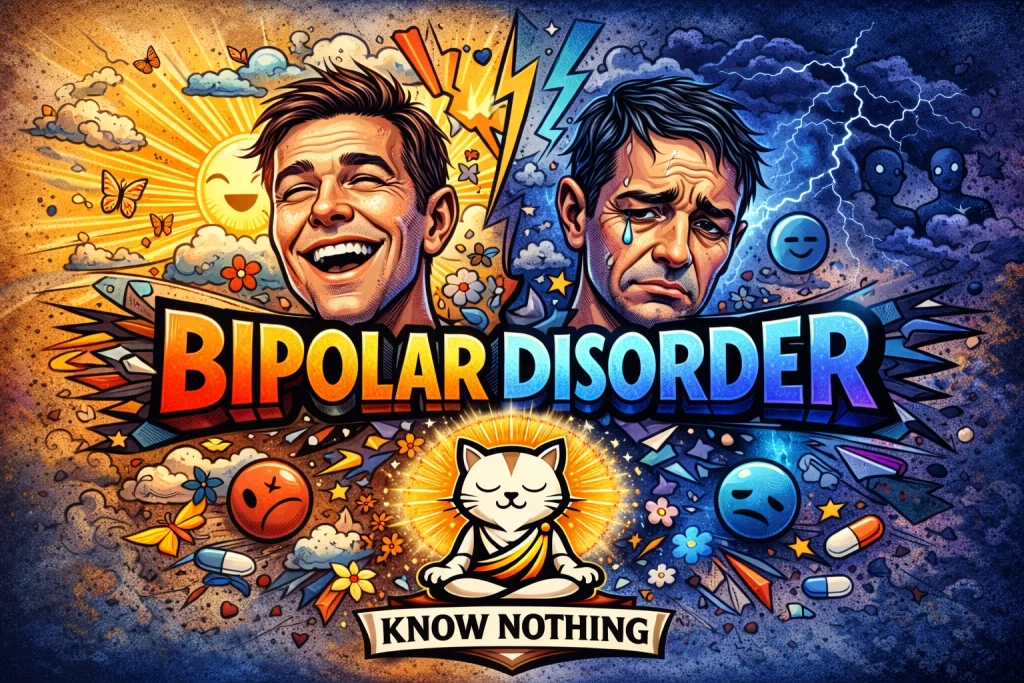
Bipolar disorder is a mood disorder characterized by extreme fluctuations in mood, energy, activity levels, and functioning. Individuals with bipolar disorder experience episodes of mania or hypomania—periods of elevated or irritable mood and increased activity—alongside episodes of depression marked by sadness, low motivation, and fatigue. These mood shifts are more intense and prolonged than typical emotional ups and downs and often interfere with work, relationships, and daily life.
According to diagnostic criteria established by the American Psychiatric Association, bipolar disorder is categorized primarily into Bipolar I (involving at least one full manic episode), Bipolar II (involving hypomanic episodes and major depressive episodes), and cyclothymic disorder (chronic mood instability without full episodes). The disorder typically emerges in late adolescence or early adulthood, though symptoms may appear earlier.
Historical Perspectives and Early Research
Descriptions of mood swings resembling bipolar disorder date back to ancient Greek medicine, where physicians such as Aretaeus of Cappadocia noted cycles of mania and melancholia. In the 19th century, Emil Kraepelin distinguished manic-depressive illness from schizophrenia, recognizing its episodic nature and relatively better long-term prognosis.
One of the most influential early treatment discoveries came from John Cade in 1949. Cade found that lithium carbonate reduced manic symptoms in hospitalized patients. Controlled clinical trials later confirmed lithium’s effectiveness as a mood stabilizer, and it remains a cornerstone of bipolar treatment today. Cade’s discovery marked a major turning point in biological psychiatry, demonstrating that mood disorders could respond to targeted pharmacological intervention.
Neurobiology and Genetic Contributions
Bipolar disorder has a strong genetic component. Twin studies show significantly higher concordance rates among identical twins compared to fraternal twins, indicating substantial heritability. Research led by Kay Redfield Jamison, who has also written extensively about her personal experience with bipolar disorder, has highlighted both the genetic and psychological dimensions of the illness.
Neuroimaging research has identified differences in brain regions involved in emotional regulation, including the amygdala and prefrontal cortex. Studies suggest dysregulation in neurotransmitter systems such as dopamine, serotonin, and glutamate. During manic episodes, increased dopamine activity is believed to contribute to elevated mood, impulsivity, and decreased need for sleep.
A landmark longitudinal study by Jules Angst followed individuals with mood disorders over decades and found that bipolar disorder often follows a recurrent course, though symptom severity and frequency vary widely. This research emphasized the importance of long-term treatment planning.
Psychological and Environmental Factors
While genetics play a major role, environmental stressors often trigger mood episodes. Stressful life events, sleep disruption, substance use, and major transitions can precipitate manic or depressive episodes in vulnerable individuals.
Research on the “kindling hypothesis,” proposed by Robert M. Post, suggests that early episodes of bipolar disorder may be triggered by major stressors, but over time, episodes may occur more autonomously due to neurobiological sensitization. This theory underscores the importance of early intervention to prevent recurrent episodes.
Cognitive research also indicates that individuals with bipolar disorder may exhibit distinct patterns of goal-directed thinking and reward sensitivity. Experimental studies show heightened responsiveness to reward cues during hypomanic states, which may contribute to impulsive decision-making.
Treatment and Long-Term Management
Effective management of bipolar disorder typically involves a combination of medication and psychotherapy. Mood stabilizers such as lithium, valproate, and certain atypical antipsychotics reduce the frequency and intensity of mood episodes. Lithium, in particular, has been shown in multiple randomized trials to reduce suicide risk among individuals with bipolar disorder.
Psychotherapeutic approaches such as Cognitive-Behavioral Therapy (CBT), Interpersonal and Social Rhythm Therapy (IPSRT), and family-focused therapy have demonstrated effectiveness in improving medication adherence, stabilizing daily routines, and reducing relapse rates. IPSRT, for example, emphasizes maintaining consistent sleep-wake cycles, as sleep disruption is a known trigger for mania.
Longitudinal outcome studies show that while bipolar disorder is often chronic, many individuals achieve stable functioning with proper treatment. Early diagnosis, medication adherence, and structured support significantly improve prognosis.
Conclusion
Bipolar disorder is a complex mood disorder involving cyclical shifts between mania and depression. From Kraepelin’s early classification to John Cade’s discovery of lithium and modern neuroimaging research, scientific understanding has advanced significantly. Genetic vulnerability, brain chemistry, and environmental stress all contribute to its development and course. Although bipolar disorder can be severe, evidence-based treatments and long-term management strategies allow many individuals to lead productive and meaningful lives. Continued research offers hope for more personalized and effective interventions in the future.