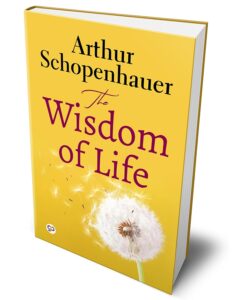
The Wisdom of Life by Arthur Schopenhauer is a practical philosophical essay that explores what truly contributes to human happiness in a world fundamentally marked by suffering.
Rather than focusing on metaphysics, Schopenhauer examines everyday life, arguing that well-being depends primarily on what a person is (character, intellect, temperament), secondarily on what a person has (possessions, wealth), and least of all on how one is regarded by others (status, reputation). He contends that inner qualities—especially a cultivated mind and independent spirit—are the most reliable sources of contentment, while external goods are unstable and often breed anxiety.
Throughout the work, Schopenhauer advises moderation, self-knowledge, limited desires, and distance from the pressures of public opinion. Ultimately, he presents wisdom not as optimism, but as clear-sighted realism: since life inevitably contains pain, the art of living lies in arranging one’s inner and outer circumstances to minimize suffering and preserve peace of mind.