Pain is one of the most universal features of human life. It resists explanation because it feels both deeply personal and strangely impersonal: it belongs entirely to us, yet no one escapes it. To ask why pain exists is to ask simultaneously a biological, psychological, and philosophical question. The answer depends on which level of human experience we examine.
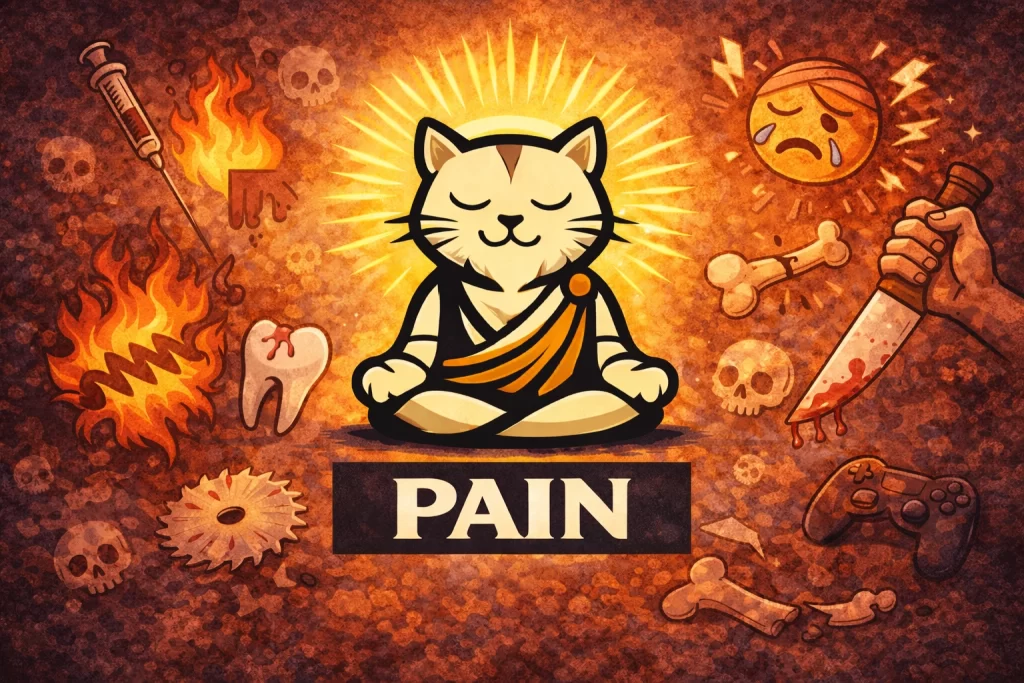
At the most basic level, pain exists because it protects life. Physical pain is an evolutionary alarm system. Without it, injury would go unnoticed, infections would spread unchecked, and survival would be jeopardized. The sting of heat pulls a hand from fire; the ache of a broken bone demands rest. In this sense, pain is not a flaw in the system but a feature—an urgent signal that something requires attention. Those rare individuals born without the ability to feel pain often suffer severe injuries precisely because they lack this warning mechanism. Biologically, pain exists to preserve the organism.
Yet this explanation feels incomplete. Much of the pain humans experience is not acute and protective but chronic, emotional, or existential. Grief after loss, shame after failure, anxiety about the future—these forms of suffering do not simply shield the body from harm. Psychological pain may serve a similar signaling function: it alerts us to damaged relationships, violated values, or unmet needs. Loneliness pushes us toward connection; guilt nudges us to repair; fear sharpens caution. Emotions, even painful ones, regulate social life and help individuals adapt within communities.
But beyond adaptation lies a deeper layer. Pain also exists because consciousness exists. To be aware is to be vulnerable to disappointment, comparison, memory, and anticipation. A creature without reflection might feel discomfort; a reflective being feels sorrow. The very capacities that allow for love, hope, creativity, and meaning also make room for anguish. The richer the inner life, the wider the emotional range. Pain is intertwined with depth.
Philosophically, some argue that pain exists as contrast. Without it, pleasure would lose definition. Relief is sweetest after hardship; joy feels vivid against prior darkness. While this does not justify suffering, it suggests that experience is relational: we understand one state through its opposite. A world entirely devoid of pain might also be one in which courage, resilience, and compassion never emerge. Struggle shapes character; endurance reveals strength; shared suffering fosters empathy.
None of this implies that pain is always purposeful or morally justified. Much suffering appears random, excessive, or cruel. To say pain has functions is not to deny its tragedy. Instead, it may be more accurate to say that pain is woven into the conditions of being alive in a world governed by change, limitation, and impermanence. Bodies break. Attachments end. Expectations fail. Wherever there is finitude, there is vulnerability.
Perhaps the most human response to pain is not to eliminate it entirely—an impossible task—but to transform our relationship to it. When pain is resisted blindly, it can harden into bitterness. When acknowledged and understood, it can deepen wisdom. It can teach boundaries, clarify values, and reveal what matters most.
Pain exists because life is dynamic, fragile, and conscious. It exists as signal, as teacher, as shadow to joy. While no explanation erases its sting, recognizing its roles can make it less arbitrary. In the end, pain is not the opposite of life; it is one of its defining textures.