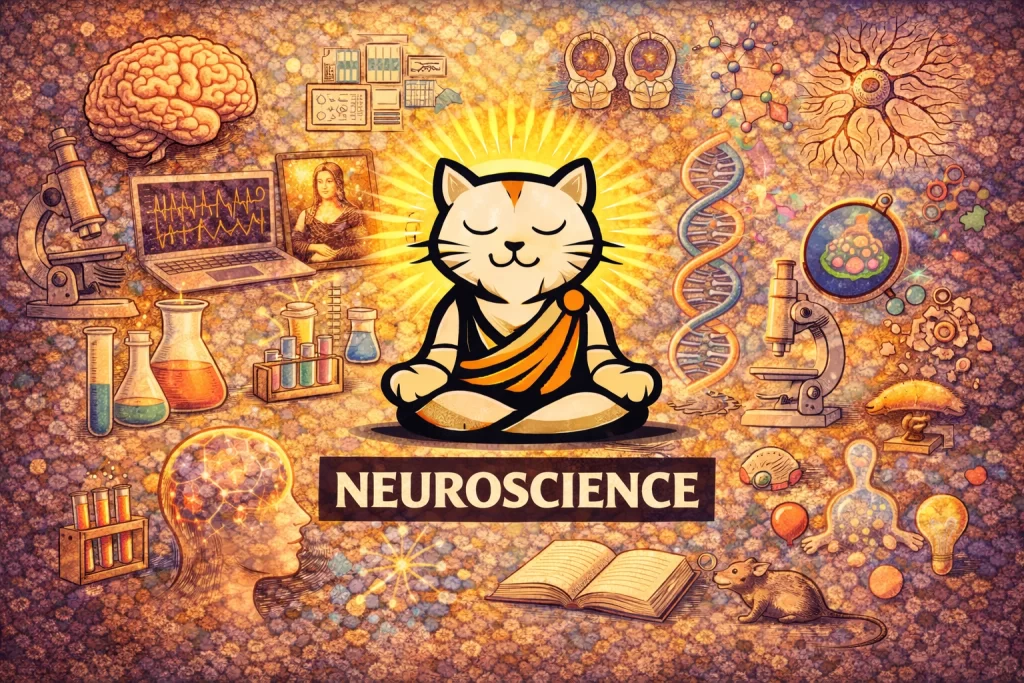
Neuroscience is the scientific study of the nervous system, particularly the brain, and how it gives rise to thought, emotion, perception, and behavior. It brings together biology, psychology, chemistry, physics, and medicine to explore one of the most complex systems known to science. At its core, neuroscience seeks to answer a profound question: how do networks of cells produce consciousness and experience?
Over the past century, advances in brain imaging, electrophysiology, and molecular biology have transformed neuroscience from speculative theory into an empirical science. Yet even as we map neural circuits and decode brain signals, many mysteries remain.
Neurons and Brain Communication
The foundation of neuroscience lies in understanding neurons—the specialized cells that transmit information through electrical and chemical signals. In the late nineteenth century, Santiago Ramón y Cajal used advanced microscopy to demonstrate that the brain is composed of individual cells rather than a continuous network. His “neuron doctrine” laid the groundwork for modern neuroscience.
Neurons communicate across synapses using neurotransmitters such as dopamine and serotonin. Studies of synaptic transmission have revealed how learning and memory depend on changes in synaptic strength. Research on long-term potentiation (LTP), first demonstrated in the 1970s in rabbit hippocampi, showed that repeated stimulation strengthens neural connections. This finding provided biological evidence for how experience reshapes the brain.
Understanding neural communication has also informed medical treatment. For example, research on dopamine pathways has deepened understanding of Parkinson’s disease and addiction.
Brain Imaging and Cognitive Function
Modern neuroscience relies heavily on imaging technologies that allow scientists to observe the brain in action. Functional magnetic resonance imaging (fMRI) measures changes in blood flow associated with neural activity, while electroencephalography (EEG) records electrical signals across the scalp.
One influential set of studies involved Michael Gazzaniga and split-brain patients. After surgical separation of the corpus callosum to treat epilepsy, patients exhibited unusual perceptual effects. For example, when an image was shown to the right hemisphere (which controls the left hand), patients could draw the object but could not verbally identify it. These findings revealed lateralization of brain function and demonstrated how different hemispheres specialize in distinct cognitive tasks.
Brain imaging has also contributed to understanding memory, language, and emotion. Research consistently shows that the hippocampus is crucial for forming new memories, while the amygdala plays a key role in emotional processing.
Neuroplasticity and Learning
One of the most transformative discoveries in neuroscience is neuroplasticity—the brain’s ability to reorganize itself through experience. Contrary to earlier beliefs that the adult brain was largely fixed, research has shown that neural connections can strengthen, weaken, and even form anew throughout life.
A well-known study by Eleanor Maguire examined London taxi drivers who must memorize complex city maps. Brain scans revealed that experienced drivers had enlarged posterior hippocampi compared to non-drivers. This study demonstrated that intensive spatial learning can physically alter brain structure.
Neuroplasticity also underlies rehabilitation after injury. Stroke patients can regain lost functions through targeted therapy that encourages alternative neural pathways to compensate for damaged regions.
Consciousness and the Future of Neuroscience
Perhaps the most profound question in neuroscience concerns consciousness: how subjective experience arises from neural processes. While research has identified networks associated with awareness—such as the default mode network—the precise mechanisms remain debated.
Experiments by Benjamin Libet in the 1980s sparked controversy about free will. Libet found that brain activity indicating a decision occurred milliseconds before participants reported consciously deciding to act. These findings raised questions about the relationship between neural processes and conscious intention.
Today, neuroscience continues to intersect with artificial intelligence, mental health research, and brain-computer interfaces. Ethical considerations are increasingly central, particularly regarding privacy and cognitive enhancement.
Conclusion
Neuroscience has revealed that thought and behavior arise from intricate networks of neurons communicating through dynamic patterns. Study examples—from Cajal’s neuron doctrine to Maguire’s taxi driver research—demonstrate the brain’s complexity and adaptability.
Yet despite remarkable progress, the brain remains one of the most intricate systems in nature. Neuroscience not only deepens understanding of disease and cognition but also challenges fundamental ideas about identity, agency, and consciousness. As technology advances, the field promises to illuminate ever more about the biological foundations of the mind.