Social Identity

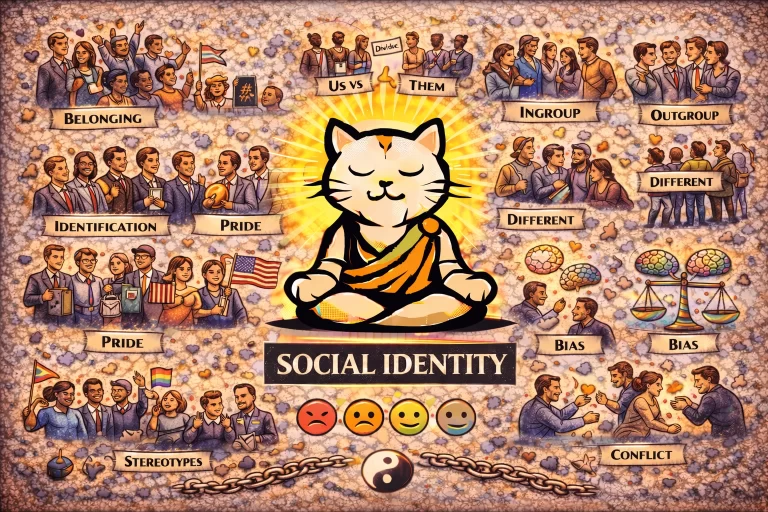
Social Identity

Social identity refers to the part of an individual’s self-concept that derives from membership in social groups. These groups may be based on nationality, ethnicity, religion, gender, occupation, political affiliation, or even arbitrary categories. Social identity shapes how people see…


Aggression

Aggression

Aggression refers to behavior intended to harm another person, either physically or psychologically. It can range from verbal insults and social exclusion to physical violence. While aggression is often viewed as purely destructive, psychologists study it as a complex behavior…

G.I. Gurdjieff

G.I. Gurdjieff

George Ivanovich Gurdjieff (c. 1866–1949) was a mystic, philosopher, composer, and spiritual teacher whose ideas profoundly influenced twentieth-century esoteric thought. Best known as the originator of the “Fourth Way,” Gurdjieff developed a system of inner development designed to awaken human…

P.D. Ouspensky

P.D. Ouspensky

Pyotr Demianovich Ouspensky (1878–1947) was a Russian philosopher, journalist, and esoteric teacher best known for introducing the teachings of George Gurdjieff to the Western world. A prolific writer and deeply original thinker in his own right, Ouspensky sought to reconcile…

Altruism

Altruism

Altruism refers to behavior intended to benefit others without expectation of personal gain. From helping a stranger in distress to donating time or resources, altruistic acts appear to challenge the assumption that human behavior is driven purely by self-interest. Social…

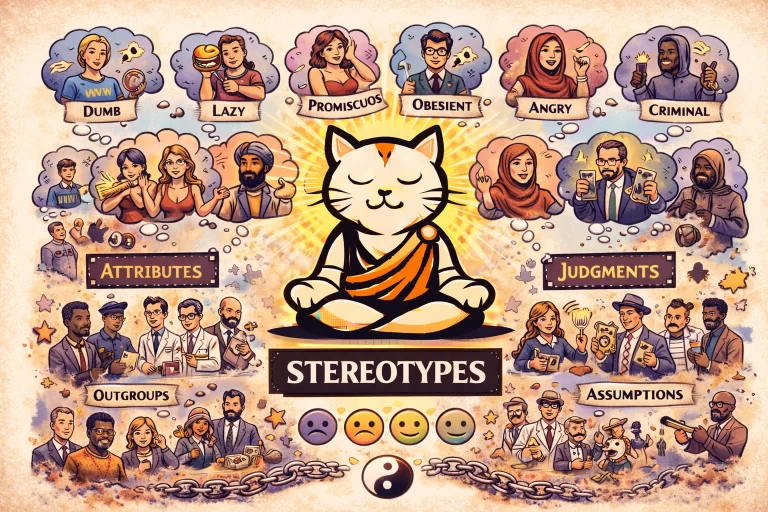
Stereotypes

Stereotypes

Stereotypes are generalized beliefs about members of a particular group. They simplify social perception by assigning traits, behaviors, or characteristics to individuals based solely on group membership. While stereotyping can help the mind process information quickly, it often leads to…

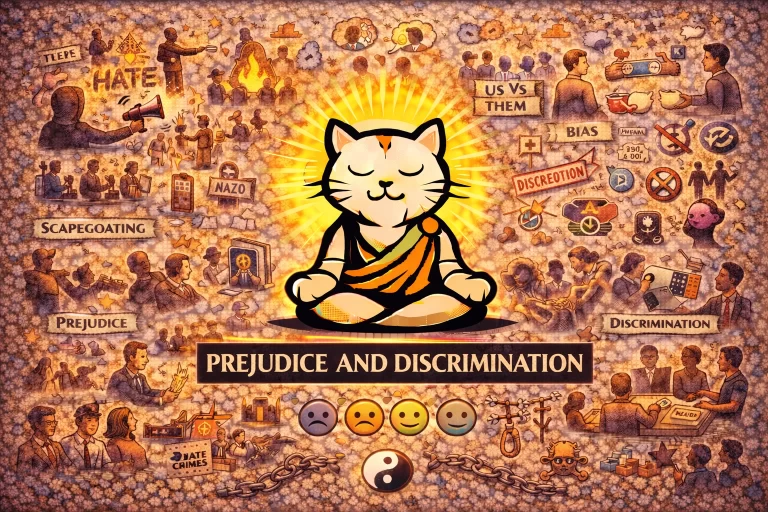
Prejudice and Discrimination

Prejudice and Discrimination

Prejudice and discrimination are social phenomena that shape how individuals perceive and treat others based on group membership. Prejudice refers to negative attitudes or beliefs about members of a group, while discrimination involves behaviors that disadvantage or exclude those individuals.…

Social Group Dynamics

Social Group Dynamics

Social group dynamics refers to the patterns of interaction, influence, roles, and relationships that emerge when individuals come together in groups. Whether in families, workplaces, classrooms, or nations, group membership shapes identity, behavior, and decision-making. Social psychology shows that groups…

Obedience

Obedience

Obedience is the act of following orders or directives from an authority figure. It is a fundamental feature of organized societies, enabling coordination, law enforcement, military structure, and institutional function. Yet obedience also raises ethical concerns, particularly when authority demands…

Conformity

Conformity

Conformity is the tendency to adjust one’s thoughts, feelings, or behaviors to align with the norms or expectations of a group. It is a powerful social force that shapes everyday decisions—from fashion choices to political opinions. While often viewed negatively…