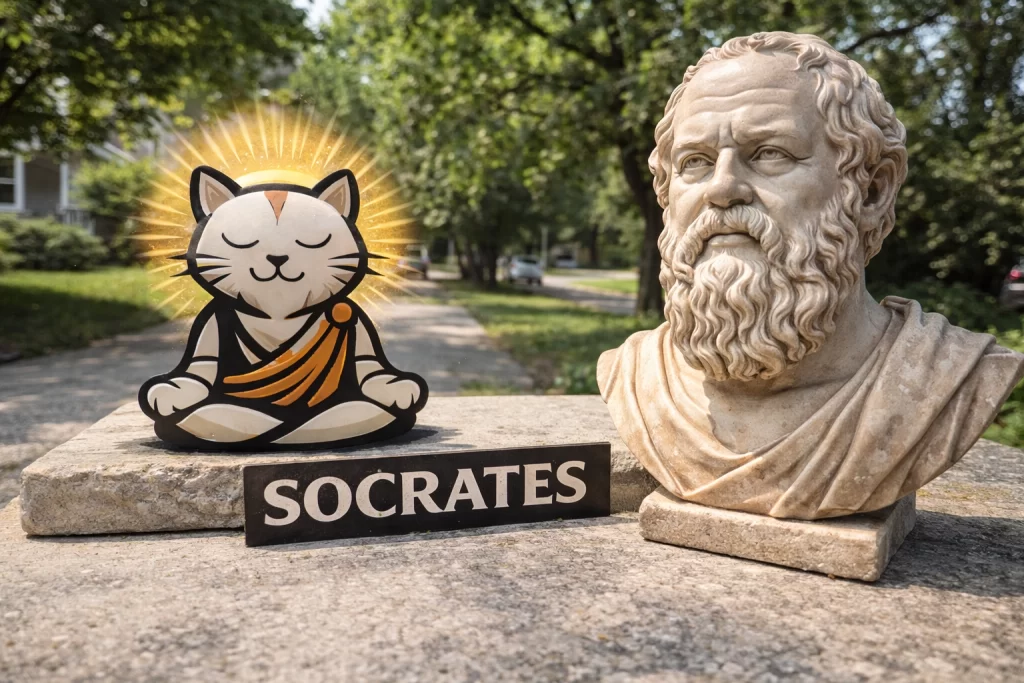
Socrates is one of the most influential figures in Western philosophy, yet he left behind no written works. What we know of him comes primarily from the dialogues of Plato, the writings of Xenophon, and satirical portrayals such as Aristophanes. Through these sources, Socrates emerges not as a systematic theorist, but as a relentless questioner—one who transformed philosophy from speculation about nature into a disciplined inquiry into ethics and the human soul.
Early Life and Background
Socrates was born in Athens around 470 BCE to a modest family. His father, Sophroniscus, was a stonemason, and his mother, Phaenarete, was a midwife. Socrates often compared his philosophical method to his mother’s profession, describing himself as a “midwife of ideas”—someone who helped others give birth to truth through questioning rather than delivering doctrines of his own.
Unlike many prominent Athenians, Socrates did not come from aristocratic wealth. He served as a hoplite (heavy infantry soldier) in the Peloponnesian War and was said to have demonstrated courage and endurance in battle. He spent much of his adult life in public spaces—markets, gymnasia, and workshops—engaging fellow citizens in conversation. His unconventional appearance and lifestyle became legendary: he walked barefoot, dressed simply, and showed little concern for material wealth.
The Socratic Method and Moral Inquiry
Socrates’ greatest contribution to philosophy was not a theory but a method. Through persistent questioning—now called the Socratic method—he exposed contradictions in others’ beliefs. He would ask seemingly simple questions: What is justice? What is courage? What is virtue? When his interlocutors offered confident definitions, Socrates would probe further, revealing inconsistencies and encouraging deeper reflection.
In Plato’s dialogue Apology, Socrates defends himself against charges of corrupting the youth and impiety. He famously claims that his wisdom consists in recognizing his own ignorance. This intellectual humility became a cornerstone of philosophical inquiry. For Socrates, the unexamined life was not worth living. Moral self-examination was essential to a meaningful existence.
Unlike earlier philosophers who speculated about the cosmos, Socrates focused on ethical questions. He believed that knowledge and virtue were intimately connected: if a person truly understood what was good, they would act accordingly. Wrongdoing, in his view, stemmed from ignorance rather than deliberate malice. Thus, philosophy was not abstract speculation but a practical pursuit aimed at improving the soul.
Trial and Death
Socrates’ commitment to questioning authority eventually led to his downfall. In 399 BCE, he was brought to trial in Athens on charges of corrupting the youth and failing to acknowledge the city’s gods. The trial, described in Plato’s Apology, ended with a guilty verdict. Offered the chance to propose an alternative punishment, Socrates refused to abandon his mission or flatter the jury.
He was sentenced to death by drinking hemlock. In Phaedo, Plato recounts Socrates’ final hours, portraying him as calm and reflective, discussing the immortality of the soul before his execution. His willingness to accept death rather than renounce his principles became a powerful symbol of philosophical integrity.
Enduring Legacy
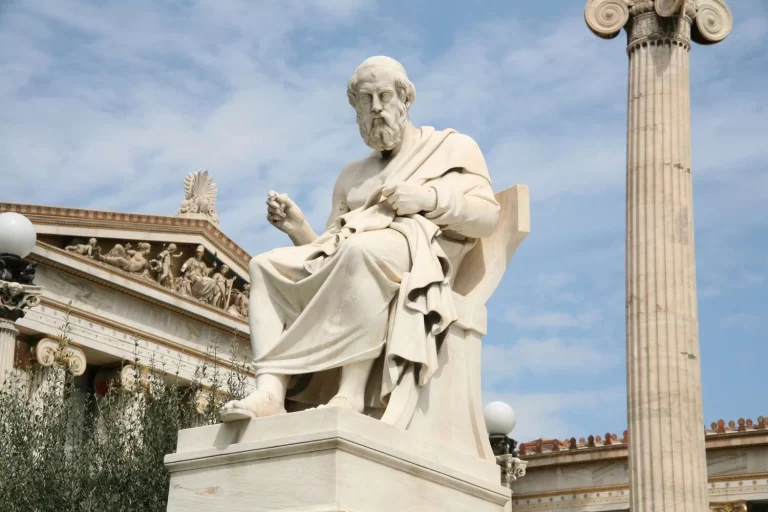
Socrates’ influence is immeasurable. Though he wrote nothing, his life became a model of intellectual courage. His student Plato would go on to establish the Academy, and Plato’s student Aristotle would further shape Western thought. Together, they form a lineage that underpins much of philosophical tradition.
More than doctrines or systems, Socrates left a way of thinking: skeptical, probing, morally serious, and grounded in dialogue. His legacy reminds us that philosophy is not merely the construction of theories but the practice of questioning—of refusing to accept easy answers in matters of truth and justice.
In the end, Socrates represents the philosopher as a public conscience. His life demonstrates that the pursuit of wisdom may carry risks, but it also affirms that integrity and reflection are worth defending—even at the highest cost.