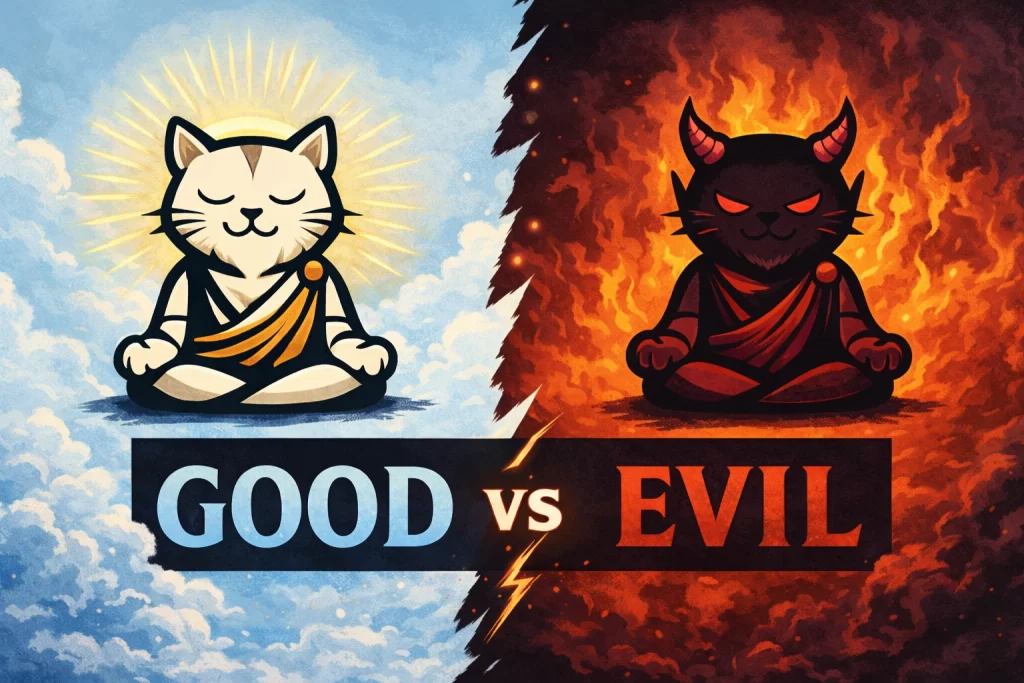
The idea of good versus evil is among the oldest and most enduring themes in human thought. It animates religion, philosophy, politics, literature, and personal morality. From the cosmic struggle between God and Satan to the moral conflicts in The Republic and Beyond Good and Evil, the tension between opposing moral forces has shaped how we understand ourselves and our world. Yet the more closely we examine this divide, the less simple it appears. Good and evil are not merely external forces battling across history; they are patterns within human consciousness, society, and choice.
At its simplest, “good” refers to actions that promote well-being, flourishing, and harmony. “Evil” refers to actions that cause unnecessary suffering, destruction, or degradation. Most cultures, despite their differences, converge on core principles: kindness is preferable to cruelty, honesty to deceit, justice to oppression. This convergence suggests that morality is not entirely arbitrary. Evolutionary psychology proposes that cooperative behavior helped human communities survive. Philosophical traditions argue that reason reveals moral truths. Religious systems claim that morality reflects divine will. However one explains it, the intuition that some things are better than others appears deeply embedded in the human condition.
Yet moral certainty becomes complicated when good intentions produce harmful outcomes, or when cultural values conflict. History is filled with individuals who believed themselves righteous while committing atrocities. Ideologies often divide the world into pure good and absolute evil, but such divisions can justify violence. When people convince themselves they are entirely on the side of good, they may stop questioning their actions. The danger lies not only in evil acts, but in the conviction that one’s own cause is immune from moral scrutiny.
Literature has long explored this ambiguity. In Paradise Lost, the figure of Satan is portrayed with complexity and charisma, complicating the reader’s response. In Crime and Punishment, evil is not a monstrous abstraction but a psychological descent, born of pride and rationalization. These works suggest that evil does not always appear grotesque or foreign; it can emerge gradually from ordinary motives—ambition, resentment, fear. The line between good and evil, as Aleksandr Solzhenitsyn famously wrote, runs through every human heart.
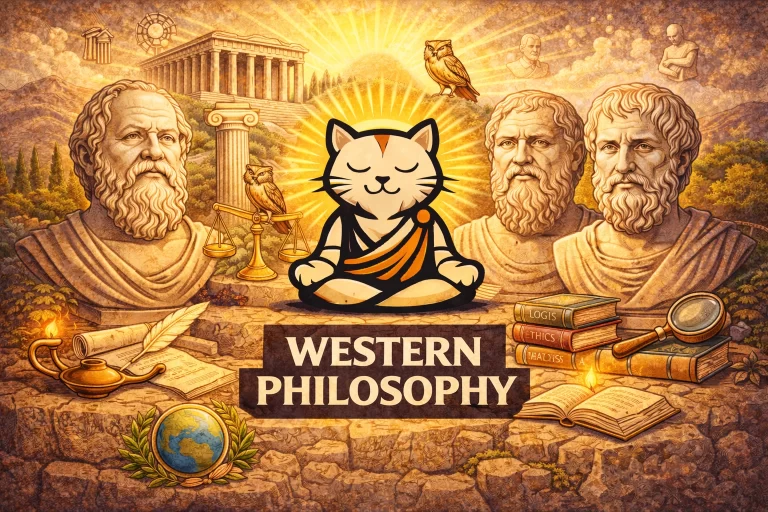
Philosophers have wrestled with whether good and evil are objective realities or human constructions. Plato argued that the Good is an ultimate form, a transcendent truth toward which reason aspires. Friedrich Nietzsche, by contrast, critiqued conventional morality as a historical development shaped by power and resentment. To Nietzsche, labeling actions “good” or “evil” often concealed deeper psychological forces. These debates reveal that moral language can both illuminate and obscure reality.
Psychology adds another layer. Cognitive biases, social pressure, and fear can lead ordinary people to commit harmful acts. Experiments such as the Stanford prison study demonstrate how quickly roles and authority can distort behavior. Evil may not require monstrous intent; it may require only conformity and disengagement from empathy. Conversely, good often requires courage—the willingness to act against self-interest or majority opinion. Acts of moral bravery frequently occur quietly: a person refusing to participate in injustice, offering help without recognition, or speaking truth at personal cost.
Perhaps the most profound insight is that good and evil are not static identities but dynamic possibilities. No one is wholly one or the other. Moral growth involves awareness of one’s own capacity for harm, coupled with deliberate cultivation of compassion and responsibility. Goodness, then, is not purity but practice: repeated choices that align with empathy, fairness, and humility.
In the end, the struggle between good and evil is less a cosmic duel than a daily discipline. It unfolds in conversations, institutions, laws, and private decisions. The challenge is not to eradicate evil from the world in a single heroic act, but to reduce suffering where one can, to question one’s own certainty, and to resist the seduction of self-righteousness. If evil thrives in ignorance and indifference, good grows in awareness and care. The battlefield is not distant; it is wherever human beings choose how to act.