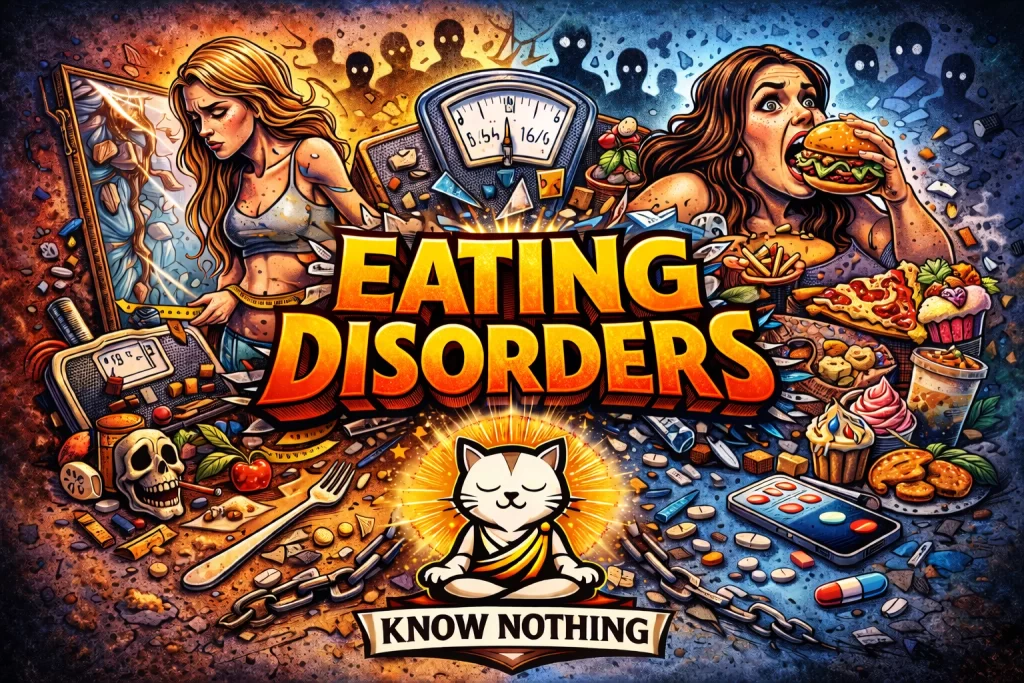
Eating disorders are serious mental health conditions characterized by persistent disturbances in eating behavior and related thoughts and emotions. They often involve intense concerns about body weight, shape, and control, and can lead to severe physical and psychological consequences. The most widely recognized eating disorders include anorexia nervosa, bulimia nervosa, and binge-eating disorder, though other specified feeding and eating disorders (OSFED) are also clinically significant.
Diagnostic criteria established by the American Psychiatric Association define eating disorders in terms of behavioral symptoms (such as restriction, bingeing, or purging), cognitive distortions related to body image, and functional impairment. Eating disorders have one of the highest mortality rates among psychiatric conditions, due to both medical complications and increased suicide risk.
Anorexia Nervosa and Restrictive Eating
Anorexia nervosa is characterized by intense fear of gaining weight, distorted body image, and severe restriction of food intake leading to significantly low body weight. Individuals with anorexia often perceive themselves as overweight despite being underweight and may engage in excessive exercise or ritualized eating patterns.
Research into anorexia has examined both psychological and biological factors. Studies led by Walter H. Kaye have identified differences in serotonin and dopamine systems among individuals with anorexia, suggesting that altered reward processing may contribute to restrictive behavior. Brain imaging research shows persistent changes in neural circuits related to anxiety and self-control, even after weight restoration.
A classic experimental study relevant to understanding starvation effects is the Minnesota Starvation Experiment conducted by Ancel Keys during World War II. Healthy male participants subjected to semi-starvation developed obsessive thoughts about food, depression, irritability, and social withdrawal. The findings demonstrated that starvation itself can produce psychological symptoms similar to those observed in eating disorders, highlighting the powerful interaction between physical and mental health.
Bulimia Nervosa and Binge-Purge Cycles
Bulimia nervosa involves recurrent episodes of binge eating followed by compensatory behaviors such as vomiting, fasting, or excessive exercise. Unlike anorexia, individuals with bulimia often maintain normal or near-normal body weight, which can delay diagnosis.
Research by Christopher G. Fairburn has significantly shaped cognitive-behavioral models of bulimia. Fairburn’s studies demonstrated that distorted beliefs about weight and shape maintain binge-purge cycles. Randomized controlled trials of Cognitive-Behavioral Therapy for Eating Disorders (CBT-E), developed by Fairburn, show substantial reductions in bingeing and purging behaviors compared to control treatments.
Laboratory studies examining binge eating have found that dietary restriction increases vulnerability to loss-of-control eating episodes. Experimental research indicates that when individuals rigidly restrict food intake, they are more likely to overeat when exposed to emotional stress or highly palatable foods, reinforcing the cycle of guilt and compensatory behavior.
Binge-Eating Disorder and Emotional Regulation
Binge-Eating Disorder (BED) is characterized by recurrent episodes of consuming large quantities of food accompanied by feelings of loss of control, but without regular compensatory behaviors. BED is the most common eating disorder and is associated with obesity, depression, and anxiety.
Studies show that binge eating is often linked to emotional dysregulation. Research suggests that individuals may use food as a coping mechanism for stress, sadness, or boredom. Neuroimaging studies indicate heightened activity in reward-related brain regions in response to food cues among individuals with BED, similar to patterns observed in substance use disorders.
Clinical trials have demonstrated that both CBT and interpersonal psychotherapy (IPT) are effective in reducing binge frequency. Some pharmacological treatments, such as lisdexamfetamine, have also shown effectiveness in decreasing binge episodes in controlled studies.
Risk Factors and Sociocultural Influences
Eating disorders arise from a complex interaction of genetic, psychological, and sociocultural factors. Twin studies suggest moderate heritability, indicating that biological vulnerability contributes to risk. However, environmental influences are equally important.
Sociocultural research highlights the role of media exposure and cultural beauty standards. Studies have shown that exposure to thin-ideal images increases body dissatisfaction among adolescents. For example, experimental research demonstrates that participants exposed to idealized media images report lower body satisfaction compared to those exposed to neutral content.
Family dynamics, trauma, perfectionism, and peer pressure also contribute to risk. Adolescents experiencing bullying related to body image are at significantly higher risk for disordered eating behaviors.
Treatment and Recovery
Treatment for eating disorders often involves a multidisciplinary approach including psychotherapy, medical monitoring, and nutritional rehabilitation. Family-Based Treatment (FBT), particularly effective for adolescents with anorexia, empowers parents to take an active role in restoring healthy eating behaviors.
Cognitive-behavioral therapy remains a leading treatment for bulimia and binge-eating disorder. Early intervention is strongly associated with improved long-term outcomes. Longitudinal research indicates that many individuals achieve recovery, though relapse can occur without sustained support.
Emerging treatments include mindfulness-based approaches and enhanced emotion-regulation strategies. Advances in neuroscience continue to inform personalized treatment models aimed at addressing both biological and psychological mechanisms.
Conclusion
Eating disorders are complex psychiatric conditions involving disturbances in eating behavior, body image, and emotional regulation. From the Minnesota Starvation Experiment to modern neuroimaging research and CBT trials, scientific studies have deepened understanding of their biological and psychological foundations. Effective treatment requires addressing cognitive distortions, emotional coping patterns, and physical health simultaneously. Although eating disorders can be severe, early diagnosis and evidence-based intervention significantly improve the likelihood of recovery and long-term well-being.