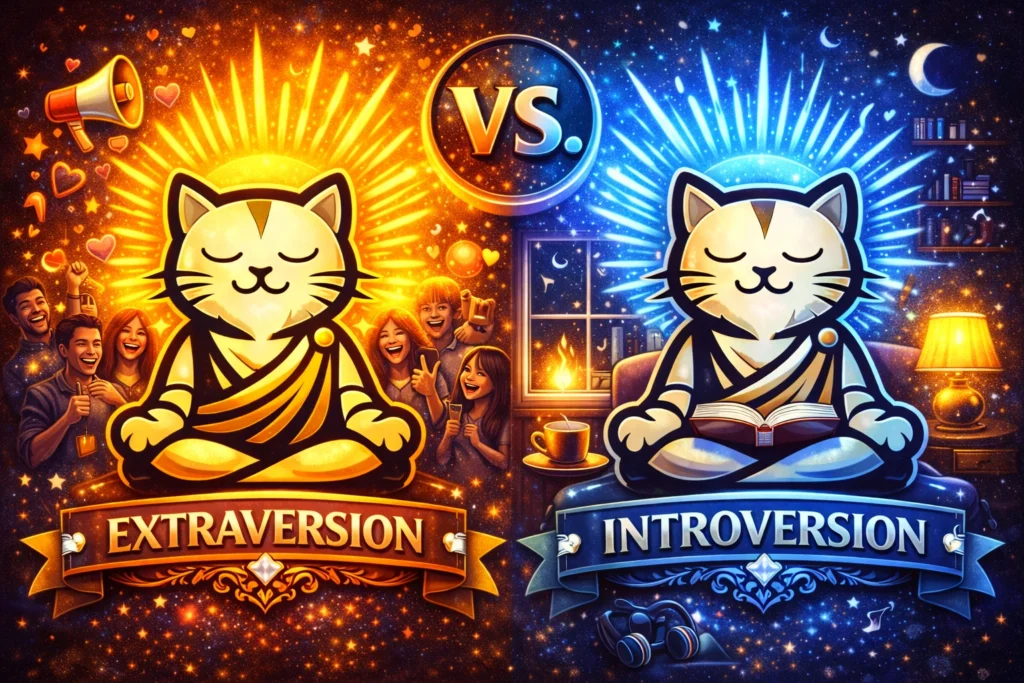
Extraversion and introversion are two of the most widely studied personality dimensions in psychology. Rather than representing rigid categories, they exist on a continuum describing how individuals differ in social engagement, energy levels, and responsiveness to stimulation. Extraverts tend to seek social interaction, excitement, and external stimulation, while introverts typically prefer quieter environments and solitary or small-group activities. Neither trait is inherently superior; each reflects a distinct way of processing the world.
Modern personality psychology places extraversion as one of the five major dimensions in the Five-Factor Model. Research consistently shows that these traits influence behavior, emotional experience, career paths, and even health outcomes.
Historical Foundations and Biological Theory
The modern scientific understanding of extraversion and introversion owes much to Carl Jung, who first popularized the terms in the early 20th century. Jung described introverts as inwardly focused and reflective, while extraverts were outwardly oriented and energized by interaction.
Later, Hans Eysenck developed a biological theory proposing that differences in cortical arousal underlie extraversion and introversion. According to Eysenck’s arousal theory, introverts have higher baseline levels of cortical arousal and therefore seek less external stimulation, whereas extraverts have lower baseline arousal and seek more stimulation to reach an optimal level.
Experimental research supported aspects of this theory. Studies measuring physiological indicators such as skin conductance and EEG activity found that introverts often show stronger responses to sensory stimuli compared to extraverts. These findings suggest that biological sensitivity may contribute to differences in social behavior and stimulation preferences.
Behavioral and Social Differences
Extraverts are typically described as sociable, assertive, energetic, and talkative. They often thrive in group settings and are more likely to take leadership roles. Research shows that extraversion is strongly associated with positive affect. In longitudinal studies, individuals high in extraversion report greater life satisfaction and more frequent experiences of positive emotions.
Introverts, on the other hand, are often more reserved, reflective, and internally focused. They may prefer deep conversations over large gatherings and require time alone to recharge. Contrary to common stereotypes, introversion is not synonymous with shyness or social anxiety. Many introverts possess strong social skills but simply prefer lower levels of stimulation.
A notable experimental study found that when instructed to behave in an extraverted manner during group tasks, both introverts and extraverts reported temporary increases in positive mood. However, introverts also reported greater fatigue afterward, suggesting that acting against dispositional tendencies may require additional psychological effort.
Cognitive and Emotional Processing
Research indicates that extraversion and introversion are linked to differences in reward sensitivity. Studies by Jeffrey Alan Gray proposed that extraverts have a more responsive Behavioral Activation System (BAS), which is sensitive to reward cues. This may explain why extraverts are more likely to pursue novelty and risk-taking opportunities.
Neuroimaging studies support this view. Brain scans show that extraverts exhibit stronger activation in dopamine-rich reward circuits when exposed to positive stimuli. Introverts, by contrast, may show heightened activity in areas associated with internal processing and planning.
Cognitive research also suggests differences in information processing. Introverts often perform well on tasks requiring sustained attention and deep focus, while extraverts may excel in dynamic, interactive environments. These tendencies influence academic and workplace preferences.
Cultural and Workplace Implications
Cultural norms shape how extraversion and introversion are valued. In many Western societies, extraversion is often associated with leadership and charisma. Research shows that extraverted individuals are more likely to emerge as leaders in group settings. However, leadership effectiveness depends on context. Studies indicate that introverted leaders may outperform extraverts when managing proactive teams, as they are more likely to listen carefully and encourage initiative.
Workplace research demonstrates that while extraversion predicts performance in sales and public-facing roles, introversion may predict success in analytical, creative, or research-oriented careers. Both traits offer strengths depending on environmental demands.
Cross-cultural studies reveal that collectivist societies may place less emphasis on overt sociability, leading to different interpretations of introversion and extraversion.
Stability and Development Over Time
Longitudinal research shows that extraversion and introversion remain relatively stable across the lifespan, though average levels may shift slightly with age. Many individuals become more emotionally stable and agreeable over time, while extraversion may decline modestly in later adulthood.
Intervention studies suggest that individuals can intentionally shift behaviors toward greater sociability or assertiveness when motivated by personal goals. However, core temperamental tendencies tend to remain consistent, reflecting both genetic and environmental influences.
Conclusion
Extraversion and introversion represent fundamental dimensions of personality that shape how individuals engage with the world. From Jung’s early typology to Eysenck’s biological arousal theory and Gray’s reward sensitivity model, research has illuminated the psychological and neurological foundations of these traits. Study findings demonstrate that extraverts and introverts differ in stimulation preferences, emotional processing, and social behavior, yet both bring valuable strengths to personal and professional contexts. Rather than viewing one as superior, modern psychology recognizes that diversity in personality enriches social systems and reflects the complexity of human nature.