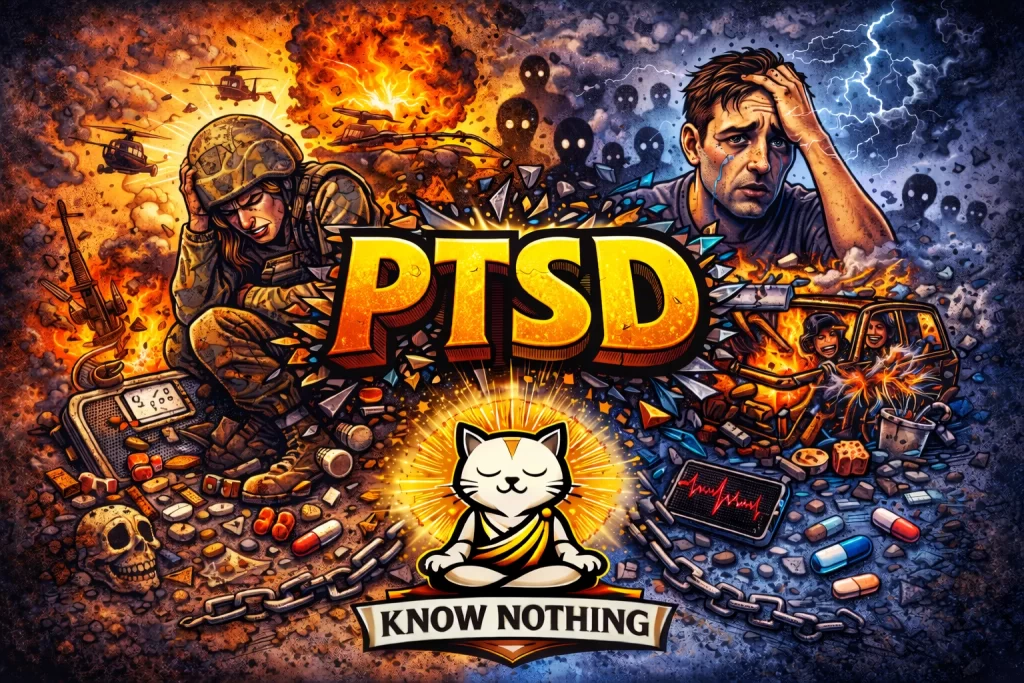
Post-Traumatic Stress Disorder (PTSD) is a psychiatric condition that can develop after exposure to actual or threatened death, serious injury, or sexual violence. Individuals with PTSD may experience intrusive memories, nightmares, flashbacks, emotional numbness, hypervigilance, and avoidance of reminders associated with the trauma. While many people experience temporary distress after traumatic events, PTSD involves persistent symptoms that significantly impair daily functioning.
Diagnostic criteria outlined by the American Psychiatric Association classify PTSD within trauma- and stressor-related disorders. Symptoms are typically grouped into four clusters: intrusion, avoidance, negative alterations in cognition and mood, and alterations in arousal and reactivity.
Historical Context and Early Observations
Although PTSD was formally recognized in 1980 with the publication of DSM-III, trauma-related symptoms have been documented for centuries. During World War I, soldiers experiencing psychological collapse were described as suffering from “shell shock.” In World War II, similar symptoms were referred to as “combat fatigue.”
Research following the Vietnam War played a pivotal role in formal recognition of PTSD. Studies of returning veterans documented persistent flashbacks, emotional detachment, and heightened startle responses. These findings led to systematic investigation and inclusion of PTSD as a diagnostic category.
A landmark epidemiological study conducted by Ronald C. Kessler examined trauma exposure in the general population and found that while most individuals experience at least one traumatic event, only a subset develop PTSD. This highlighted the role of vulnerability factors beyond trauma exposure alone.
Neurobiology of Trauma
Neuroscientific research has significantly advanced understanding of PTSD. Brain imaging studies consistently show heightened activity in the amygdala, a region involved in fear processing, and reduced activity in the prefrontal cortex, which helps regulate emotional responses.
Research led by Bessel van der Kolk demonstrated that traumatic memories are often encoded differently from ordinary memories, sometimes lacking coherent narrative structure and remaining highly sensory and emotionally intense. Functional MRI studies reveal altered connectivity between brain regions responsible for memory and emotional regulation.
The hippocampus, a structure involved in memory consolidation, has also been found to be smaller in some individuals with chronic PTSD. Twin studies suggest that reduced hippocampal volume may reflect both pre-existing vulnerability and trauma-related change, illustrating the complex interaction between biology and experience.
Psychological Models and Conditioning
Behavioral theories help explain how trauma-related cues trigger distress long after the event has ended. Classical conditioning models suggest that neutral stimuli present during trauma (such as sounds, smells, or locations) become associated with fear responses. Later exposure to these cues can automatically activate anxiety and physiological arousal.
Experimental research demonstrates that individuals with PTSD show heightened fear conditioning and slower extinction of learned fear responses. Laboratory paradigms using conditioned stimuli confirm that trauma survivors may have difficulty distinguishing between safe and threatening cues.
Cognitive models, developed by researchers such as Edna Foa, propose that maladaptive beliefs about safety, trust, and self-blame maintain symptoms. For example, individuals may develop global beliefs such as “The world is completely dangerous” or “I am permanently damaged,” which reinforce avoidance and hypervigilance.
Risk and Protective Factors
Not everyone exposed to trauma develops PTSD. Risk factors include prior trauma, lack of social support, genetic vulnerability, and pre-existing mental health conditions. Childhood adversity significantly increases later PTSD risk.
Research on adverse childhood experiences (ACEs) shows that early trauma sensitizes stress-response systems, increasing susceptibility to later stress-related disorders. Conversely, strong social support and early intervention reduce the likelihood of chronic PTSD.
Resilience studies indicate that coping skills, community connection, and meaning-making processes contribute to recovery. Social support consistently emerges as one of the strongest protective factors in longitudinal trauma research.
Treatment and Recovery
PTSD treatment often involves trauma-focused psychotherapies. Prolonged Exposure Therapy, developed by Edna Foa, involves gradual, controlled confrontation with trauma memories and reminders. Randomized controlled trials demonstrate significant reductions in symptom severity following exposure-based interventions.
Cognitive Processing Therapy (CPT) targets maladaptive beliefs and has shown strong effectiveness in both civilian and military populations. Eye Movement Desensitization and Reprocessing (EMDR), developed by Francine Shapiro, integrates bilateral stimulation while processing traumatic memories and has demonstrated efficacy in numerous clinical trials.
Medications such as selective serotonin reuptake inhibitors (SSRIs) may reduce symptoms, particularly anxiety and depression, though psychotherapy remains the primary evidence-based treatment.
Conclusion
PTSD is a complex trauma-related disorder involving alterations in memory, emotion regulation, and stress-response systems. From early observations of shell shock to modern neuroimaging and conditioning research, scientific understanding has evolved significantly. Studies by Kessler, van der Kolk, and Foa demonstrate that both biological vulnerability and cognitive processes shape symptom development. While trauma can have profound psychological effects, evidence-based therapies offer effective pathways toward recovery. With early intervention, social support, and structured treatment, many individuals with PTSD regain stability and improved quality of life.