Category Psychology

Behavior Modification
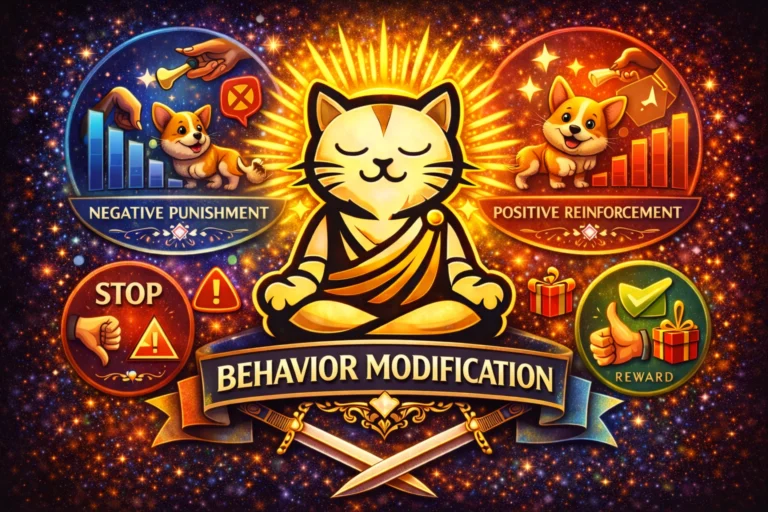
Behavior Modification

Behavior modification is a systematic approach to changing behavior through the application of learning principles, particularly those derived from operant conditioning. Rooted in behavioral psychology, behavior modification focuses on observable actions rather than internal thoughts or unconscious motives. By manipulating…

Operant Conditioning

Operant Conditioning

Operant conditioning is a fundamental theory of learning that explains how voluntary behaviors are shaped by their consequences. Unlike classical conditioning, which focuses on associations between stimuli, operant conditioning examines how behaviors increase or decrease based on reinforcement or punishment.…

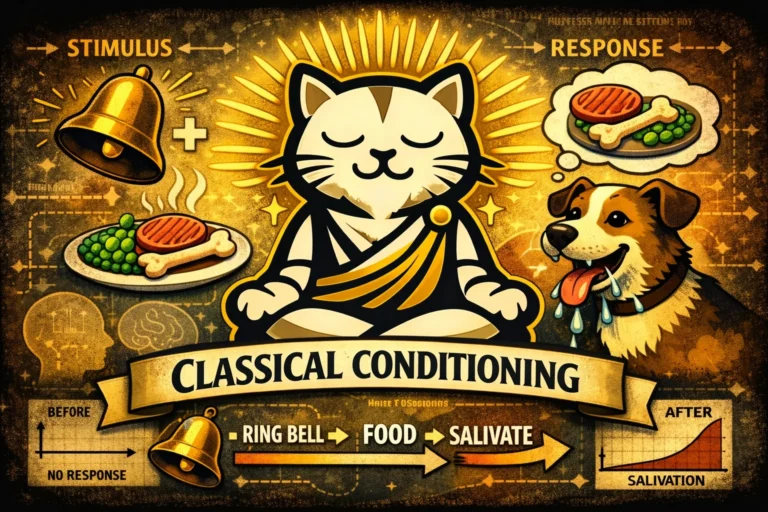
Classical Conditioning

Classical Conditioning

Classical conditioning is a fundamental learning process through which a previously neutral stimulus becomes associated with a meaningful stimulus, eventually eliciting a similar response. Discovered in the late 19th century, classical conditioning demonstrated that behavior can be shaped through association…

Behavioral Psychology

Behavioral Psychology

Behavioral psychology, also known as behaviorism, is a school of thought that focuses on observable behavior rather than internal mental states. It argues that behavior is learned through interaction with the environment and shaped by conditioning processes such as reinforcement…

Defense Mechanisms

Defense Mechanisms

Defense mechanisms are unconscious psychological strategies that individuals use to protect themselves from anxiety, conflict, and emotional distress. Originally proposed within psychoanalytic theory, defense mechanisms help manage internal tensions arising from unacceptable thoughts, impulses, or external stressors. While they often…

Extraversion vs. Introversion

Extraversion vs Introversion

Extraversion and introversion are two of the most widely studied personality dimensions in psychology. Rather than representing rigid categories, they exist on a continuum describing how individuals differ in social engagement, energy levels, and responsiveness to stimulation. Extraverts tend to…

Narcissism

Narcissism

Narcissism is a personality construct characterized by grandiosity, a strong need for admiration, and a relative lack of empathy for others. While the term is often used casually to describe self-centered behavior, in psychology it refers to a spectrum of…

Big Five Personality Traits

Big Five Personality Traits

The Big Five Personality Traits—openness, conscientiousness, extraversion, agreeableness, and neuroticism—represent one of the most widely accepted models for understanding human personality. Rather than categorizing individuals into rigid “types,” the Big Five framework describes personality along five broad, continuous dimensions. These…

Personality Psychology

Personality Psychology

Personality psychology is the scientific study of enduring patterns of thought, emotion, and behavior that distinguish individuals from one another. It seeks to answer fundamental questions: Why are people different? How stable are personality traits over time? What roles do…

PTSD

PTSD

Post-Traumatic Stress Disorder (PTSD) is a psychiatric condition that can develop after exposure to actual or threatened death, serious injury, or sexual violence. Individuals with PTSD may experience intrusive memories, nightmares, flashbacks, emotional numbness, hypervigilance, and avoidance of reminders associated…

Eating Disorders

Eating Disorders

Eating disorders are serious mental health conditions characterized by persistent disturbances in eating behavior and related thoughts and emotions. They often involve intense concerns about body weight, shape, and control, and can lead to severe physical and psychological consequences. The…

Addiction

Addiction

Addiction is a chronic and relapsing disorder characterized by compulsive substance use or engagement in behaviors despite harmful consequences. It affects the brain’s reward, motivation, and self-control systems, leading individuals to prioritize the addictive substance or activity over relationships, work,…