Why do people compare themselves to others?

Why Do People Compare Themselves to Others?

People compare themselves with others because the mind rarely evaluates personal qualities in isolation. Intelligence, attractiveness, success, popularity, wealth, fitness, and even happiness are difficult to judge without a reference point. A person may feel satisfied with an income until…
Why are politics so toxic?

Why Are Politics So Toxic?

Politics has always involved conflict because it determines who receives power, which values become law, and how a society distributes rights, risks, and resources. Yet ordinary disagreement does not fully explain why modern political life so often feels personal, humiliating,…

Why do people fall in love?

Why Do People Fall in Love? The Psychology and Neuroscience of Romantic Bonding

People fall in love when attraction, opportunity, emotional responsiveness, learning, and attachment begin to organize around one particular person. Although romantic love feels like a single overwhelming emotion, researchers describe several partly independent motivational systems. Sexual desire can direct attention…

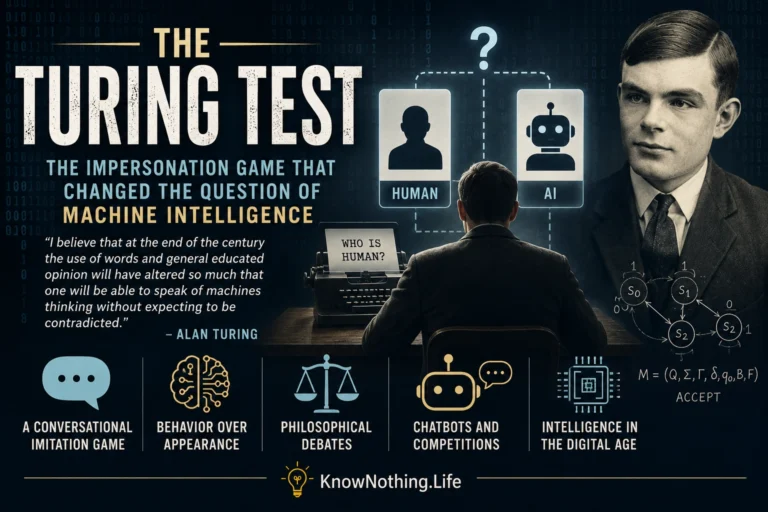
Turing Test

The Turing Test: Intelligence, Imitation, and the Problem of Knowing a Mind

In 1950, British mathematician Alan Turing opened his landmark paper “Computing Machinery and Intelligence” with a deceptively simple question: “Can machines think?” He quickly argued that this wording created more confusion than clarity because both “machine” and “thinking” could be…

Why do people avoid confrontation?

Why Do People Avoid Confrontation?

Confrontation is often described as a simple act of speaking honestly, setting a boundary, or addressing a problem. Psychologically, however, it can feel much more dangerous. A difficult conversation may carry the possibility of anger, rejection, humiliation, retaliation, or the…

Genes and Behavior

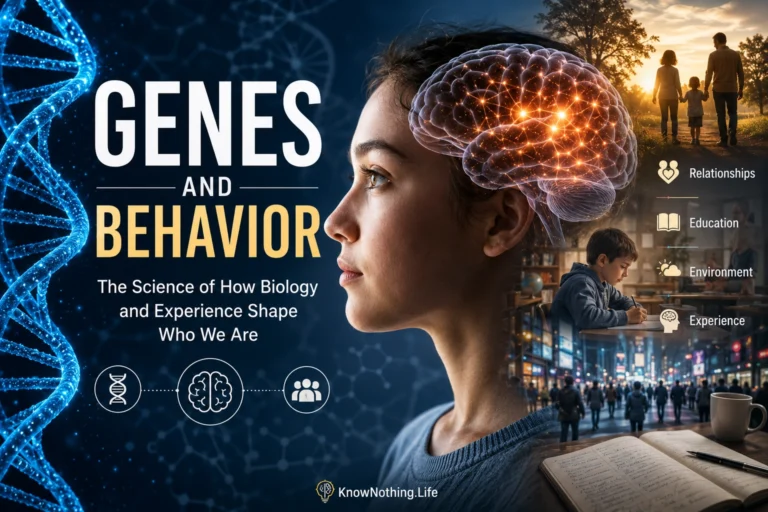
Genes and Behavior: How Biology and Experience Shape Who We Become

The study of genes and behavior asks how inherited differences contribute to variation in temperament, personality, intelligence, motivation, mental health, and everyday action. It does not assume that genes contain fixed instructions for complex behaviors. Genes encode proteins and regulate…

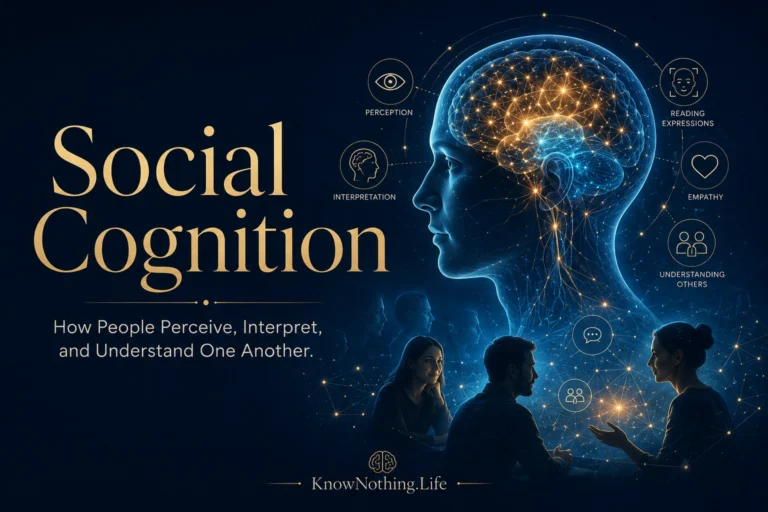
Social Cognition

Social Cognition: How People Perceive, Interpret, and Understand One Another

Social cognition refers to the mental processes people use to perceive, interpret, remember, and respond to information about themselves and others. It includes recognizing faces and emotions, forming impressions, explaining behavior, inferring intentions, evaluating trust, understanding social roles, and predicting…