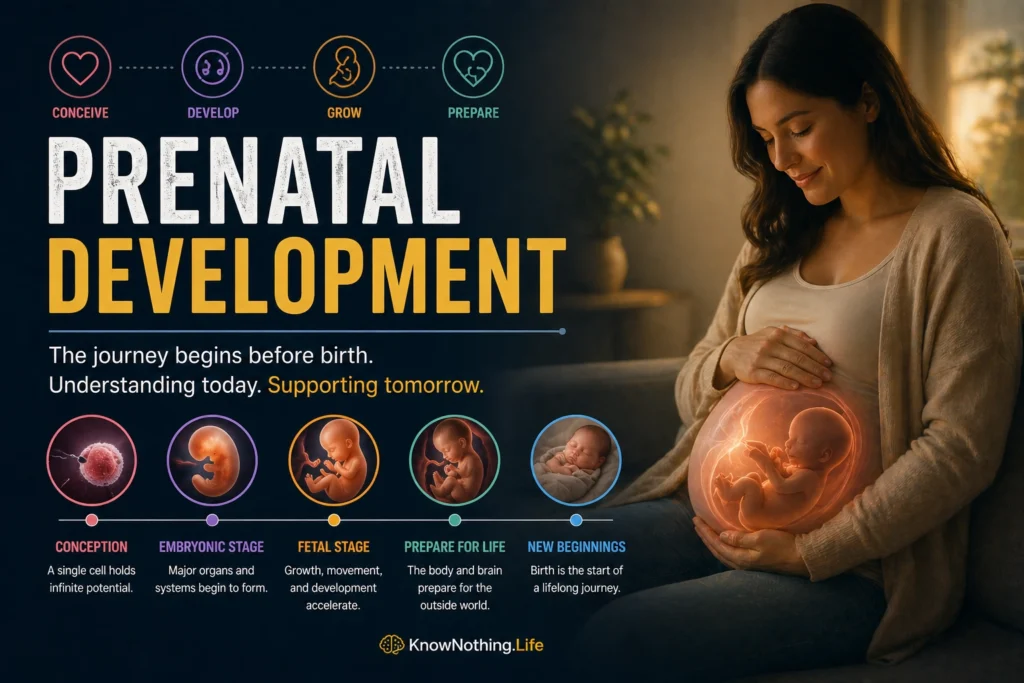
Prenatal development is the process by which a human organism grows and transforms from a single fertilized cell into a fully formed fetus before birth. This period, though relatively brief compared to the lifespan, is one of the most critical phases of development. During these months, the foundations for physical structure, brain organization, and future health are established. The complexity and precision of prenatal development highlight the remarkable coordination of biological systems that guide human growth from its earliest stages.
Understanding prenatal development provides insight into how early conditions shape later outcomes. Factors such as genetics, maternal health, environmental influences, and nutrition all interact to influence the course of development. While much of this process follows a predictable sequence, it is also highly sensitive to disruption. Small changes during critical periods can have lasting effects, underscoring the importance of this stage in the broader context of human development.
Stages of Prenatal Development
Prenatal development is typically divided into three main stages: the germinal stage, the embryonic stage, and the fetal stage. Each stage is characterized by distinct processes and milestones that contribute to the formation of the developing organism. These stages reflect a progression from basic cellular division to the development of complex systems and structures.
The germinal stage begins at conception and lasts for approximately two weeks. During this time, the fertilized egg, or zygote, undergoes rapid cell division as it travels down the fallopian tube and implants in the uterine wall. This stage is critical for establishing the conditions necessary for further development. Although the organism is not yet differentiated into specific structures, successful implantation is essential for the continuation of pregnancy.
The embryonic stage, which spans from the third to the eighth week, is marked by the formation of major organs and body systems. During this period, the embryo develops a basic body plan, including the neural tube, which will become the brain and spinal cord. This stage is particularly sensitive to environmental influences, as the foundations of all major systems are being established. The fetal stage, beginning in the ninth week and continuing until birth, involves growth, refinement, and maturation. During this time, the organism becomes increasingly recognizable as a human, with fully formed structures that continue to develop in complexity and function.
Genetic Foundations and Biological Processes
Prenatal development begins with the combination of genetic material from two parents, resulting in a unique genetic blueprint. This blueprint, encoded in DNA, guides the processes of growth and differentiation that occur throughout development. Genes influence a wide range of characteristics, from physical traits such as eye color and height to aspects of brain development and potential health outcomes.
Cell differentiation is a key process during prenatal development, in which initially identical cells become specialized for different functions. This process is regulated by genetic instructions and biochemical signals that determine how cells develop into tissues and organs. The coordination of these processes ensures that complex structures emerge in an organized and functional manner. Any disruption in this coordination can lead to developmental abnormalities, highlighting the precision required for successful development.
Biological processes such as mitosis, apoptosis, and morphogenesis play essential roles in shaping the developing organism. Mitosis allows for the rapid increase in cell numbers, apoptosis eliminates unnecessary or damaged cells, and morphogenesis guides the formation of structures. Together, these processes create a dynamic system in which growth and regulation occur simultaneously, ensuring that development proceeds in a balanced and controlled manner.
The Role of the Placenta and Maternal Environment
The placenta is a vital organ that supports prenatal development by facilitating the exchange of nutrients, oxygen, and waste products between the mother and the developing fetus. It acts as a lifeline, providing the resources necessary for growth while also protecting the fetus from certain harmful substances. The placenta also produces hormones that regulate pregnancy and support the developing organism.
The maternal environment plays a crucial role in shaping prenatal development. Factors such as nutrition, stress, and overall health can significantly influence the course of development. Adequate nutrition ensures that the fetus receives essential nutrients needed for growth, while poor nutrition can lead to complications such as low birth weight or developmental delays. Similarly, maternal stress can affect hormonal levels, potentially influencing fetal development.
Exposure to harmful substances, known as teratogens, can disrupt prenatal development and lead to birth defects or other complications. These substances include alcohol, drugs, certain medications, and environmental toxins. The impact of teratogens depends on factors such as timing, dosage, and genetic susceptibility. Understanding the role of the maternal environment highlights the importance of prenatal care and the need to minimize risks during this critical period.
Brain Development and Early Neural Foundations
The development of the brain is one of the most complex and significant aspects of prenatal development. It begins early in the embryonic stage with the formation of the neural tube, which later develops into the central nervous system. As development progresses, neurons are generated, migrate to their appropriate locations, and form connections that will support cognitive and behavioral functions.
During the fetal stage, the brain undergoes rapid growth and increasing complexity. Neural connections multiply, and different regions of the brain begin to specialize in specific functions. Although the brain is not fully developed at birth, the foundational structures and pathways are established during prenatal development. This early organization plays a crucial role in shaping later cognitive and emotional abilities.
The sensitivity of brain development to environmental influences underscores the importance of prenatal conditions. Factors such as nutrition, exposure to toxins, and maternal health can affect neural development, with potential long-term consequences. Research in developmental neuroscience continues to explore how early experiences and conditions influence brain structure and function, providing valuable insights into the origins of behavior and cognition.
Critical Periods and Developmental Sensitivity
Prenatal development is characterized by critical periods, during which specific systems and structures are particularly sensitive to environmental influences. These periods represent windows of heightened vulnerability, as well as opportunities for optimal development. For example, the formation of the neural tube occurs within a narrow timeframe, and disruptions during this period can result in serious developmental conditions.
The concept of critical periods highlights the importance of timing in development. The same environmental factor may have different effects depending on when it occurs. For instance, exposure to a teratogen during the embryonic stage may have more severe consequences than exposure during the fetal stage, when major structures are already formed. This sensitivity underscores the need for careful attention to prenatal conditions throughout pregnancy.
At the same time, prenatal development also demonstrates resilience. In many cases, the developing organism can adapt to certain challenges, compensating for minor disruptions. This balance between vulnerability and resilience reflects the complexity of developmental processes, where multiple factors interact to shape outcomes. Understanding critical periods provides a framework for identifying risks and supporting healthy development.
Individual Differences and Outcomes
Although prenatal development follows a general pattern, individual differences emerge even before birth. Genetic variation, environmental influences, and random biological processes contribute to differences in growth, development, and health outcomes. These differences can have lasting effects, influencing physical characteristics, cognitive abilities, and susceptibility to certain conditions.
Research has shown that prenatal factors can have long-term implications for health and development, a concept often referred to as fetal programming. Conditions such as low birth weight or prenatal stress have been linked to increased risks of certain health issues later in life. This perspective emphasizes the importance of early development in shaping lifelong trajectories.
However, prenatal influences do not determine outcomes in a fixed or deterministic way. Postnatal experiences, environment, and individual choices continue to play significant roles in shaping development. The interaction between prenatal and postnatal factors highlights the complexity of human development, where multiple influences converge to create diverse outcomes.
Applications and Implications
The study of prenatal development has important applications in medicine, psychology, and public health. Advances in prenatal care, such as improved nutrition, medical monitoring, and early detection of potential issues, have significantly improved outcomes for both mothers and infants. Understanding the factors that influence prenatal development allows healthcare providers to offer targeted interventions and support.
In psychology, prenatal development provides insight into the origins of behavior and mental processes. By examining how early biological and environmental factors shape development, researchers can better understand the foundations of cognition, emotion, and personality. This knowledge also informs interventions aimed at supporting healthy development and preventing potential challenges.
Public health initiatives often focus on promoting healthy prenatal environments through education, access to healthcare, and policies that support maternal well-being. These efforts recognize that investing in early development has long-term benefits for individuals and society. By addressing factors that influence prenatal development, it is possible to improve outcomes across the lifespan.
Conclusion
Prenatal development is a complex and dynamic process that lays the foundation for human life. From the earliest stages of cellular division to the formation of complex systems, it reflects the intricate interplay of genetic, biological, and environmental factors. This period is marked by both vulnerability and potential, as early conditions can have lasting effects on development.
By understanding prenatal development, we gain insight into the origins of health, behavior, and individual differences. This knowledge not only enhances our understanding of human growth but also informs practices that support healthy development. Ultimately, prenatal development serves as a reminder of the profound impact of early life, highlighting the importance of care, environment, and biological processes in shaping the human experience.