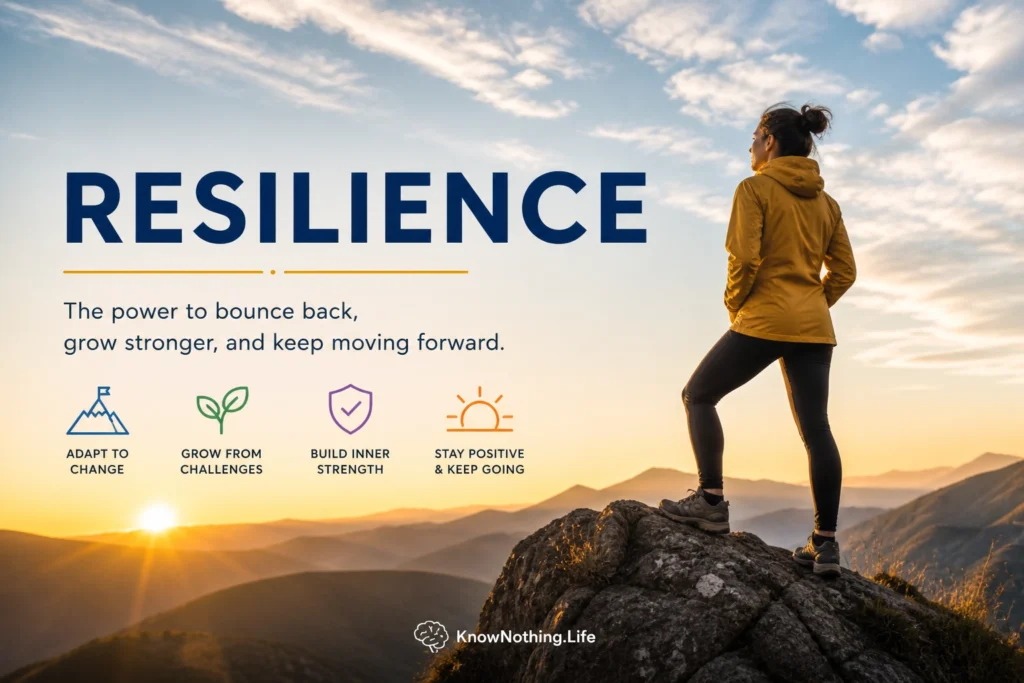
Resilience is the capacity to adapt, recover, and grow in the face of adversity. It is not merely the ability to endure hardship, but the dynamic process through which individuals maintain or regain psychological well-being despite challenges. From personal loss and trauma to chronic stress and uncertainty, resilience plays a crucial role in how people navigate the complexities of life. In recent decades, resilience has become a central concept in psychology, shifting the focus from vulnerability and pathology to strength, adaptation, and recovery.
The scientific study of resilience emerged from research on children who thrived despite adverse conditions. Early work by Norman Garmezy and Michael Rutter highlighted the importance of protective factors—conditions that buffer individuals against risk. These findings challenged the assumption that exposure to adversity inevitably leads to dysfunction. Instead, they suggested that resilience is not an exceptional trait possessed by a few, but a common capacity that can be nurtured and developed. As Rutter noted, “Resilience is not a single trait, but a complex interplay of factors.”
Today, resilience is understood as a multidimensional construct influenced by biological, psychological, and social factors. It involves cognitive flexibility, emotional regulation, social support, and a sense of meaning. This article explores the foundations of resilience, the mechanisms that support it, and the ways it can be cultivated, offering a comprehensive perspective on one of the most vital aspects of human functioning.
The Foundations of Resilience
Resilience is not a fixed trait but a process that unfolds over time. Early research emphasized the role of individual characteristics, such as intelligence, temperament, and self-efficacy, in promoting resilience. However, subsequent studies have highlighted the importance of environmental factors, including supportive relationships, stable communities, and access to resources. This shift reflects a broader understanding of resilience as an interaction between the individual and their context.
The work of Ann Masten has been particularly influential in reframing resilience as “ordinary magic.” In her research, Masten argued that resilience arises from common human adaptive systems, such as attachment, problem-solving skills, and self-regulation. These systems are present in most individuals and can be strengthened through supportive environments. By emphasizing the ordinary nature of resilience, Masten challenged the notion that it is a rare or extraordinary quality.
Developmental perspectives further underscore the importance of early experiences in shaping resilience. Secure attachment relationships, for example, provide a foundation for emotional security and exploration. Children who experience consistent care and support are more likely to develop the skills needed to cope with stress and adversity. These findings highlight the importance of nurturing environments in fostering resilience across the lifespan.
Cognitive and Emotional Mechanisms
At the core of resilience are cognitive and emotional processes that enable individuals to interpret and respond to adversity effectively. Cognitive flexibility—the ability to adapt one’s thinking in response to changing circumstances—is a key component. Resilient individuals are more likely to reframe challenges as opportunities for growth, rather than as insurmountable obstacles. This capacity for positive reappraisal can reduce the emotional impact of stress and promote adaptive coping.
The concept of learned optimism, developed by Martin Seligman, provides insight into how cognitive patterns influence resilience. In Learned Optimism (1991), Seligman argued that individuals who attribute setbacks to temporary and specific causes are more likely to recover and persist. He famously noted, “Pessimists give up more easily and get depressed more often. Optimists bounce back.” This perspective highlights the role of explanatory style in shaping responses to adversity.
Emotional regulation is equally important. Resilient individuals are able to manage intense emotions without becoming overwhelmed. This does not mean suppressing negative feelings, but rather acknowledging and processing them in a constructive way. Techniques such as mindfulness and cognitive restructuring can enhance emotional regulation, allowing individuals to maintain balance even in difficult situations. Together, cognitive and emotional mechanisms form the psychological foundation of resilience.
Social Support and Relationships
Resilience is deeply embedded in social contexts, with relationships playing a central role in how individuals cope with adversity. Supportive connections provide emotional comfort, practical assistance, and a sense of belonging, all of which contribute to resilience. Research consistently shows that individuals with strong social networks are better able to withstand stress and recover from setbacks.
The importance of relationships is evident across the lifespan. In childhood, caregivers provide the stability and guidance needed to navigate challenges. In adulthood, friendships, family ties, and community connections continue to serve as sources of support. As Julianne Holt-Lunstad has demonstrated in her research on social connection, strong relationships are associated not only with psychological well-being but also with physical health and longevity.
Social support also facilitates resilience by promoting adaptive coping strategies. Sharing experiences with others can provide new perspectives, reduce feelings of isolation, and enhance problem-solving. In this way, resilience is not solely an individual achievement but a collective process, shaped by the quality of social interactions and the availability of support.
Meaning, Purpose, and Growth
Beyond coping with adversity, resilience often involves a process of growth and transformation. Individuals who experience significant challenges may emerge with a deeper sense of meaning and purpose, a phenomenon known as post-traumatic growth. This concept reflects the idea that adversity can lead to positive psychological changes, such as increased appreciation for life, stronger relationships, and a greater sense of personal strength.
The work of Viktor Frankl provides a powerful illustration of the role of meaning in resilience. In Man’s Search for Meaning (1946), Frankl argued that the ability to find purpose in suffering is a key determinant of psychological survival. Drawing on his experiences in concentration camps, he wrote, “When we are no longer able to change a situation, we are challenged to change ourselves.” This insight highlights the transformative potential of meaning in the face of adversity.
Modern research supports the idea that purpose enhances resilience. Individuals who have a clear sense of direction and values are more likely to persevere through difficult circumstances. Meaning provides a framework for understanding adversity, allowing individuals to integrate difficult experiences into a coherent life narrative. By fostering purpose, resilience extends beyond survival to encompass growth and fulfillment.
Biological and Neuropsychological Factors
Resilience is also influenced by biological and neuropsychological processes. The body’s stress response system, including the hypothalamic-pituitary-adrenal (HPA) axis, plays a critical role in how individuals respond to adversity. While acute stress can be adaptive, chronic stress can have detrimental effects on both physical and mental health. Resilient individuals tend to exhibit more efficient regulation of stress responses, allowing them to recover more quickly from challenging situations.
Neuroscientific research has identified brain regions involved in resilience, including the prefrontal cortex and the amygdala. The prefrontal cortex is associated with executive functions such as decision-making and emotional regulation, while the amygdala plays a key role in processing fear and threat. Effective communication between these regions supports adaptive responses to stress, enabling individuals to regulate emotions and maintain perspective.
The concept of neuroplasticity—the brain’s ability to change in response to experience—offers further insight into resilience. Experiences, behaviors, and practices can shape neural pathways, influencing how individuals respond to future challenges. Interventions such as mindfulness, exercise, and social engagement can enhance neuroplasticity, contributing to greater resilience over time. These findings underscore the interplay between biology and experience in shaping adaptive capacity.
Cultivating Resilience
While resilience has natural foundations, it can also be intentionally developed. Psychological interventions often focus on building skills such as problem-solving, emotional regulation, and cognitive flexibility. Practices such as mindfulness meditation have been shown to enhance awareness and reduce stress, while cognitive-behavioral techniques can help individuals reframe negative thoughts and develop more adaptive perspectives.
Education and community programs also play a vital role in fostering resilience. By creating environments that support learning, connection, and growth, these initiatives help individuals build the resources needed to cope with adversity. Programs that emphasize social-emotional learning, for example, equip individuals with skills that promote resilience across different contexts.
Importantly, cultivating resilience does not mean eliminating hardship. Instead, it involves developing the capacity to navigate challenges effectively. As Ann Masten emphasized, resilience arises from ordinary processes that can be strengthened through intentional effort and supportive environments. By focusing on these processes, individuals and communities can enhance their ability to adapt and thrive.
Conclusion
Resilience is a multifaceted and dynamic process that reflects the human capacity to adapt, recover, and grow in the face of adversity. Rooted in cognitive, emotional, social, and biological systems, it represents a fundamental aspect of human functioning. Research by scholars such as Ann Masten, Martin Seligman, and Viktor Frankl has illuminated the mechanisms that support resilience, offering valuable insights into how individuals can navigate life’s challenges.
The study of resilience shifts the focus from vulnerability to strength, emphasizing the potential for adaptation and growth. By understanding and cultivating resilience, individuals can enhance their ability to cope with adversity and build meaningful, fulfilling lives. As research continues to evolve, resilience remains a powerful reminder of the enduring capacity of the human spirit to persevere and thrive.