
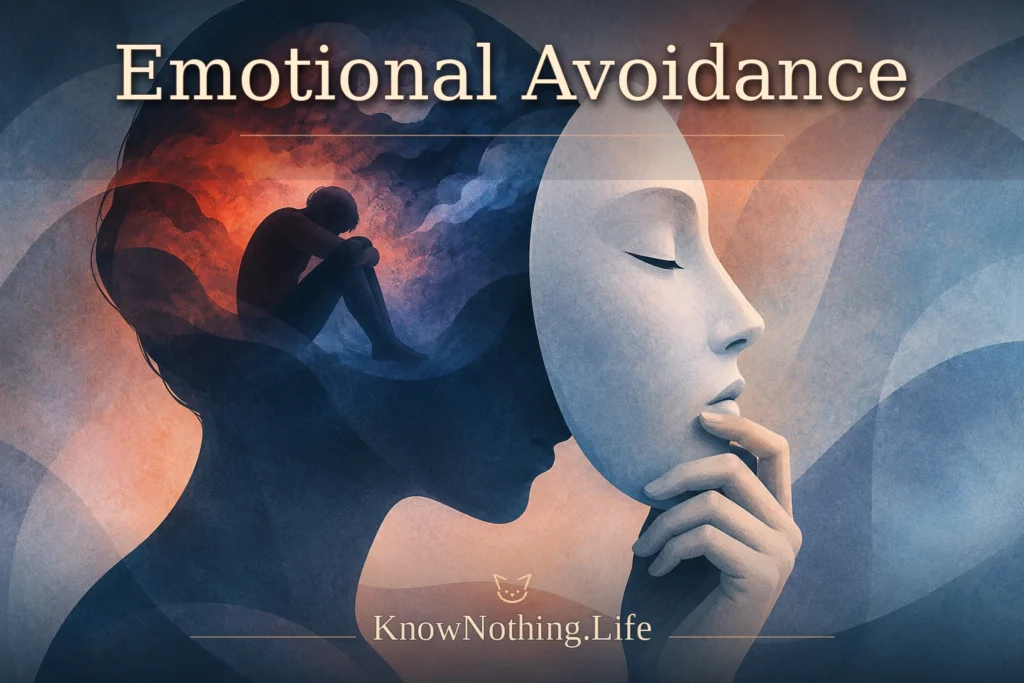
Why do people sometimes go to extraordinary lengths to avoid feelings they know are part of life? Someone may refuse to discuss a painful experience, distract themselves whenever anxiety appears, or remain constantly busy to avoid confronting loneliness. Others withdraw from relationships when emotional vulnerability becomes uncomfortable, suppress anger to prevent conflict, or use entertainment, alcohol, or excessive work to escape unwanted thoughts. Although these behaviors can appear unrelated, they may share a psychological motivation: the desire to avoid experiencing difficult emotions.
Emotional avoidance is a common human response to psychological discomfort, but its consequences depend on how frequently and rigidly it occurs. Avoiding an overwhelming feeling can provide temporary relief, yet persistent avoidance may prevent individuals from processing experiences, resolving problems, and developing confidence in their ability to tolerate distress. Psychological research suggests that attempts to control internal experiences can sometimes intensify the very emotions people are trying to escape. Understanding emotional avoidance therefore reveals an important paradox of human psychology: efforts to eliminate emotional pain may unintentionally contribute to its persistence.
What Is Emotional Avoidance?
Emotional avoidance refers to efforts to escape, suppress, minimize, or distance oneself from uncomfortable emotional experiences. These experiences may include sadness, fear, shame, guilt, anger, loneliness, embarrassment, or vulnerability. Avoidance can occur through behavior, such as refusing difficult conversations, or through mental strategies, such as distracting oneself whenever distressing thoughts appear. Some individuals deliberately recognize what they are avoiding, while others develop habitual patterns that operate with little conscious awareness. The defining characteristic is not the emotion itself but the person’s attempt to prevent or control its experience.
Psychologist Steven C. Hayes and colleagues developed a closely related concept known as experiential avoidance. In their influential 1996 paper, Experiential Avoidance and Behavioral Disorders: A Functional Dimensional Approach to Diagnosis and Treatment, published in the Journal of Consulting and Clinical Psychology, they described avoidance as involving an unwillingness to remain in contact with unwanted private experiences, including thoughts, emotions, memories, and bodily sensations. Their broader framework proposed that rigid attempts to control these experiences could contribute to psychological difficulties across diagnostic categories. Emotional avoidance is therefore not necessarily a disorder, but a process that may become problematic when escaping discomfort consistently takes priority over meaningful action.
Why Avoiding Emotions Feels So Effective
Emotional avoidance often persists because it works in the short term. Someone experiencing social anxiety may decline an invitation and immediately feel relieved. A person afraid of rejection may avoid expressing romantic interest, eliminating the immediate possibility of embarrassment. Someone struggling with grief may remain occupied with work to prevent painful memories from emerging. In each situation, avoidance reduces discomfort quickly, making the behavior more likely to occur again. The temporary improvement reinforces the belief that avoiding the emotion is an effective way to maintain psychological stability.
Behavioral psychology explains this process through negative reinforcement, in which behavior becomes more likely because it removes or reduces an unpleasant experience. The immediate consequences of avoidance are often rewarding, while its longer-term costs develop gradually. Someone who repeatedly avoids social situations may lose opportunities to discover that they can handle uncertainty or rejection. A person who suppresses grief may postpone opportunities to acknowledge a significant loss. Emotional avoidance becomes self-reinforcing because individuals repeatedly experience the relief it provides without necessarily recognizing the opportunities and emotional learning they sacrifice.
The Paradox of Emotional Suppression
One of the most fascinating discoveries in psychology concerns the difficulty of deliberately suppressing unwanted thoughts. In their landmark 1987 study, Paradoxical Effects of Thought Suppression, psychologist Daniel Wegner and colleagues instructed participants to avoid thinking about a white bear. The researchers found that attempts to suppress the thought could produce subsequent increases in its occurrence. Wegner later developed the theory of ironic mental processes, proposing that efforts to control thoughts involve monitoring mechanisms that can inadvertently keep the unwanted material accessible.
Although suppressing a thought is not identical to suppressing an emotion, the research illustrates why internal control can become counterproductive. Someone repeatedly instructing themselves not to feel anxious may become unusually attentive to signs of anxiety. Every physical sensation, intrusive thought, or moment of uncertainty becomes potential evidence that emotional control is failing. This heightened monitoring can increase psychological preoccupation. Importantly, suppression does not always produce a rebound effect, and temporary distraction can sometimes be useful. The problem emerges when controlling unwanted experiences becomes a rigid, continuous struggle that consumes attention and interferes with ordinary functioning.
How Emotional Avoidance Develops
Emotional avoidance can develop through learning, temperament, family relationships, and previous experiences with distress. Some children grow up in environments where sadness is dismissed, anger is punished, or vulnerability is treated as weakness. Others learn that expressing emotional needs produces criticism, conflict, or rejection. Over time, individuals may develop the expectation that uncomfortable emotions are dangerous, unacceptable, or likely to overwhelm them. Suppression can then become an automatic form of self-protection rather than a deliberate choice.
Psychologists Kim Gratz and Lizabeth Roemer investigated difficulties in emotional functioning in their 2004 paper, Multidimensional Assessment of Emotion Regulation and Dysregulation. Their research emphasized that effective emotion regulation involves more than controlling emotional intensity. It also requires emotional awareness, understanding, acceptance, and the ability to pursue meaningful goals while experiencing distress. Their Difficulties in Emotion Regulation Scale helped establish a multidimensional framework for studying these capacities. From this perspective, emotional avoidance may develop when people have limited opportunities to learn that uncomfortable feelings can be experienced without requiring immediate escape or suppression.
Emotional Avoidance, Anxiety, and Depression
Avoidance is especially important in psychological theories of anxiety. When someone fears a particular experience, avoiding it prevents immediate discomfort but may also prevent the development of new expectations. A person with social anxiety who repeatedly avoids conversations may never discover that awkward moments are usually manageable. Similarly, someone experiencing panic symptoms may begin avoiding places associated with previous episodes, gradually narrowing their activities. Cognitive-behavioral theories emphasize that avoidance can help maintain anxiety by preventing individuals from learning that feared outcomes are less likely, less catastrophic, or more manageable than anticipated.
Research also connects experiential avoidance with broader psychological difficulties. In their 2010 meta-analysis, Emotion-Regulation Strategies Across Psychopathology, Amelia Aldao, Susan Nolen-Hoeksema, and Susanne Schweizer examined relationships between emotion-regulation strategies and symptoms involving anxiety, depression, eating disorders, and substance-related disorders. Avoidance, rumination, and suppression were generally associated with greater psychological symptoms, while strategies such as acceptance and reappraisal showed more favorable associations. These findings do not establish that avoidance causes every disorder. Psychological distress may also increase avoidance, creating reciprocal relationships that vary across individuals and circumstances.
Emotional Avoidance in Trauma and Painful Memories
Emotional avoidance can serve a particularly understandable function following traumatic experiences. Memories, reminders, or physical sensations associated with frightening events may trigger intense distress, leading individuals to avoid situations that evoke those experiences. Temporary avoidance can help someone regain stability when emotions are overwhelming. However, persistent avoidance may interfere with ordinary activities and make reminders of the experience increasingly difficult to tolerate. Avoidance of trauma-related memories, feelings, and external reminders is also recognized as an important symptom dimension in post-traumatic stress disorder.
Clinical research has investigated how carefully structured exposure-based therapies can help individuals develop new responses to feared experiences. Michelle Craske and colleagues explained in their 2014 paper, Maximizing Exposure Therapy: An Inhibitory Learning Approach, that therapeutic exposure can support new learning about feared stimuli and expected outcomes. The goal is not necessarily to eliminate every uncomfortable emotion, but to reduce fear-based restrictions on functioning. Trauma-related experiences require particular care because confronting distressing memories without appropriate preparation or support can be overwhelming. Psychological treatment should therefore be adapted to the individual’s needs, safety, and circumstances rather than encouraging indiscriminate confrontation with painful experiences.
Emotional Avoidance and Relationships
Relationships frequently expose individuals to vulnerability, uncertainty, disappointment, and the possibility of rejection. Emotional avoidance may therefore appear as withdrawal during conflict, reluctance to discuss personal needs, difficulty expressing affection, or the tendency to minimize emotional concerns. Someone who fears abandonment may conceal insecurity rather than discuss it, while another person may respond to disagreement by becoming emotionally distant. These patterns can initially feel protective because avoiding uncomfortable conversations reduces immediate tension. However, persistent withdrawal may leave important problems unresolved and create misunderstandings between partners.
Psychologists James Gross and Oliver John examined differences in emotion regulation in their 2003 study, Individual Differences in Two Emotion Regulation Processes: Implications for Affect, Relationships, and Well-Being. Their research found that habitual expressive suppression was associated with less favorable patterns of emotional experience, interpersonal functioning, and well-being than cognitive reappraisal. Expressive suppression involves inhibiting the outward expression of emotions, which is not necessarily the same as refusing to experience them internally. Nevertheless, the findings demonstrate that consistently concealing feelings can have interpersonal consequences. Healthy relationships often require the capacity to recognize emotions privately and communicate them appropriately, rather than treating emotional openness as a threat to independence.
The Difference Between Emotional Avoidance and Healthy Boundaries
Not every decision to disengage from an emotional situation represents unhealthy avoidance. People sometimes need distance from conflict, overwhelming demands, or harmful interactions. Choosing not to respond immediately during an argument may prevent impulsive behavior and allow time for reflection. Similarly, temporarily redirecting attention after an exhausting experience can support psychological recovery. The difference lies in whether disengagement is flexible and purposeful or becomes a persistent strategy for escaping emotional discomfort regardless of its consequences.
Psychologists George Bonanno and Charles Burton explored this distinction in their 2013 paper, Regulatory Flexibility: An Individual Differences Perspective on Coping and Emotion Regulation. They proposed that effective regulation depends on sensitivity to context, access to different strategies, and the ability to evaluate whether a response is working. Sometimes emotional expression is helpful; at other times, restraint is more appropriate. Healthy regulation therefore does not require constant emotional disclosure or uninterrupted attention to every feeling. Instead, it involves selecting responses that fit the situation while remaining capable of acknowledging and addressing emotions when necessary.
Distraction, Busyness, and Modern Emotional Avoidance
Modern life offers numerous opportunities to avoid uncomfortable internal experiences. Smartphones, social media, streaming entertainment, online shopping, and continuous communication can fill nearly every moment of silence. These activities are not inherently unhealthy, and many provide genuine relaxation, connection, and enjoyment. Yet they can also function as emotional escape mechanisms when individuals use them compulsively to avoid loneliness, uncertainty, or self-reflection. Someone may repeatedly check notifications whenever sadness emerges or maintain an exhausting schedule because quiet moments allow unresolved concerns to surface.
A useful question is not simply how much time someone spends engaging in an activity, but what psychological function the activity serves. Reading a novel for enjoyment differs from feeling unable to tolerate being alone with one’s thoughts. Exercising to improve health differs from exercising compulsively whenever guilt or anxiety appears. In their 2006 study, Experiential Avoidance as a Generalized Psychological Vulnerability, Todd Kashdan, Velma Barrios, John Forsyth, and Michael Steger found associations between greater experiential avoidance and several indicators of psychological distress and reduced well-being. Their findings support examining avoidance as a broad psychological process, although the same outward behavior may serve healthy or unhealthy functions depending on context.
Acceptance and Commitment Therapy
One influential approach to emotional avoidance is acceptance and commitment therapy, commonly abbreviated ACT. Developed through the work of Steven Hayes, Kirk Strosahl, and Kelly Wilson, ACT emphasizes psychological flexibility: the capacity to remain open to internal experiences while behaving in ways consistent with personally meaningful values. The approach does not require individuals to enjoy sadness, anxiety, or fear. Instead, it challenges the assumption that uncomfortable emotions must disappear before meaningful action becomes possible. Someone who feels anxious about an important conversation may still choose to participate because honesty and connection matter more than temporary emotional comfort.
ACT includes processes such as acceptance, cognitive defusion, present-moment awareness, values clarification, and committed action. Cognitive defusion involves recognizing thoughts as mental events rather than automatically treating them as commands or objective facts. A person thinking, “I cannot handle rejection,” may learn to notice that statement without accepting it as a complete description of their abilities. In a 2012 meta-analysis, Michael Levin and colleagues examined 66 laboratory-based studies investigating processes associated with the psychological flexibility model. Their findings provided experimental support for several treatment components, while leaving important questions about how these processes interact in everyday clinical practice. Acceptance is not resignation; it is a willingness to experience discomfort without allowing avoidance to dictate every decision.
Practical Ways to Reduce Emotional Avoidance
Developing a healthier relationship with emotions begins with learning to recognize them. Individuals can practice identifying what they feel, the circumstances surrounding the emotion, and the actions they feel compelled to take. Someone experiencing embarrassment might notice an immediate urge to withdraw, while a person feeling sadness may recognize a desire to distract themselves. Naming the emotion can create an opportunity to respond deliberately rather than automatically. The purpose is not to analyze every feeling indefinitely, but to recognize when an avoidance pattern is developing. Emotional awareness becomes particularly useful when paired with curiosity rather than self-criticism.
Another strategy involves gradually increasing tolerance for manageable emotional discomfort. Instead of abandoning every situation that produces anxiety, a person might remain engaged long enough to discover that the feeling can fluctuate without requiring immediate escape. Journaling, mindfulness practices, supportive conversations, and cognitive reappraisal may also help individuals approach emotions with greater flexibility. However, no single technique is appropriate for everyone. People facing severe distress, trauma-related symptoms, or overwhelming circumstances may benefit from professional guidance. The aim is not to maximize discomfort or force emotional exposure, but to expand the range of situations and feelings a person can navigate without becoming controlled by avoidance.
When Emotional Avoidance Becomes a Serious Problem
Emotional avoidance may warrant greater attention when it consistently interferes with relationships, responsibilities, decision-making, or psychological well-being. Warning signs can include repeatedly abandoning meaningful opportunities because of fear, using substances to escape distress, remaining unable to discuss important emotional concerns, or experiencing persistent anxiety whenever uncomfortable thoughts arise. Avoidance may also become problematic when individuals increasingly organize their lives around preventing particular feelings rather than pursuing goals they consider important. Emotional avoidance itself is not a distinct psychiatric diagnosis, but severe or rigid patterns may occur alongside anxiety disorders, depression, trauma-related conditions, and other difficulties.
Psychological treatment can help individuals understand the functions their avoidance behaviors serve and develop alternatives appropriate to their circumstances. Cognitive-behavioral therapy, ACT, and other evidence-based approaches may support emotional awareness, flexible thinking, and gradual engagement with previously avoided experiences. Importantly, effective treatment does not require uncovering one hidden cause behind every behavior. Emotional avoidance may emerge through multiple influences, including previous learning, personality, environmental stress, and the consequences of repeated coping strategies. Understanding these influences allows people to replace rigid patterns with responses that are both emotionally manageable and consistent with their personal values.
Final Thoughts on Emotional Avoidance
Emotional avoidance reveals a fundamental tension within human psychology. People naturally seek comfort and attempt to protect themselves from pain, yet the strategies that provide immediate relief can sometimes interfere with long-term well-being. Avoiding an uncomfortable conversation may prevent temporary anxiety while allowing relationship problems to deepen. Suppressing unwanted thoughts may increase psychological preoccupation, while withdrawing from challenging experiences can reduce opportunities for confidence, learning, and personal growth. Research on experiential avoidance, emotional regulation, and psychological flexibility demonstrates that the relationship between feelings and behavior is more important than the simple presence or absence of discomfort.
The deeper lesson is that emotional health does not require eliminating sadness, anger, fear, or vulnerability. These experiences are part of human psychological life, and their presence does not necessarily indicate weakness or dysfunction. What matters is the capacity to acknowledge emotions, understand their significance, and decide how to respond without becoming trapped in rigid attempts to escape them. Healthy emotional regulation involves knowing when to engage, when to step away, and when to seek support. Learning to experience difficult feelings without allowing them to determine every action can create greater psychological freedom, making room for meaningful relationships, personal development, and a more flexible relationship with the inevitable discomforts of being human.