Visual Perception

Visual Perception: Constructing the Seen World

Visual perception is the process by which the brain interprets light-based information from the eyes and transforms it into meaningful representations of the environment. While vision often feels immediate and effortless, it is the result of complex computations that occur…
Perception

Perception: Interpreting Reality Through the Mind

Perception is the cognitive process through which sensory information is organized, interpreted, and transformed into meaningful experience. While sensation provides the raw data—light entering the eyes, sound waves striking the ears, chemical signals activating taste and smell receptors—perception is what…

Selective Attention

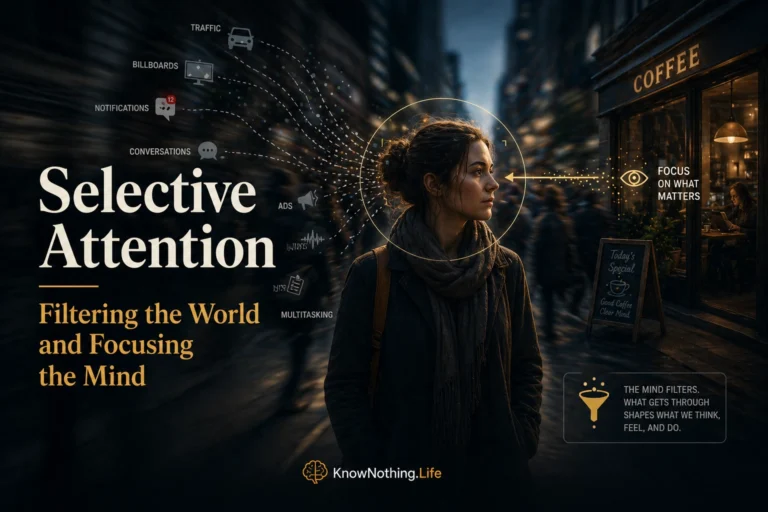
Selective Attention: Filtering the World and Focusing the Mind

Selective attention is the cognitive process that allows individuals to focus on specific stimuli while ignoring others, enabling efficient interaction with a complex and information-rich environment. At any given moment, the senses are bombarded with far more input than the…

Attention

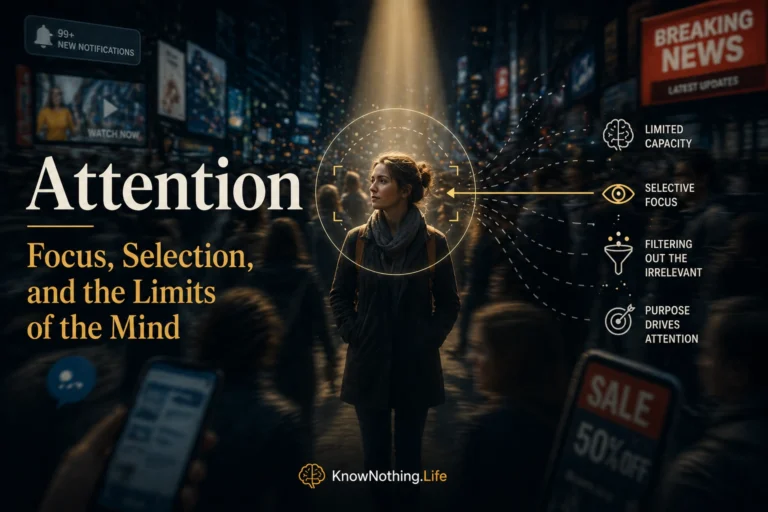
Attention: Focus, Selection, and the Limits of the Mind

Attention is the cognitive process that allows us to selectively concentrate on certain aspects of our environment while ignoring others. In a world saturated with sensory information, attention acts as a filter, prioritizing what is relevant to our goals, needs,…

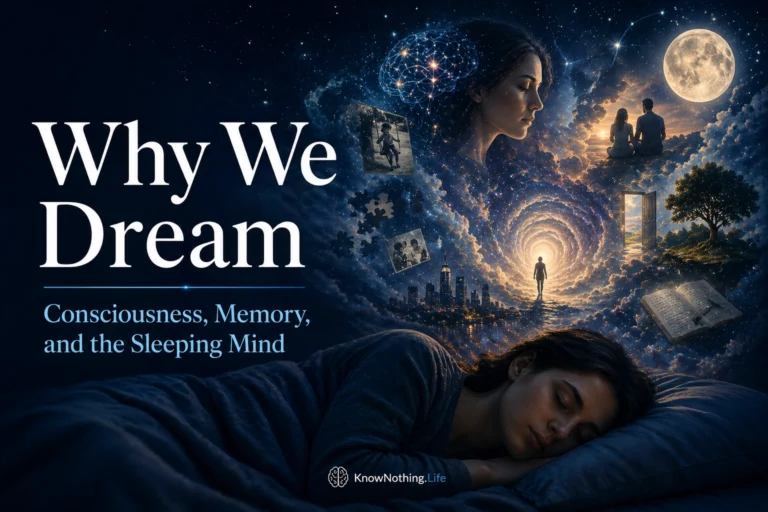
Why We Dream

Why We Dream: Consciousness, Memory, and the Sleeping Mind

Dreaming is one of the most universal yet enigmatic features of human experience. Across cultures and historical periods, dreams have been interpreted as divine messages, psychological signals, neurological byproducts, and even glimpses into alternate realities. Despite centuries of speculation and…

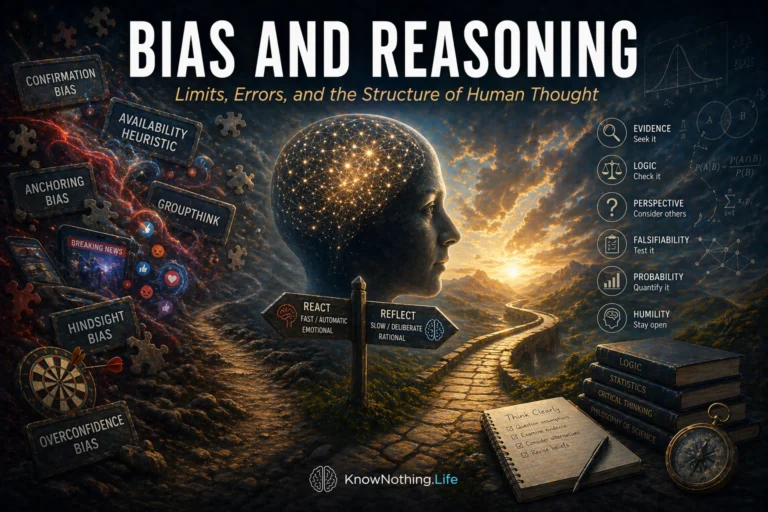
Bias and Reasoning

Bias and Reasoning: Limits, Errors, and the Structure of Human Thought

Human reasoning is often celebrated as the foundation of knowledge, decision-making, and progress. It allows individuals to analyze information, draw conclusions, and navigate complex situations. Yet reasoning is not a flawless process. It is shaped by biases—systematic tendencies that influence…

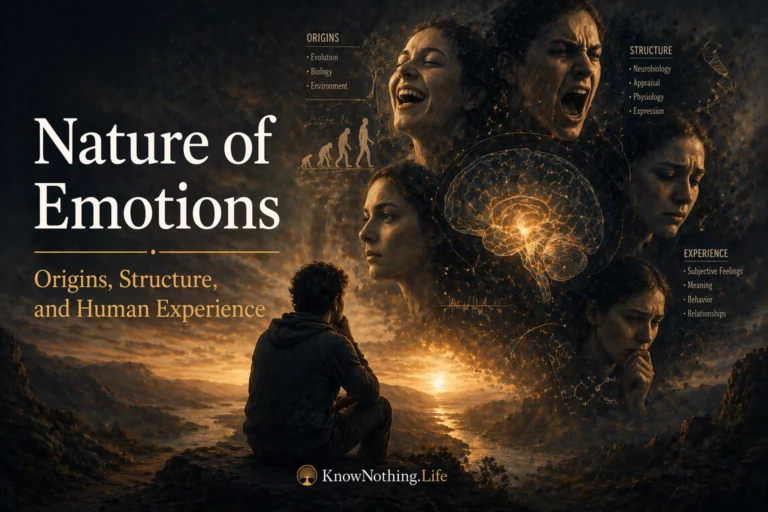
Nature of Emotions

Nature of Emotions: Origins, Structure, and Human Experience

Emotions are among the most immediate and influential features of human life. They shape how individuals perceive the world, interpret events, and respond to challenges and opportunities. From the intensity of fear to the warmth of affection, emotions provide a…

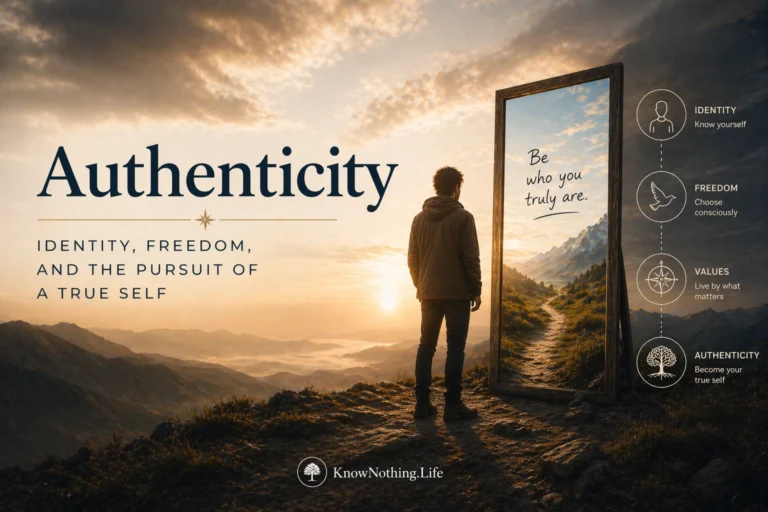
Authenticity

Authenticity: Identity, Freedom, and the Pursuit of a True Self

Authenticity is a central concept in philosophy and psychology, referring to the alignment between one’s inner self and outward actions. To live authentically is to act in ways that reflect one’s genuine beliefs, values, and experiences rather than conforming uncritically…