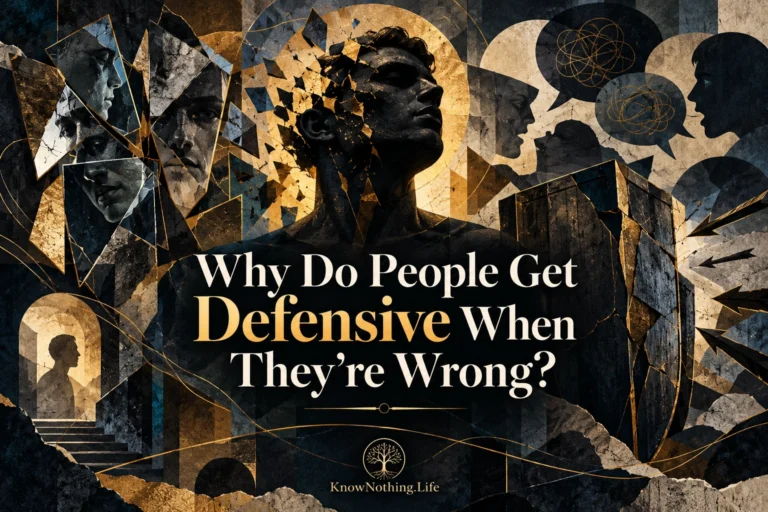
The shadow self is one of the most powerful and unsettling ideas in depth psychology. It refers to the hidden, rejected, disowned, or unconscious parts of the personality—the traits, desires, fears, instincts, memories, and potentials that a person does not fully recognize as their own. The concept is most closely associated with Swiss psychiatrist Carl Gustav Jung, who developed it as part of his broader theory of the unconscious. In Aion, Jung wrote, “Everyone carries a shadow,” a concise statement that captures the universality of the idea: the shadow is not a rare defect or a sign of moral failure, but a normal feature of human psychological life.
To understand the shadow self, it is important to avoid reducing it to “evil” or “darkness” in a simplistic sense. The shadow may contain aggression, envy, selfishness, resentment, shame, or cruelty, but it may also contain vitality, creativity, sexuality, courage, independence, ambition, humor, and emotional honesty. Much of what becomes shadow does so because it was judged unacceptable by family, culture, religion, school, or the person’s own conscious identity. The gentle person may repress anger; the dutiful person may repress desire; the intellectual person may repress vulnerability; the agreeable person may bury assertiveness. The shadow is therefore not merely what is bad in us. It is what has been exiled from conscious ownership.
Carl Jung and the Origins of the Shadow
Jung introduced the shadow as one of the major archetypal structures of the psyche, alongside the persona, anima and animus, and the Self. In Two Essays on Analytical Psychology, he described the unconscious not as a passive storage room but as a living psychological reality that influences thought, behavior, dreams, relationships, and spiritual development. The shadow forms in relation to the ego, the conscious sense of “I,” and the persona, the social mask a person uses to adapt to the world. The more rigidly someone identifies with a preferred image of themselves, the more forcefully the opposite qualities may be pushed into shadow.
In Psychology and Religion, Jung wrote that “the shadow is a moral problem that challenges the whole ego-personality.” This is a crucial point. Shadow work is not simply a matter of discovering interesting hidden traits; it requires moral courage because it confronts the ego with facts it would rather deny. A person may discover that their kindness is mixed with a need for control, that their humility hides secret superiority, that their moral outrage contains envy, or that their helpfulness masks resentment. Jung believed that genuine psychological growth requires the difficult movement from self-image toward self-knowledge.
The Shadow and the Persona
The shadow cannot be understood without the persona. The persona is the face we present to others: professional, polite, competent, spiritual, attractive, strong, intelligent, harmless, or respectable. It is not false in every sense; social life requires roles, manners, and adaptation. The problem begins when a person mistakes the persona for the whole self. When this happens, everything that contradicts the chosen identity is denied, and the shadow grows more powerful by being ignored.
For example, someone who builds an identity around being endlessly generous may repress their own needs until bitterness leaks out through passive aggression. Someone who sees themselves as rational may deny emotional dependency and then become controlled by it unconsciously. Someone who identifies as peaceful may be unable to admit anger, causing that anger to emerge as sarcasm, avoidance, moral judgment, or sudden outbursts. The shadow often appears indirectly because it cannot appear openly. It speaks through slips, moods, projections, fantasies, dreams, compulsions, and disproportionate reactions.
Projection and the Shadow in Relationships
One of Jung’s most important insights was that the shadow is often first encountered through projection. Projection occurs when a person unconsciously attributes their own hidden qualities to someone else. The trait may genuinely exist in the other person, but the emotional intensity of the reaction often reveals that something personal is involved. In Aion, Jung observed that the shadow is commonly experienced as something outside oneself, because the ego resists recognizing it as part of its own nature.
This is why the people who irritate, fascinate, disgust, or obsess us can become mirrors of the unconscious. A person who cannot admit their own ambition may condemn ambition in others with unusual bitterness. Someone who represses sensuality may become preoccupied with policing it. A person who denies vulnerability may despise “weakness” in others. Projection does not mean every criticism is secretly self-criticism, but it does suggest that exaggerated emotional charge deserves examination. As Jung famously wrote in The Collected Works, “Everything that irritates us about others can lead us to an understanding of ourselves.”
The Shadow in Freud, Adler, and Psychoanalytic Thought
Although the shadow is specifically Jungian, related ideas appear throughout psychoanalysis. Sigmund Freud explored repression, unconscious wishes, and the conflict between instinctual drives and social demands. In The Ego and the Id, Freud argued that the ego is not “master in its own house,” meaning that conscious identity is shaped by forces it does not fully command. Freud’s unconscious is not identical to Jung’s shadow, but both thinkers challenged the comforting belief that people transparently know why they think, feel, and act as they do.
Alfred Adler, another major figure in depth psychology, also helps illuminate the shadow through his concepts of inferiority, compensation, and striving for significance. In Understanding Human Nature, Adler emphasized that people often develop personality strategies to overcome felt weakness or shame. From a shadow perspective, the person who overidentifies with superiority may hide deep insecurity, while the person who appears submissive may conceal a powerful will to dominate. Adler’s work reminds us that the hidden self is often organized around wounds, defenses, and compensations rather than isolated traits.
The Shadow in Literature, Myth, and Religion
The shadow is not only a psychological concept; it is visible across literature, mythology, and religious symbolism. Stories of doubles, monsters, demons, tricksters, devils, hidden rooms, cursed reflections, and forbidden desires dramatize the divided human psyche. Robert Louis Stevenson’s Strange Case of Dr Jekyll and Mr Hyde remains one of the clearest literary images of the shadow. Dr. Jekyll attempts to separate his respectable self from his forbidden impulses, only to discover that what is split off does not disappear—it becomes more autonomous and destructive.
Religious and mythic traditions often portray the shadow through encounters with temptation, wilderness, descent, exile, or the underworld. These symbolic journeys reflect an ancient insight: human beings cannot become whole by identifying only with purity, order, and light. The hero must face the dragon; the saint must face temptation; the seeker must descend before rising. Jung saw such images as expressions of archetypal psychology, not merely fictional inventions. The shadow appears wherever consciousness is forced to confront what it has rejected.
The Dangers of Denying the Shadow
A denied shadow does not remain harmless. When unconscious traits are not recognized, they tend to appear in distorted forms. Repressed anger may become chronic resentment. Repressed desire may become obsession. Repressed selfishness may disguise itself as righteousness. Repressed shame may become contempt. Because the person does not experience these forces as “mine,” they are more likely to act them out without reflection. This is one reason Jung warned that unconscious material becomes dangerous when it is not integrated into conscious life.
At the social level, shadow denial can become collective. Groups, nations, religions, ideologies, and movements often maintain a heroic self-image by projecting evil onto outsiders. Jung discussed this danger in writings such as The Undiscovered Self, where he warned that modern mass society can intensify unconscious identification and moral blindness. The collective shadow appears when groups refuse to acknowledge their own capacity for violence, domination, hypocrisy, or cruelty. The individual shadow says, “That is not me.” The collective shadow says, “That is not us.”
Shadow Work and Integration
Shadow work is the process of becoming conscious of disowned parts of the self and integrating them responsibly. Integration does not mean acting out every impulse or celebrating every dark tendency. It means recognizing that these forces belong to the psyche and must be understood rather than blindly denied. A person who integrates anger does not become violent; they may become more assertive, honest, and capable of boundaries. A person who integrates selfishness may become less secretly resentful and more openly able to state their needs. A person who integrates vulnerability may become stronger because they no longer need to maintain the illusion of invulnerability.
Practical shadow work can include dream analysis, journaling, psychotherapy, active imagination, honest feedback from trusted people, attention to emotional triggers, and careful reflection on envy, contempt, shame, and fascination. Jung’s method of active imagination, discussed in works such as The Red Book and The Transcendent Function, involved entering into dialogue with unconscious images rather than suppressing them. The goal is not self-condemnation but increased consciousness. Shadow work requires humility: the willingness to say, “This too is part of me, and I must learn how to relate to it wisely.”
The Shadow and Modern Psychology
Modern psychology does not always use Jung’s language, but many contemporary ideas overlap with shadow theory. Cognitive-behavioral psychology studies automatic thoughts and hidden assumptions. Psychodynamic therapy examines defenses, unconscious conflict, and relational patterns. Trauma-informed therapy explores dissociation, shame, emotional suppression, and parts of the self that were split off for survival. Internal Family Systems therapy, developed by Richard Schwartz, describes the psyche as composed of “parts,” some of which are exiled because they carry pain, fear, or unacceptable feeling. Though different in theory, this resembles the shadow in its attention to inner fragmentation and integration.
The shadow also relates to modern research on implicit bias, emotional regulation, personality, and self-deception. People often sincerely believe they are more fair, rational, generous, or objective than their behavior reveals. Psychologists such as Daniel Kahneman, in Thinking, Fast and Slow, have shown how much judgment occurs beneath conscious awareness. While Kahneman’s work is not Jungian, it supports a broader psychological truth: the conscious mind is not the whole mind. Human beings are shaped by hidden processes, and self-knowledge requires more than introspection alone.
Misunderstandings of the Shadow Self
The shadow is sometimes misunderstood in popular culture as a glamorous dark alter ego, a license for selfishness, or a mystical badge of depth. This misses Jung’s seriousness. Shadow work is not about becoming cruel, rebellious, mysterious, or emotionally indulgent. Nor is it about romanticizing destructive behavior. To “embrace the shadow” does not mean obeying it. It means bringing unconscious material into relationship with conscience, reflection, and responsibility.
Another misunderstanding is that the shadow contains only negative qualities. In many cases, the “golden shadow” contains positive capacities that were rejected because they threatened belonging. A child may learn that confidence is arrogance, creativity is impractical, sadness is weakness, or independence is disloyalty. Later in life, those lost qualities must be recovered. This is why shadow integration can feel not only painful but liberating. The person does not merely confront darkness; they reclaim energy that was locked away in repression.
Final Thoughts on the Shadow Self
The shadow self is one of the most enduring concepts in psychology because it names something people repeatedly discover in themselves: the gap between who they think they are and what actually moves within them. Jung’s great contribution was to insist that wholeness is not achieved by perfecting the persona, but by entering a more honest relationship with the unconscious. The shadow is uncomfortable because it challenges innocence, certainty, and self-image. Yet it is also necessary because no mature life can be built on denial.
To face the shadow is to accept a more complex vision of human nature. We are not only our ideals, values, achievements, and public virtues. We are also our fears, wounds, resentments, forbidden wishes, hidden strengths, and unrealized possibilities. The purpose of shadow work is not to become darker, but to become less divided. When the shadow is denied, it controls from below. When it is recognized, it can become a source of humility, depth, creativity, and moral awareness. As Jung wrote in Psychology and Alchemy, “One does not become enlightened by imagining figures of light, but by making the darkness conscious.”