Death and mortality stand as the most universal and inescapable features of human life. Every culture, philosophy, and religion has grappled with the reality that life is finite, and that each individual must confront the inevitability of death. Yet despite its certainty, death remains one of the most difficult aspects of existence to fully comprehend, shaping how individuals think about meaning, purpose, and the value of life itself.
Philosophers from Epicurus to Martin Heidegger have offered radically different interpretations of death’s significance. Some have sought to diminish its importance, arguing that it should not be feared, while others have emphasized its central role in defining human existence. These perspectives reveal that death is not merely a biological event but a profound philosophical problem that influences how life is understood and lived.
The Nature of Death
At its most basic level, death is the cessation of biological life, the point at which the processes that sustain an organism come to an end. However, from a philosophical standpoint, death raises deeper questions about existence, identity, and the nature of consciousness. What does it mean for a person to cease to exist? Is death simply the absence of experience, or does it have a more complex significance?
Epicurus famously argued that death is nothing to us, because all good and bad require sensation, and death is the absence of sensation. From this perspective, fearing death is irrational, as there is no subject to experience harm once death occurs. This view attempts to dissolve the fear of death by reframing it as a non-event from the standpoint of the individual.
However, critics of this position argue that it overlooks the broader implications of mortality. Even if death itself is not experienced, the knowledge of its inevitability can profoundly affect how individuals live. The anticipation of death, rather than the state of being dead, becomes the central concern, shaping attitudes toward time, value, and purpose.
Mortality and the Human Condition
Mortality is not simply a fact of life but a defining feature of the human condition. Unlike other animals, human beings are aware of their own finitude, capable of reflecting on the inevitability of death and its implications. This awareness introduces a unique dimension to human existence, influencing how individuals understand themselves and their place in the world.
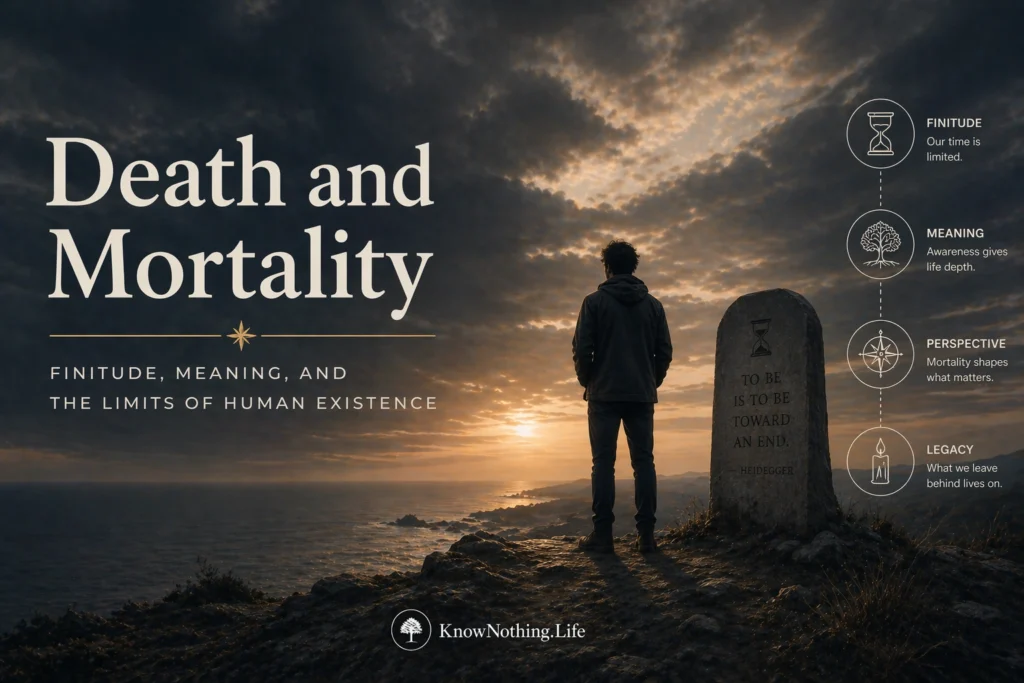
For Martin Heidegger, mortality is central to what it means to be human. He described human existence as “being-toward-death,” emphasizing that the awareness of death is not an abstract concept but a fundamental aspect of how individuals experience life. By recognizing their finitude, individuals can gain a deeper understanding of their existence and the choices they make.
This perspective highlights the role of mortality in shaping meaning. The fact that life is limited gives it urgency and significance, encouraging individuals to reflect on how they spend their time and what they value. Mortality, in this sense, is not merely a limitation but a condition that makes meaningful life possible.
Fear of Death and Existential Anxiety
The fear of death is one of the most pervasive and powerful human emotions. It can manifest in various forms, from a general sense of unease to intense anxiety or dread. This fear is not only about the unknown nature of death but also about the loss of life, identity, and connection.
Existential philosophers have explored the relationship between death and anxiety, arguing that the awareness of mortality gives rise to a unique form of existential unease. Søren Kierkegaard and Jean-Paul Sartre both emphasized that confronting death reveals the fragility of existence and the absence of ultimate certainty.
At the same time, some philosophical traditions suggest that fear of death can be transformed through reflection and acceptance. By understanding the nature of mortality, individuals may come to terms with its inevitability, reducing its power to generate anxiety. This process involves not eliminating fear entirely but integrating it into a broader understanding of life.
Death and the Meaning of Life
The relationship between death and the meaning of life is one of the most profound questions in philosophy. Does the inevitability of death undermine meaning, or does it enhance it? Different perspectives offer contrasting answers, reflecting the complexity of the issue.
Some argue that mortality gives life its meaning by providing a finite framework within which actions and experiences take place. Without limits, it is suggested, life might lack urgency and significance. The awareness that time is limited can motivate individuals to pursue goals, build relationships, and create value.
Others contend that death poses a challenge to meaning, particularly if it leads to the eventual erasure of all achievements and experiences. From this perspective, the temporary nature of life may seem to undermine its significance. Philosophers have responded to this concern in various ways, suggesting that meaning can be found in the process of living rather than in any permanent outcome.
Cultural and Religious Perspectives
Different cultures and religious traditions offer diverse interpretations of death and mortality, providing frameworks for understanding and coping with the end of life. These perspectives often address questions about what happens after death, the nature of the soul, and the possibility of an afterlife.
Many religious traditions view death as a transition rather than an end, offering the promise of continued existence in another form. This can provide comfort and a sense of continuity, shaping attitudes toward mortality and influencing ethical behavior. Rituals and practices surrounding death also play a role in helping individuals and communities process loss and maintain social bonds.
In contrast, secular perspectives often focus on the finality of death, emphasizing the importance of living meaningfully within the limits of a finite life. While these views may lack the reassurance of an afterlife, they can encourage a deeper engagement with the present and a greater appreciation of life’s fleeting nature.
Death, Identity, and Legacy
The inevitability of death raises questions about identity and legacy. What remains of an individual after death? Is it possible to achieve a form of continuity through memory, influence, or creation? These questions reflect the human desire to transcend mortality in some way.
Philosophers have explored the idea that individuals can leave a lasting impact through their actions, relationships, and contributions. This notion of legacy suggests that while physical existence may end, the effects of one’s life can persist. Achievements, ideas, and relationships can continue to influence others, providing a sense of continuity.
However, the concept of legacy also raises questions about its significance. If all things eventually fade, does legacy truly overcome mortality? This tension highlights the complexity of seeking permanence in a finite world, suggesting that the value of legacy may lie more in its immediate impact than in its long-term endurance.
The Ethics of Mortality
Mortality has important ethical implications, influencing how individuals approach life, relationships, and decision-making. The awareness of death can shape priorities, encouraging individuals to focus on what they consider most important.
Philosophers have argued that recognizing mortality can lead to a more ethical life, fostering empathy, responsibility, and a sense of shared humanity. The knowledge that all individuals face the same ultimate fate can promote compassion and solidarity, highlighting the interconnectedness of human experience.
At the same time, mortality can also raise ethical dilemmas, particularly in areas such as end-of-life care, euthanasia, and the allocation of resources. These issues require careful consideration of values, rights, and the meaning of dignity, reflecting the complex relationship between death and ethics.
Death in Contemporary Context
In modern society, attitudes toward death are shaped by technological, medical, and cultural developments. Advances in medicine have extended life expectancy and transformed the experience of dying, raising questions about the quality of life and the limits of intervention.
The increasing visibility of death in media and public discourse has also influenced how it is understood and discussed. While death remains a difficult topic, there is growing recognition of the need for open and honest conversations about mortality, particularly in the context of aging populations and healthcare.
Contemporary perspectives often emphasize the importance of preparing for death, both practically and emotionally. This includes considerations such as advance directives, palliative care, and the role of support systems. By addressing these issues, individuals and societies can approach mortality with greater awareness and compassion.
Final Thoughts
Death and mortality are central to the human experience, shaping how individuals understand life, meaning, and value. While the inevitability of death can be a source of fear and uncertainty, it also provides a framework for reflection and engagement.
Philosophical and cultural perspectives offer diverse ways of interpreting mortality, from acceptance and transcendence to confrontation and transformation. Each approach contributes to a richer understanding of what it means to live in the face of finitude.
Ultimately, the reality of death invites individuals to consider how they live. By acknowledging mortality and its implications, it is possible to approach life with greater intention, depth, and appreciation, finding meaning not despite death, but in relation to it.