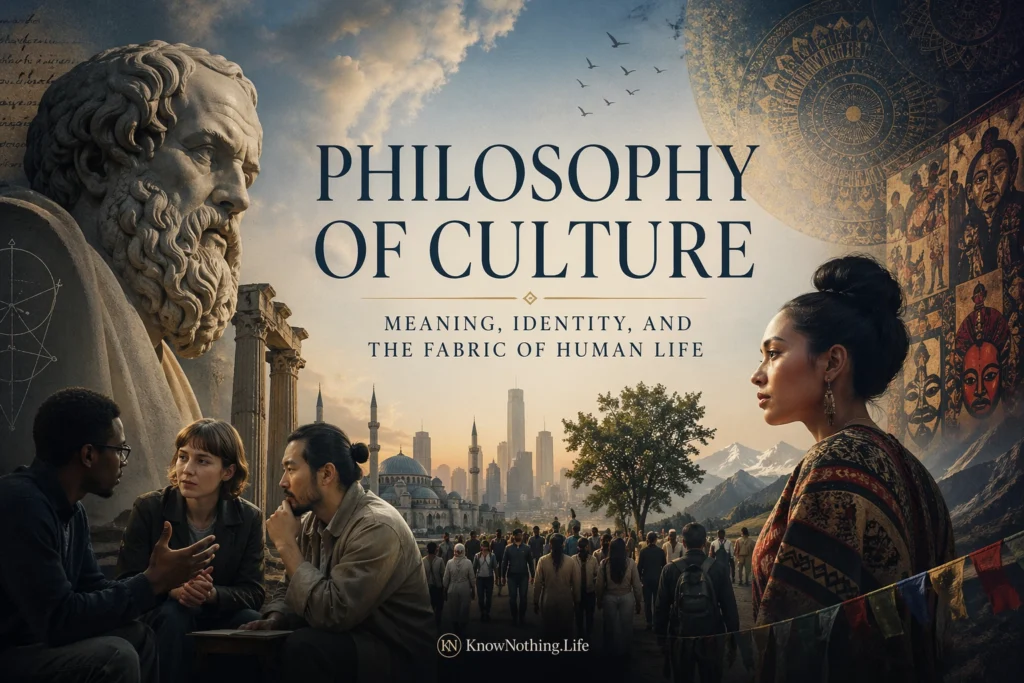
The philosophy of culture examines how human beings create, inhabit, and interpret the shared systems of meaning that shape their lives. Culture encompasses language, art, customs, beliefs, institutions, and practices—everything through which human experience becomes intelligible and socially embedded. Rather than viewing culture as a static backdrop, philosophical inquiry treats it as an active, evolving process that both reflects and forms human thought and behavior.
At its core, the philosophy of culture asks how meaning arises and how it is sustained across communities and generations. It explores the relationship between individual agency and collective norms, questioning whether culture constrains or enables human freedom. By analyzing culture, philosophers gain insight into the ways people understand themselves, relate to others, and construct the world they inhabit.
Historical Foundations of Cultural Thought
Philosophical reflection on culture has roots in early inquiries into human society and meaning. In classical antiquity, Aristotle examined the role of social institutions and shared practices in shaping human life. For Aristotle, humans are “political animals,” whose flourishing depends on participation in a community governed by norms and values. This insight highlights the importance of culture in forming ethical and social life.
In the modern period, thinkers such as Johann Gottfried Herder emphasized the uniqueness of different cultures, arguing that each community develops its own way of understanding the world. Herder’s perspective challenged universalist assumptions, suggesting that meaning is rooted in particular historical and linguistic contexts. This idea laid the groundwork for later approaches that emphasize cultural diversity and relativism.
The 19th and 20th centuries saw further development of cultural philosophy, with thinkers exploring the relationship between culture and modernity. These developments reflect a growing awareness of the complexity of cultural systems and their role in shaping human experience.
Culture and Meaning
A central concern of the philosophy of culture is the nature of meaning. Culture provides the frameworks through which individuals interpret their experiences, assigning significance to actions, objects, and events. Language plays a crucial role in this process, as it enables communication and the transmission of ideas across time and space.
Philosophers such as Ludwig Wittgenstein argued that meaning arises from use within specific contexts, emphasizing that language is embedded in forms of life. This perspective suggests that understanding meaning requires attention to the cultural practices in which language is employed. Meaning is not fixed but evolves with changes in social context.
The study of cultural meaning also raises questions about interpretation. Individuals may understand the same cultural symbols differently, depending on their perspectives and experiences. This variability highlights the dynamic nature of culture, where meaning is continually negotiated and redefined.
Culture, Identity, and Selfhood
Culture plays a fundamental role in shaping identity, influencing how individuals understand themselves and their place in the world. Through cultural practices and narratives, individuals acquire a sense of belonging and orientation. These frameworks provide categories and concepts through which identity is constructed and expressed.
Philosophers such as Charles Taylor have explored the relationship between culture and identity, emphasizing the importance of recognition. According to Taylor, individuals develop their identities in dialogue with others, relying on cultural frameworks that affirm or challenge their sense of self. This process highlights the social dimension of identity formation.
At the same time, culture can impose constraints on identity, shaping expectations and limiting possibilities. Norms related to gender, class, and ethnicity can influence how individuals are perceived and treated. The philosophy of culture examines these dynamics, exploring how identity is both enabled and restricted by cultural systems.
Power, Ideology, and Cultural Structures
Culture is not neutral; it is shaped by power relations that influence which meanings and practices are dominant. Philosophers analyze how cultural systems can reinforce inequalities by privileging certain perspectives while marginalizing others. This analysis reveals the role of ideology in maintaining social structures.
Karl Marx examined how culture reflects economic conditions, arguing that dominant ideas often serve the interests of those in power. His analysis highlights the connection between material conditions and cultural production, suggesting that culture can function as a tool of control.
Later thinkers, such as Michel Foucault, expanded this analysis by examining how power operates through discourse and knowledge. Foucault’s work shows how cultural norms shape what is considered true or acceptable, influencing behavior and perception. This perspective emphasizes the pervasive nature of power within cultural systems.
Cultural Relativism and Universalism
The diversity of cultural practices raises questions about the possibility of universal values. Cultural relativism suggests that beliefs and practices should be understood within their specific contexts, without imposing external standards. This perspective emphasizes respect for cultural differences and challenges the idea of a single, objective framework for evaluating human behavior.
However, relativism also raises concerns about moral judgment. If all cultural practices are context-dependent, can any be criticized as unjust or harmful? Philosophers debate how to balance respect for cultural diversity with the need to address issues such as human rights and social justice.
Universalist approaches argue that certain values, such as dignity and equality, transcend cultural differences. These perspectives seek to establish common principles that can guide ethical evaluation across contexts. The tension between relativism and universalism remains a central issue in the philosophy of culture, reflecting the complexity of navigating diversity and shared humanity.
Culture and Modernity
The philosophy of culture also examines the impact of modernity on cultural systems. Industrialization, globalization, and technological change have transformed how cultures are created and experienced. These developments raise questions about continuity, authenticity, and the preservation of cultural identity.
Philosophers such as Theodor Adorno and Max Horkheimer critiqued the “culture industry,” arguing that mass production and commercialization can standardize cultural products, reducing diversity and critical engagement. This critique highlights the tension between cultural creativity and economic forces.
At the same time, globalization has facilitated the exchange of cultural ideas, creating new forms of hybridity and interaction. While this can enrich cultural life, it also raises concerns about homogenization and the loss of local traditions. The philosophy of culture explores these dynamics, seeking to understand how culture evolves in a rapidly changing world.
Culture in Contemporary Thought
In contemporary philosophy, the study of culture is increasingly interdisciplinary, drawing on insights from anthropology, sociology, and media studies. This integration reflects the complexity of cultural phenomena, which cannot be fully understood through a single lens. By combining different perspectives, philosophers gain a more comprehensive understanding of how culture operates.
Contemporary discussions also emphasize the role of digital technology in shaping culture. Online platforms and social media have transformed how people communicate, create, and share meaning. These developments raise new questions about identity, community, and the nature of cultural participation.
The ongoing evolution of culture highlights the importance of philosophical reflection. As new forms of expression and interaction emerge, the philosophy of culture provides tools for analyzing their implications, ensuring that cultural change is understood in its broader context.
Conclusion
The philosophy of culture offers a rich framework for understanding the systems of meaning that shape human life. By examining language, identity, power, and diversity, it reveals the complexity of cultural processes and their impact on individuals and societies. Culture is not merely a backdrop but an active force that shapes how people think, act, and relate to one another.
Through its analysis of cultural dynamics, philosophy provides insight into the challenges and possibilities of human existence. It highlights the importance of context and perspective, while also addressing questions of justice and universality. This balance reflects the dual nature of culture as both particular and shared.
Ultimately, the philosophy of culture invites reflection on the ways in which meaning is created and sustained. It encourages a deeper understanding of the connections between individuals and their communities, offering a vision of culture as a dynamic and transformative aspect of human life.