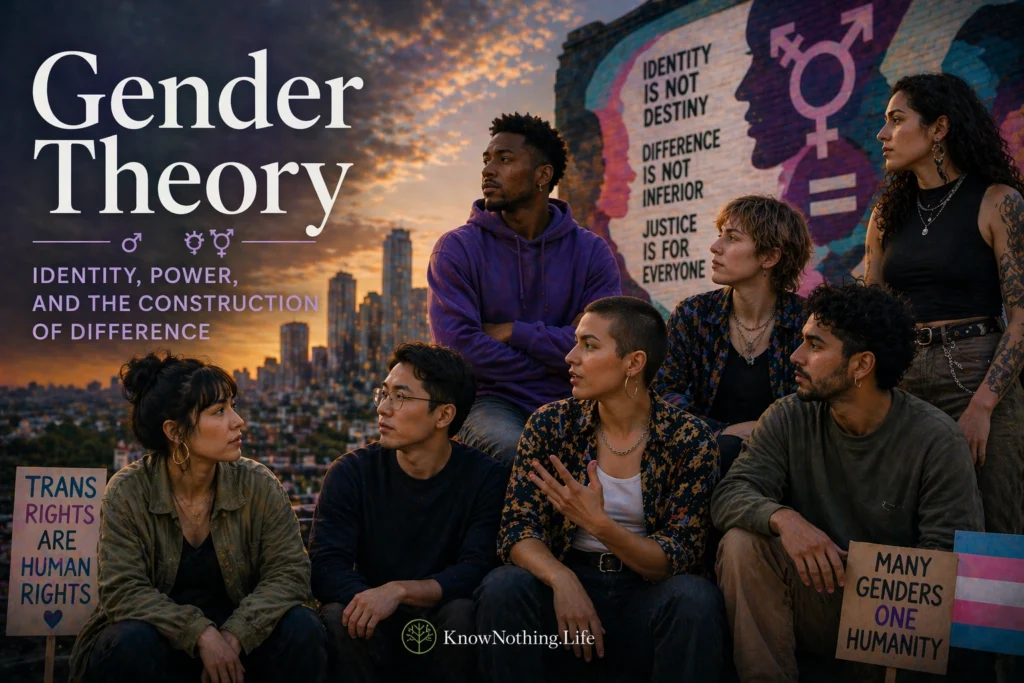
Gender theory is a multidisciplinary field that examines how gender is formed, experienced, and structured within society. It challenges the assumption that gender is a fixed biological fact, instead exploring how cultural norms, language, and power relations shape what it means to be masculine, feminine, or something beyond those categories. By analyzing gender as a social and philosophical construct, gender theory reveals the deep connections between identity and the systems that organize human life.
At its core, gender theory raises questions about how individuals come to understand themselves and how these understandings are influenced by broader social forces. It explores the distinction between sex and gender, the role of institutions in reinforcing norms, and the ways in which identities can be constrained or transformed. This field is not only theoretical but also deeply connected to lived experience, offering insights into issues of inequality, representation, and social change.
Historical Foundations of Gender Theory
The development of gender theory is rooted in earlier feminist thought, which sought to challenge assumptions about women’s roles and capacities. In the mid-20th century, Simone de Beauvoir provided a foundational insight with her claim that one is not born but becomes a woman. This idea emphasized that gender is shaped by socialization and cultural expectations rather than determined solely by biology.
Building on this insight, later thinkers expanded the scope of analysis to include the ways in which gender norms are embedded in social structures. Michel Foucault explored how power operates through discourse, shaping identities and regulating behavior. His work influenced gender theory by highlighting the role of institutions and knowledge systems in constructing gender categories.
The emergence of gender theory as a distinct field reflects a broader shift in philosophy and social science toward examining the social construction of identity. By questioning naturalized assumptions, gender theory opens new possibilities for understanding and transforming the structures that shape human experience.
Sex, Gender, and Social Construction
A central distinction in gender theory is that between sex and gender. Sex typically refers to biological characteristics, such as chromosomes and reproductive anatomy, while gender refers to the roles, behaviors, and identities that societies associate with those characteristics. Gender theory challenges the idea that these roles are natural or inevitable, arguing instead that they are socially constructed.
Philosophers such as Judith Butler have taken this argument further by suggesting that even the concept of sex is shaped by social interpretation. Butler’s theory of performativity argues that gender is not something one is but something one does, produced through repeated actions and expressions. This perspective emphasizes the fluid and dynamic nature of gender, highlighting its dependence on social context.
The concept of social construction does not imply that gender is arbitrary but rather that it is shaped by historical and cultural forces. Understanding these forces allows for a critical examination of how gender norms are maintained and how they can be challenged. This analysis is central to the transformative potential of gender theory.
Power, Norms, and Institutional Influence
Gender theory places significant emphasis on the role of power in shaping gender identities and relations. Social institutions—such as family, education, religion, and media—play a key role in reinforcing norms about what is considered appropriate behavior for different genders. These norms often operate implicitly, influencing individuals without explicit awareness.
Michel Foucault’s analysis of power provides a framework for understanding how these norms function. Rather than being imposed solely through coercion, power operates through subtle forms of regulation, shaping what individuals perceive as normal or natural. This perspective highlights the pervasive influence of power in constructing gender.
The examination of norms also reveals how deviations from expected roles are often met with resistance or sanction. Individuals who challenge traditional gender expectations may face social exclusion or discrimination. Gender theory seeks to expose these dynamics, providing tools for understanding and resisting the constraints imposed by normative frameworks.
Identity, Expression, and Fluidity
Gender theory emphasizes the diversity and fluidity of gender identities, challenging binary frameworks that categorize individuals as strictly male or female. It recognizes that gender exists on a spectrum, encompassing a wide range of experiences and expressions. This perspective reflects the complexity of human identity, which cannot be fully captured by rigid categories.
The concept of gender identity refers to an individual’s internal sense of their gender, which may or may not align with their assigned sex at birth. Gender expression, meanwhile, involves the ways in which individuals present their gender through behavior, clothing, and other forms of self-presentation. These aspects of identity highlight the interplay between personal experience and social context.
Philosophers and theorists explore how these identities are formed and how they can be articulated in ways that challenge existing norms. The recognition of fluidity and diversity in gender has significant implications for social policy, cultural representation, and individual well-being, emphasizing the importance of inclusivity and respect for difference.
Intersectionality and the Complexity of Experience
Gender does not exist in isolation but intersects with other aspects of identity, such as race, class, sexuality, and ability. The concept of intersectionality, developed by Kimberlé Crenshaw, provides a framework for understanding how these different dimensions interact to shape experiences of privilege and oppression.
Intersectionality highlights that individuals may face multiple and overlapping forms of discrimination, which cannot be understood by examining each aspect of identity separately. For example, the experiences of women of color may differ significantly from those of white women, reflecting the combined effects of gender and racial inequality. This perspective underscores the importance of considering the full complexity of identity in analyzing social issues.
By incorporating intersectionality, gender theory expands its scope and depth, addressing the diverse realities of individuals across different contexts. It emphasizes the need for nuanced approaches that account for the interplay of multiple factors, rather than relying on simplified or universal models.
Language, Representation, and Cultural Narratives
Language and representation play a crucial role in shaping gender identities and norms. The ways in which gender is described and depicted in media, literature, and everyday discourse influence how individuals understand themselves and others. Gender theory examines these representations, revealing how they reinforce or challenge existing structures.
Judith Butler’s work on performativity highlights the role of language in constituting identity. By analyzing how gender is expressed through discourse, gender theory shows how linguistic practices can both constrain and enable different forms of identity. This perspective emphasizes the power of language in shaping social reality.
Cultural narratives also play a significant role, providing frameworks for understanding gender roles and expectations. These narratives can perpetuate stereotypes or open possibilities for new forms of expression. Gender theory seeks to critique and reimagine these narratives, promoting more inclusive and diverse representations.
Gender Theory in Contemporary Context
In the modern world, gender theory has become increasingly relevant as societies grapple with issues of identity, equality, and inclusion. Debates about gender roles, rights, and representation have gained prominence, reflecting broader social changes and challenges. Gender theory provides a framework for analyzing these developments, offering insights into the underlying dynamics.
The field is inherently interdisciplinary, drawing on philosophy, sociology, psychology, and cultural studies. This integration reflects the complexity of gender as a phenomenon that spans multiple domains. By combining different perspectives, gender theory offers a more comprehensive understanding of how gender operates in contemporary society.
At the same time, gender theory continues to evolve, responding to new questions and challenges. Issues such as digital identity, global diversity, and shifting cultural norms require ongoing analysis and adaptation. This dynamic nature ensures that gender theory remains a vital and relevant area of inquiry.
Conclusion
Gender theory offers a powerful framework for understanding the construction and experience of gender. By challenging traditional assumptions and examining the role of social structures, it reveals the complexity and fluidity of identity. Its insights extend beyond theoretical analysis, influencing discussions of equality, representation, and social change.
The study of gender theory highlights the importance of context, power, and diversity in shaping human experience. It emphasizes that identities are not fixed but are continually formed and transformed through interaction with social and cultural forces. This perspective opens possibilities for rethinking and reshaping the structures that define gender.
Ultimately, gender theory invites a deeper engagement with the question of what it means to be human. It challenges rigid categories and encourages a more inclusive understanding of identity, offering a vision of a society that recognizes and respects the diversity of human experience.