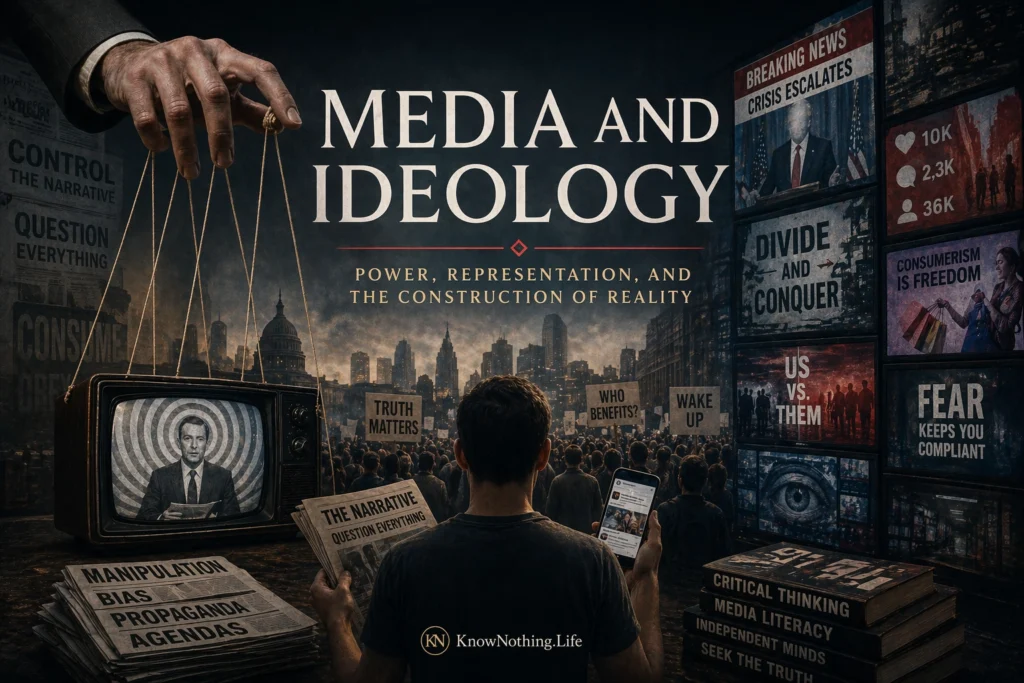
Media and ideology are deeply intertwined forces that shape how individuals understand the world. Media—ranging from traditional forms like newspapers and television to digital platforms and social networks—acts as a primary channel through which information, images, and narratives are disseminated. Ideology, meanwhile, refers to systems of belief that structure how reality is interpreted, often reflecting underlying power relations. Together, media and ideology influence perception, guide behavior, and reinforce or challenge social norms.
Philosophically, the relationship between media and ideology raises questions about truth, representation, and authority. Does media reflect reality, or does it construct it? How do ideological frameworks shape the production and interpretation of media content? These questions highlight the importance of critical analysis in understanding how information is presented and how it shapes thought. By examining media and ideology, philosophy uncovers the mechanisms through which meaning is created and contested in modern societies.
Historical Foundations of Media and Ideology
The philosophical analysis of media and ideology builds on earlier theories of knowledge, power, and communication. In the 19th century, Karl Marx developed a foundational account of ideology, arguing that dominant ideas in society reflect the interests of the ruling class. According to Marx, ideology serves to legitimize existing power structures, shaping how individuals perceive their social conditions.
In the 20th century, thinkers such as Antonio Gramsci expanded this analysis by introducing the concept of cultural hegemony. Gramsci argued that power is maintained not only through coercion but also through consent, as dominant groups shape cultural norms and values in ways that appear natural and inevitable. Media plays a crucial role in this process, disseminating ideas that reinforce existing hierarchies.
Later, Theodor Adorno and Max Horkheimer critiqued the “culture industry,” suggesting that mass media standardizes cultural production and limits critical thinking. Their work highlights the role of media in shaping consciousness, emphasizing the need to examine its influence on perception and ideology.
Ideology and the Construction of Reality
Ideology functions as a framework through which individuals interpret the world. It shapes beliefs about what is normal, desirable, or possible, often operating at an implicit level. Media serves as a key vehicle for transmitting ideology, presenting narratives and images that reinforce particular perspectives.
Philosophers such as Louis Althusser argued that ideology operates through institutions, including media, that shape individuals’ understanding of their place in society. These institutions create what Althusser called “interpellation,” a process by which individuals are addressed and positioned within ideological structures. Through media, individuals come to see themselves in ways that align with dominant frameworks.
The construction of reality through media raises questions about objectivity and truth. If media content is shaped by ideological perspectives, then what appears as neutral information may reflect underlying biases. This insight emphasizes the importance of critical engagement with media, recognizing that representation is not merely descriptive but also interpretive.
Representation, Language, and Meaning
Media shapes ideology through representation, using language, images, and symbols to convey meaning. Representation involves selecting and framing aspects of reality, highlighting certain elements while omitting others. This process influences how events and issues are understood, shaping public perception.
Stuart Hall emphasized the role of encoding and decoding in media communication. Producers encode messages with particular meanings, but audiences interpret them in diverse ways based on their own contexts. This interaction highlights the dynamic nature of meaning, showing that ideology is not simply imposed but also negotiated.
Language plays a central role in this process, as it structures how ideas are expressed and understood. The choice of words, metaphors, and narratives can influence perception, reinforcing or challenging ideological assumptions. By analyzing language, philosophers uncover the ways in which media shapes meaning and guides interpretation.
Power, Media, and Social Control
Media is a powerful tool for shaping public opinion and maintaining social order. By controlling the flow of information, media institutions can influence what issues are considered important and how they are framed. This power raises questions about accountability and the potential for manipulation.
Michel Foucault’s analysis of power provides a framework for understanding how media operates. Foucault argued that power is not centralized but dispersed, functioning through networks of knowledge and discourse. Media plays a key role in these networks, shaping what is considered true or legitimate.
The concept of agenda-setting illustrates how media influences public discourse by determining which topics receive attention. Similarly, framing shapes how issues are presented, influencing how they are interpreted. These mechanisms demonstrate the subtle ways in which media can guide thought and behavior, reinforcing ideological structures.
Media, Technology, and Digital Culture
The rise of digital media has transformed the relationship between media and ideology. Social media platforms, online news sources, and digital communication tools have expanded access to information while also creating new challenges. The speed and volume of information can make it difficult to evaluate sources and identify biases.
Digital media also enables new forms of participation, allowing individuals to create and share content. This democratization of media production has the potential to challenge dominant ideologies, providing space for alternative perspectives. However, it also raises concerns about misinformation, echo chambers, and the fragmentation of public discourse.
Philosophers examine how these changes affect the nature of knowledge and communication. The algorithms that govern digital platforms can shape what information is seen, reinforcing existing preferences and limiting exposure to diverse viewpoints. Understanding these dynamics is essential for navigating the complexities of contemporary media environments.
Ideology, Resistance, and Critical Engagement
While media can reinforce dominant ideologies, it also provides opportunities for resistance and transformation. Alternative media, critical journalism, and cultural production can challenge prevailing narratives, offering new perspectives and fostering dialogue.
Critical theory emphasizes the importance of media literacy—the ability to analyze and evaluate media content. By developing these skills, individuals can recognize ideological influences and engage more thoughtfully with information. This process involves questioning assumptions, examining sources, and considering alternative interpretations.
Resistance also occurs at the level of production, as creators use media to express dissent and promote change. Art, literature, and digital content can serve as platforms for challenging dominant ideologies, highlighting the potential of media as a tool for social transformation.
Media and Ideology in Contemporary Society
In contemporary society, media and ideology are central to political, cultural, and social life. Issues such as misinformation, polarization, and the influence of corporate interests highlight the importance of understanding how media shapes perception. The global reach of media means that ideological frameworks can spread rapidly, influencing diverse populations.
At the same time, the diversity of media sources creates opportunities for pluralism and debate. Individuals can access a wide range of perspectives, potentially fostering greater understanding and critical engagement. However, this diversity also requires careful navigation, as conflicting information can lead to confusion and division.
Philosophical analysis provides tools for understanding these dynamics, emphasizing the need for critical reflection and ethical responsibility. By examining the relationship between media and ideology, individuals can better understand the forces shaping their perceptions and contribute to more informed and equitable discourse.
Conclusion
Media and ideology are central to the construction of reality in modern societies. Through representation, language, and discourse, media shapes how individuals understand the world and their place within it. Philosophical inquiry reveals that this process is not neutral but influenced by power and interests, requiring critical engagement.
The study of media and ideology highlights the importance of awareness and reflection. By recognizing the ways in which information is shaped and presented, individuals can navigate media environments more effectively and resist manipulation. This involves developing skills of analysis and maintaining openness to diverse perspectives.
Ultimately, media and ideology are not merely forces to be analyzed but also arenas for action. They offer opportunities for both control and transformation, shaping the possibilities for understanding and change. By engaging critically with media, individuals and societies can work toward a more informed and equitable world.