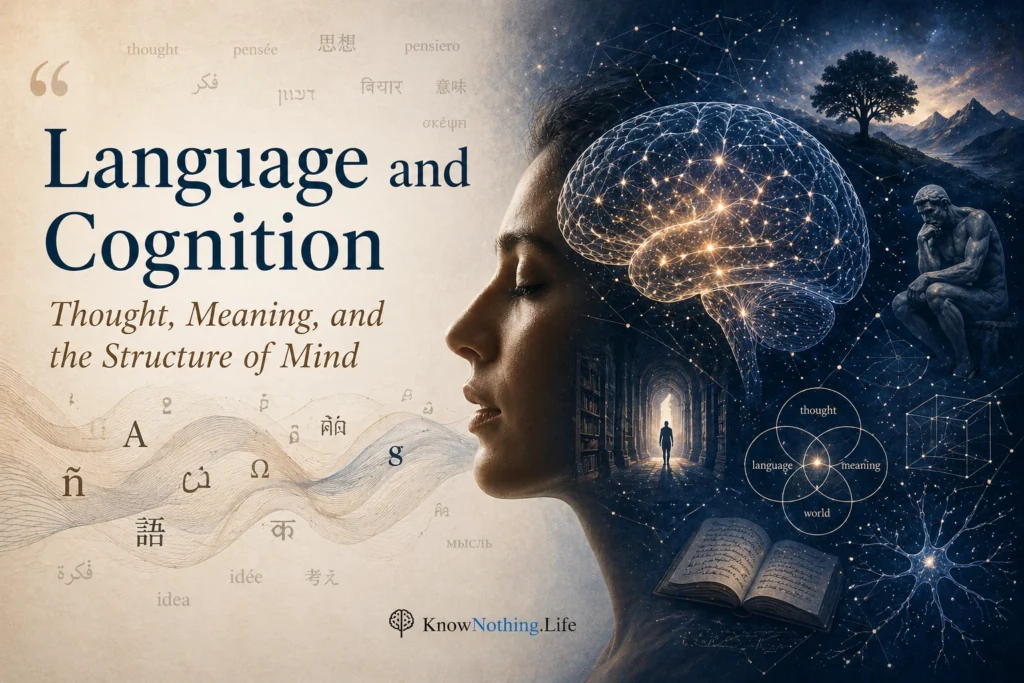
Language and cognition are deeply intertwined, shaping how humans think, communicate, and understand the world. Language provides a symbolic system for representing ideas, while cognition encompasses the processes that interpret, manipulate, and generate those ideas. Together, they form a dynamic relationship in which language both reflects and influences thought. From everyday conversation to abstract reasoning, language serves as a primary tool through which cognitive processes are expressed and refined.
At a fundamental level, language enables the externalization of internal mental states. It allows individuals to share knowledge, coordinate actions, and construct shared realities. At the same time, cognition provides the structure that makes language meaningful, organizing information into concepts and relationships. This reciprocal relationship raises important questions: Does language shape the way we think, or does thought exist independently of language? Exploring these questions reveals the complexity of the human mind and the mechanisms that underlie communication and understanding.
Historical Foundations and Theoretical Perspectives
The relationship between language and cognition has been a central topic of inquiry in philosophy, linguistics, and psychology. One influential perspective is associated with Noam Chomsky, who proposed that humans possess an innate capacity for language, often referred to as universal grammar. According to this view, language is grounded in biological structures that enable rapid acquisition and complex expression, suggesting that cognition provides the foundation for linguistic ability.
In contrast, the theory of linguistic relativity, often linked to Benjamin Lee Whorf, argues that language influences thought. This perspective suggests that the structure and vocabulary of a language can shape how its speakers perceive and conceptualize the world. For example, differences in color terminology across languages may affect how individuals categorize and remember colors.
Contemporary research has moved beyond this dichotomy, recognizing that the relationship between language and cognition is bidirectional. Language can influence thought, but cognitive processes also shape language use and development. This integrated perspective reflects the complexity of the interaction, highlighting the need for interdisciplinary approaches to understanding how language and cognition work together.
Language as a System of Representation
Language functions as a system of representation, allowing individuals to encode and communicate information through symbols. These symbols, whether spoken or written, correspond to concepts and ideas, enabling the transmission of meaning. This representational capacity is essential for abstract thinking, as it allows individuals to manipulate ideas that are not directly tied to immediate sensory experience.
The structure of language, including syntax and semantics, plays a crucial role in shaping how information is organized. Syntax governs the arrangement of words into sentences, while semantics relates to meaning. Together, they provide a framework for constructing and interpreting complex ideas. This structure allows for the expression of relationships between concepts, such as cause and effect, time, and hierarchy.
Language also supports the development of mental representations by providing labels for concepts. These labels facilitate categorization and memory, allowing individuals to organize information efficiently. By linking words to ideas, language enhances cognitive processing, making it easier to store and retrieve knowledge. This function underscores the importance of language as a tool for both communication and thought.
Thought Without Language
While language plays a central role in cognition, not all thought depends on linguistic processes. Evidence from areas such as visual reasoning, spatial navigation, and problem-solving suggests that individuals can think in nonverbal ways. For example, mental imagery allows individuals to manipulate visual representations, enabling tasks such as imagining objects or navigating environments.
Studies of infants and non-human animals further support the idea that cognition can occur without language. Infants demonstrate the ability to recognize patterns, understand basic concepts, and solve problems before acquiring language. Similarly, animals exhibit complex behaviors that require learning, memory, and decision-making, despite lacking human-like linguistic systems.
These findings indicate that language is not a prerequisite for thought but rather an additional system that enhances and extends cognitive capabilities. It allows for more complex and abstract forms of reasoning, but it is not the sole basis of cognition. Understanding the distinction between linguistic and non-linguistic thought provides a more nuanced view of the relationship between language and cognition.
Language Shaping Thought: Evidence and Debate
The idea that language influences thought has been the subject of extensive research and debate. Empirical studies have examined how linguistic differences affect perception, memory, and reasoning. For example, speakers of languages with different spatial terms may rely on different reference frames when describing locations, influencing how they navigate and remember spatial relationships.
Research on color perception has also provided evidence for linguistic influences. Languages vary in how they categorize colors, and these differences can affect how individuals discriminate and recall color distinctions. Similarly, grammatical structures, such as gender or tense, can shape how events are conceptualized and described.
However, the extent of these effects remains a topic of debate. While language can influence certain aspects of cognition, it does not completely determine thought. Cognitive processes are flexible and can operate independently of linguistic constraints. This suggests that language shapes thought in specific contexts rather than imposing a rigid framework. The ongoing debate highlights the complexity of the interaction and the need for continued research.
Language and Memory
Language plays a significant role in memory, influencing how information is encoded, stored, and retrieved. Verbal labels can enhance memory by providing a structure for organizing information. For example, naming objects or events can facilitate recall by linking them to existing knowledge and categories.
At the same time, language can also introduce distortions in memory. The wording of questions or descriptions can influence how events are remembered, leading to changes in recall. This effect demonstrates the reconstructive nature of memory, where language interacts with cognitive processes to shape what is remembered.
The relationship between language and memory highlights the interplay between representation and retrieval. Language provides tools for organizing and accessing information, but it also influences the content of memory. Understanding this relationship is essential for exploring how knowledge is maintained and communicated.
Neural Basis of Language and Cognition
The neural mechanisms underlying language and cognition involve a network of brain regions that support processing, integration, and control. Key areas include the left hemisphere regions traditionally associated with language, such as Broca’s area and Wernicke’s area, which are involved in production and comprehension, respectively.
These regions interact with broader cognitive networks, including the prefrontal cortex, which supports executive functions, and the temporal lobes, which are involved in memory and semantic processing. This integration allows for the coordination of linguistic and cognitive processes, enabling complex tasks such as reasoning and communication.
Neuroscientific research has also revealed that language processing is not confined to specific areas but involves distributed networks across the brain. This perspective reflects the interconnected nature of cognition, where multiple systems work together to support behavior. Understanding the neural basis of language and cognition provides insight into how these processes are implemented in the brain.
Language in Social and Cultural Contexts
Language is not only a cognitive system but also a social and cultural phenomenon. It reflects the values, beliefs, and practices of the communities in which it is used. Through language, individuals share knowledge, negotiate meaning, and construct social relationships. This social dimension highlights the role of language in shaping collective cognition.
Cultural differences in language can influence how individuals think and communicate. For example, variations in politeness norms, narrative structures, and metaphor use can affect how ideas are expressed and interpreted. These differences demonstrate that language is embedded within cultural contexts, shaping and being shaped by social interactions.
The study of language in social contexts underscores the importance of considering both individual and collective aspects of cognition. It reveals how language functions as a bridge between personal thought and shared understanding, facilitating communication and collaboration.
Applications and Future Directions
The study of language and cognition has wide-ranging applications in fields such as education, artificial intelligence, and clinical psychology. In education, understanding how language supports learning can inform teaching strategies that enhance comprehension and retention. Techniques such as scaffolding and dialogue-based instruction leverage the connection between language and cognition.
In artificial intelligence, research on language and cognition informs the development of systems that process and generate natural language. These systems aim to replicate aspects of human cognition, enabling more effective interaction between humans and machines. Advances in this area highlight the potential for integrating linguistic and cognitive models.
Future research is likely to focus on the dynamic interaction between language and other cognitive processes, including emotion, perception, and social cognition. As interdisciplinary approaches continue to evolve, they will provide deeper insights into how language shapes and is shaped by the mind. This ongoing exploration remains central to understanding human cognition.
Conclusion: The Interplay of Words and Thought
Language and cognition are deeply interconnected, forming a system that enables humans to think, communicate, and understand the world. Language provides the tools for representing and sharing ideas, while cognition gives those ideas structure and meaning. Together, they support complex forms of reasoning, learning, and social interaction.
By examining the relationship between language and cognition, cognitive psychology reveals the mechanisms that underlie human thought and communication. This understanding has profound implications for education, technology, and society, highlighting the importance of language as both a cognitive and cultural resource. As research continues to advance, the interplay between words and thought will remain a central focus in the study of the mind.