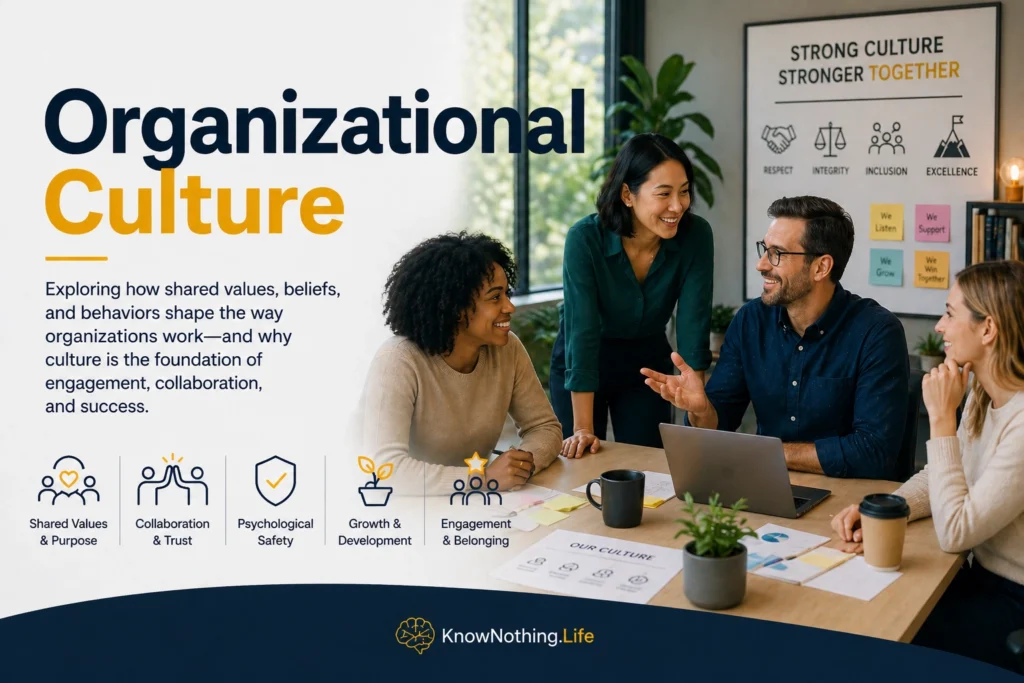
Organizational culture refers to the shared values, beliefs, assumptions, and norms that shape how people behave within an organization. It is often described as the “invisible force” guiding decisions, interactions, and performance, influencing everything from leadership style to employee engagement. Unlike formal structures or policies, culture operates at a deeper level, embedded in everyday practices and collective meaning. It determines not only how work gets done, but why it is done in a particular way.
The importance of organizational culture has become increasingly evident as businesses navigate rapid change, globalization, and evolving workforce expectations. A strong, adaptive culture can foster innovation, collaboration, and resilience, while a dysfunctional culture can lead to conflict, disengagement, and failure. As organizational psychologist Edgar Schein famously defined it, culture is “a pattern of shared basic assumptions learned by a group as it solved its problems,” emphasizing that culture emerges through experience and adaptation. This foundational perspective continues to guide research and practice in understanding organizational behavior.
Theoretical Foundations of Organizational Culture
The study of organizational culture draws from multiple disciplines, including psychology, sociology, and anthropology. Early approaches focused on observable aspects of organizations, such as rituals, symbols, and language. However, deeper analysis revealed that these visible elements are manifestations of underlying beliefs and values that shape behavior.
Schein’s model of organizational culture is one of the most influential frameworks, consisting of three levels: artifacts (visible structures and processes), espoused values (stated beliefs and strategies), and basic underlying assumptions (unconscious, taken-for-granted beliefs). Schein argued that “the essence of culture lies in the pattern of basic underlying assumptions,” highlighting that true understanding requires looking beyond surface-level observations. This layered approach provides a comprehensive framework for analyzing and influencing culture within organizations.
Types of Organizational Culture
Organizations can exhibit different types of culture depending on their values, goals, and environment. One widely used framework is the Competing Values Framework, developed by Robert E. Quinn and Kim Cameron, which identifies four primary culture types: clan, adhocracy, market, and hierarchy.
Clan cultures emphasize collaboration, trust, and a sense of family, often fostering high levels of employee engagement. Adhocracy cultures prioritize innovation and adaptability, encouraging risk-taking and creativity. Market cultures focus on competitiveness and achievement, driving performance and results. Hierarchy cultures emphasize structure, control, and efficiency, ensuring stability and consistency. Each type has its strengths and challenges, and organizations often exhibit a combination of these characteristics. Understanding these variations helps leaders align culture with strategic objectives.
Culture and Leadership
Leadership plays a critical role in shaping and sustaining organizational culture. Leaders influence culture through their actions, decisions, and communication, setting the tone for acceptable behavior and reinforcing values. They serve as role models, demonstrating the principles that guide the organization.
Research by Edgar Schein emphasizes that leaders are the primary architects of culture, as they create and embed assumptions through their responses to challenges. Schein noted, “The only thing of real importance that leaders do is to create and manage culture,” underscoring the centrality of leadership in this process. Transformational leaders, in particular, can shape culture by inspiring shared vision and fostering a sense of purpose. This dynamic relationship between leadership and culture highlights the importance of aligning leadership practices with desired cultural outcomes.
Organizational Culture and Performance
Organizational culture has a significant impact on performance, influencing productivity, innovation, and employee satisfaction. A positive culture that aligns with organizational goals can enhance motivation and engagement, leading to improved outcomes. Conversely, a misaligned or toxic culture can hinder performance and create barriers to success.
Research has shown that organizations with strong, cohesive cultures often outperform those with weak or fragmented cultures. Management theorist Peter Drucker famously stated, “Culture eats strategy for breakfast,” highlighting that even the best strategies can fail if they are not supported by the underlying culture. This insight underscores the importance of integrating cultural considerations into organizational planning and decision-making. By fostering a culture that supports goals and values, organizations can enhance both performance and sustainability.
Socialization and Cultural Transmission
Organizational culture is not static; it is continuously shaped and transmitted through socialization processes. New employees learn the culture through onboarding, training, and interaction with colleagues, gradually internalizing the organization’s values and norms. This process ensures continuity while also allowing for adaptation and change.
Socialization is influenced by both formal mechanisms, such as orientation programs, and informal interactions, such as mentorship and peer relationships. As sociologist John Van Maanen has noted, “Organizational socialization is the process by which an individual acquires the social knowledge and skills necessary to assume an organizational role.” Effective socialization can enhance commitment and performance, while poor integration can lead to disengagement and turnover. Understanding these processes is essential for maintaining a strong and cohesive culture.
Culture, Diversity, and Inclusion
Diversity and inclusion are increasingly recognized as critical components of organizational culture. A diverse workforce brings a range of perspectives, experiences, and ideas, which can enhance creativity and problem-solving. However, diversity alone is not sufficient; it must be supported by an inclusive culture that values and integrates different viewpoints.
Research by Geert Hofstede on cultural dimensions highlights the importance of understanding differences in values and communication styles across cultures. Inclusive cultures promote equity, respect, and psychological safety, enabling employees to contribute fully. As organizational scholar Amy Edmondson has emphasized, “Psychological safety is a belief that one will not be punished or humiliated for speaking up,” a key factor in fostering inclusion. These insights underscore the importance of creating cultures that support diversity and collaboration.
Change and Cultural Transformation
Organizational culture is not fixed; it can evolve in response to internal and external pressures. Cultural change is often necessary when organizations face new challenges, such as technological disruption or shifts in market conditions. However, changing culture is a complex and often difficult process, as it involves altering deeply ingrained beliefs and behaviors.
Effective cultural transformation requires strong leadership, clear vision, and consistent communication. Change initiatives must address both visible practices and underlying assumptions, ensuring that new values are integrated into everyday behavior. As change theorist John P. Kotter has argued, “Culture changes only after you have successfully altered people’s actions,” highlighting the importance of aligning behavior with desired outcomes. Successful transformation depends on sustained effort and commitment across all levels of the organization.
Technology and Modern Organizational Culture
The rise of digital technologies and remote work has transformed organizational culture, creating new challenges and opportunities. Virtual communication, flexible work arrangements, and global teams require organizations to adapt their cultural practices to maintain cohesion and engagement.
Technology can both enhance and disrupt culture, depending on how it is used. While digital tools can facilitate collaboration and innovation, they can also lead to isolation and communication breakdowns if not managed effectively. Organizations must develop strategies to maintain a strong culture in virtual environments, emphasizing communication, trust, and shared values. As work continues to evolve, understanding the interplay between technology and culture will be critical for organizational success.
Future Directions in Organizational Culture
The future of organizational culture is likely to be shaped by ongoing changes in work, technology, and societal expectations. Organizations are increasingly focusing on purpose, sustainability, and social responsibility, reflecting broader shifts in values. Employees are seeking meaningful work and alignment with organizational missions, making culture a key factor in attracting and retaining talent.
Research is also exploring the role of culture in innovation and adaptability, emphasizing the need for environments that support learning and change. As organizations navigate uncertainty and complexity, culture will remain a critical factor in determining their ability to succeed. The continued study of organizational culture will provide valuable insights into how organizations can thrive in a rapidly changing world.
Conclusion
Organizational culture is a fundamental aspect of how organizations function, influencing behavior, performance, and overall success. By understanding the values, beliefs, and norms that shape behavior, leaders can create environments that support engagement, innovation, and well-being.
Ultimately, culture is not something that organizations have, but something they are. It is continuously shaped by the actions and interactions of individuals, reflecting the collective identity of the organization. By aligning culture with strategic goals and human needs, organizations can build a foundation for long-term success and resilience.