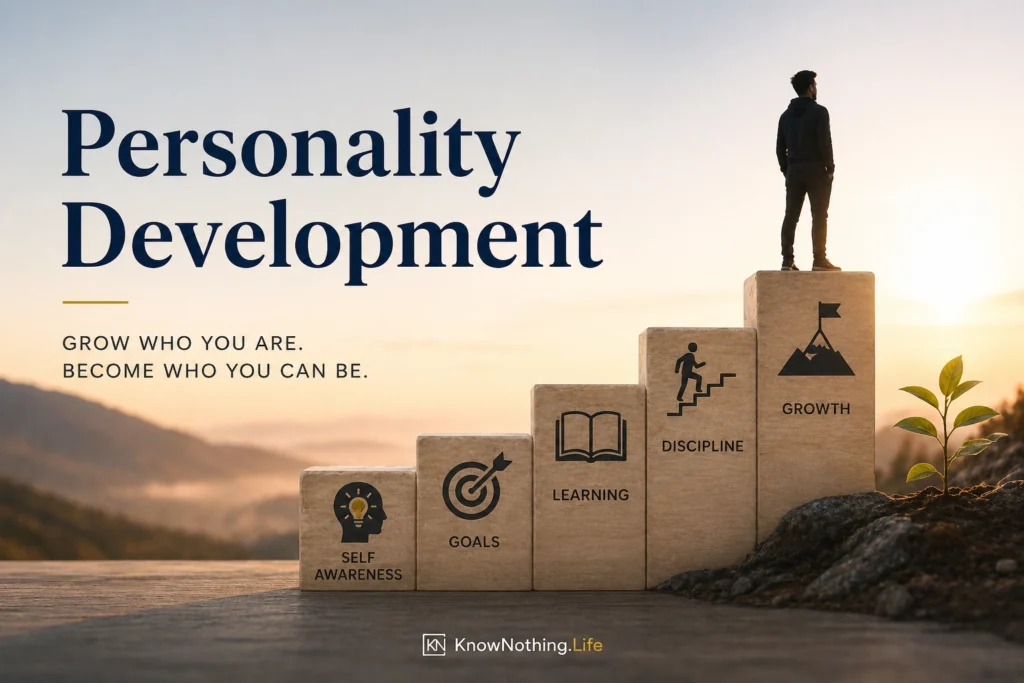
Personality development refers to the processes through which enduring patterns of thought, emotion, and behavior emerge and evolve across the lifespan. While personality often appears stable in adulthood, it is the product of complex interactions among biological predispositions, environmental influences, and personal experiences. From infancy through later life, individuals continuously adapt to changing circumstances, shaping and reshaping their identities in response to both internal and external forces.
The study of personality development seeks to answer fundamental questions about human nature: How do early experiences influence later behavior? To what extent is personality fixed or malleable? And how do individuals maintain continuity while also undergoing change? As Gordon Allport observed in Pattern and Growth in Personality, personality is not static but a “becoming,” reflecting an ongoing process rather than a finished state. This dynamic perspective underscores the importance of examining development across time, integrating insights from multiple theoretical traditions.
Biological Foundations and Temperament
Personality development begins with biological factors that shape early dispositions. Temperament, defined as innate patterns of emotional reactivity and self-regulation, provides the foundation upon which personality is built. Research by Jerome Kagan demonstrated that infants differ in their responses to unfamiliar stimuli, with some showing high reactivity and others displaying calmness and adaptability. These early differences often persist, influencing later traits such as introversion or emotional stability.
Genetic influences further contribute to personality development, as twin and adoption studies have shown significant heritability for many traits. However, genes do not operate in isolation; they interact with environmental factors in complex ways. This interaction, often referred to as gene-environment interplay, suggests that individuals actively shape their own developmental pathways by selecting and modifying their environments.
Neuroscientific research adds another layer of understanding, linking personality traits to brain structures and neurochemical processes. For example, variations in dopamine activity have been associated with reward sensitivity and extraversion, while serotonin plays a role in mood regulation. These findings highlight the biological underpinnings of personality while also emphasizing the importance of experience in shaping how these predispositions are expressed.
Psychodynamic and Early Childhood Influences
Psychodynamic theories place particular emphasis on the role of early childhood experiences in shaping personality. Sigmund Freud proposed that personality develops through a series of psychosexual stages, each associated with specific conflicts and sources of pleasure. In The Ego and the Id, Freud argued that unresolved conflicts during these stages can lead to fixation, influencing behavior in adulthood.
Building on Freud’s ideas, Erik Erikson introduced a psychosocial framework that extends across the lifespan. In Childhood and Society, Erikson identified eight stages of development, each characterized by a central conflict, such as trust versus mistrust or identity versus role confusion. Successful resolution of these conflicts leads to the development of psychological strengths, while failure may result in difficulties that persist over time.
These perspectives underscore the importance of early relationships, particularly those with caregivers, in shaping personality. Attachment theory, developed by John Bowlby, further emphasizes the role of early bonds in influencing emotional regulation and interpersonal behavior. Together, these theories highlight the lasting impact of childhood experiences, suggesting that personality development is deeply rooted in early life.
Learning and Environmental Influences
Behavioral and social learning theories emphasize the role of environment in shaping personality. B. F. Skinner argued that behavior is shaped through reinforcement and punishment, with patterns of response developing over time based on environmental contingencies. In this view, personality is not an internal structure but a collection of learned behaviors.
Expanding on this approach, Albert Bandura introduced the concept of observational learning, demonstrating that individuals can acquire behaviors by watching others. In Social Learning Theory, Bandura emphasized the role of modeling, imitation, and self-efficacy in development. This perspective highlights the importance of social context, suggesting that family, peers, and media all contribute to shaping personality.
Environmental influences extend beyond immediate interactions to include broader cultural and societal factors. Norms, values, and expectations shape behavior, guiding individuals toward certain patterns of thought and action. These influences interact with individual predispositions, creating a dynamic process in which personality is continuously shaped and reshaped by experience.
Cognitive and Humanistic Perspectives
Cognitive theories of personality development focus on how individuals interpret and understand their experiences. Jean Piaget, in his work on cognitive development, demonstrated that children actively construct their understanding of the world through processes of assimilation and accommodation. While Piaget’s work primarily addressed cognitive growth, it has important implications for personality, as the way individuals think about themselves and others influences behavior.
Humanistic perspectives, on the other hand, emphasize personal growth and self-actualization. Carl Rogers proposed that individuals have an inherent tendency toward growth, which is facilitated by environments that provide acceptance and understanding. In On Becoming a Person, Rogers argued that congruence between the self-concept and experience is essential for psychological well-being.
Similarly, Abraham Maslow highlighted the importance of fulfilling basic needs as a foundation for higher-level growth. His concept of self-actualization represents the culmination of personality development, where individuals realize their potential and pursue meaningful goals. These perspectives emphasize agency and purpose, suggesting that personality development is not only shaped by past experiences but also directed by future aspirations.
Stability and Change Across the Lifespan
A key question in personality development is the extent to which personality remains stable over time. Research indicates that while certain traits exhibit consistency, significant changes can occur throughout life. Longitudinal studies by Paul Costa and Robert McCrae have shown that traits such as conscientiousness and emotional stability tend to increase with age, reflecting maturation processes.
At the same time, life events and transitions can lead to changes in personality. Experiences such as education, career development, relationships, and adversity all contribute to shaping individual differences. These changes highlight the adaptability of personality, suggesting that development continues well into adulthood.
The interplay between stability and change reflects the complexity of personality development. While early experiences and biological factors provide a foundation, ongoing interactions with the environment and personal choices contribute to evolution over time. This dynamic perspective challenges the notion of fixed personality, emphasizing instead a process of continuous growth and adaptation.
Contemporary Perspectives and Integration
Modern approaches to personality development integrate insights from multiple theoretical traditions, recognizing that no single perspective can fully explain the complexity of human behavior. Contemporary research often adopts a biopsychosocial framework, combining biological, psychological, and social factors into a comprehensive model.
Advances in neuroscience, genetics, and longitudinal research have provided new tools for understanding development, while interdisciplinary approaches have enriched theoretical perspectives. For example, the integration of cognitive and behavioral theories has led to more nuanced models that account for both internal processes and external influences.
This integrative approach reflects the evolving nature of psychology, as researchers seek to balance empirical rigor with the richness of human experience. By drawing on diverse perspectives, contemporary theories offer a more complete understanding of how personality develops and changes over time.
Conclusion
Personality development is a complex and dynamic process shaped by the interplay of biological, psychological, and environmental factors. From early temperament and childhood experiences to social learning and personal growth, multiple influences contribute to the formation and evolution of personality. Theories from Freud, Erikson, Bandura, Rogers, and others provide valuable frameworks for understanding these processes, each highlighting different aspects of development.
Ultimately, the study of personality development reveals both continuity and change, stability and adaptability. While individuals may retain core patterns of behavior, they also possess the capacity for growth and transformation. By examining the factors that shape personality across the lifespan, psychology offers insights into what it means to become—and continue becoming—who we are.