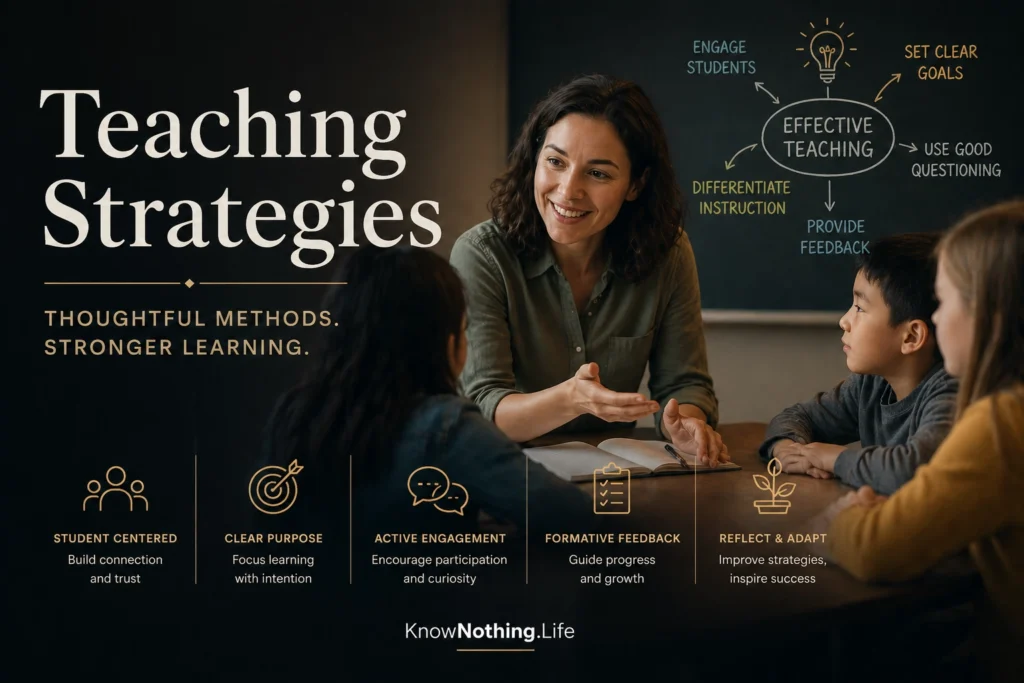
Teaching strategies are the structured approaches educators use to facilitate learning, guide understanding, and foster intellectual growth. They encompass methods, techniques, and practices that shape how content is delivered and how students engage with it. Effective teaching strategies are not static; they evolve in response to advances in psychology, pedagogy, and technology, reflecting a deeper understanding of how people learn. At their core, they aim to transform information into meaningful knowledge, enabling learners to think critically, apply concepts, and develop lifelong skills.
The importance of teaching strategies lies in their ability to bridge theory and practice. While learning theories explain how knowledge is acquired, teaching strategies translate those insights into actionable methods within the classroom. As educational theorist John Dewey famously stated, “If we teach today’s students as we taught yesterday’s, we rob them of tomorrow.” This perspective underscores the need for adaptive and innovative approaches that respond to the changing needs of learners and society.
Foundations of Effective Teaching
Effective teaching strategies are grounded in an understanding of how students learn, drawing on principles from cognitive, behavioral, and social psychology. One of the most influential frameworks is the concept of scaffolding, introduced by Lev Vygotsky, which emphasizes providing temporary support to help learners accomplish tasks within their zone of proximal development. This approach recognizes that learning is most effective when instruction is tailored to the learner’s current level while gently pushing them toward greater independence.
Another foundational principle is the alignment of objectives, instruction, and assessment. Educational psychologist Benjamin Bloom developed a taxonomy of cognitive skills ranging from basic recall to higher-order thinking, such as analysis and evaluation. Bloom’s framework has guided educators in designing lessons that promote deeper understanding rather than rote memorization. As Bloom noted, “Education must be increasingly concerned with the development of thinking,” highlighting the importance of strategies that cultivate critical and creative capacities.
Direct Instruction and Structured Teaching
Direct instruction is a teacher-centered approach that emphasizes clear, explicit teaching of concepts and skills. It involves structured lessons, guided practice, and immediate feedback, making it particularly effective for foundational knowledge and skill acquisition. This method is rooted in behaviorist principles, focusing on reinforcement and repetition to ensure mastery.
Research by Barak Rosenshine identified key principles of effective instruction, including presenting material in small steps, checking for understanding, and providing opportunities for practice. Rosenshine’s work has demonstrated that structured teaching can significantly improve learning outcomes, especially for novice learners. However, while direct instruction is highly effective for certain tasks, it is often complemented by more student-centered approaches that encourage exploration and independent thinking.
Active Learning and Student Engagement
Active learning strategies shift the focus from teacher-centered delivery to student-centered participation, encouraging learners to engage directly with content through discussion, problem-solving, and collaboration. These approaches are based on the premise that learning is most effective when students are actively involved in constructing knowledge rather than passively receiving information.
Educational psychologist Jerome Bruner emphasized discovery learning, arguing that “students are more likely to remember concepts they discover on their own.” Techniques such as group work, case studies, and project-based learning allow students to apply knowledge in meaningful contexts, enhancing understanding and retention. Active learning also fosters critical thinking, as students must analyze information, evaluate perspectives, and generate solutions. These strategies align with constructivist principles, highlighting the importance of interaction and experience in the learning process.
Differentiated Instruction
Differentiated instruction recognizes that students vary in their abilities, interests, and learning styles, and seeks to tailor teaching to meet these diverse needs. Rather than adopting a one-size-fits-all approach, educators adjust content, process, and assessment to accommodate individual differences. This strategy is particularly important in inclusive classrooms, where learners may have varying levels of prior knowledge and support requirements.
The concept of differentiation has been widely advocated by Carol Ann Tomlinson, who emphasizes the importance of flexible grouping, varied instructional methods, and ongoing assessment. Tomlinson argues that “students learn best when teachers respond to their readiness, interests, and learning profiles,” highlighting the need for adaptability in teaching. Differentiated instruction not only improves academic outcomes but also promotes equity by ensuring that all students have access to meaningful learning experiences.
Assessment and Feedback Strategies
Assessment is a critical component of effective teaching, providing insights into student learning and guiding instructional decisions. Formative assessment, which occurs during the learning process, allows educators to identify gaps in understanding and adjust their teaching accordingly. Summative assessment, conducted at the end of a unit or course, evaluates overall achievement.
Feedback is particularly powerful in shaping learning outcomes. Research by John Hattie has shown that feedback is one of the most influential factors in student achievement. In Visible Learning, Hattie states, “The most powerful single modification that enhances achievement is feedback.” Effective feedback is timely, specific, and focused on improvement rather than judgment. It helps students understand their progress and identify areas for growth, fostering a mindset of continuous learning.
Technology-Enhanced Teaching
The integration of technology into education has transformed teaching strategies, offering new tools for engagement, collaboration, and personalization. Digital platforms, interactive media, and online resources enable educators to create dynamic learning environments that extend beyond the traditional classroom. Technology can support a wide range of strategies, from multimedia presentations to virtual simulations and adaptive learning systems.
Research by Richard E. Mayer on multimedia learning has shown that combining visual and verbal information can enhance understanding when designed effectively. Mayer’s principles emphasize the importance of reducing cognitive load and aligning content with how the brain processes information. However, the use of technology also presents challenges, including the risk of distraction and the need for digital literacy. Effective teaching strategies must therefore balance innovation with thoughtful design, ensuring that technology enhances rather than detracts from learning.
Classroom Management and Learning Environment
A supportive and well-managed classroom environment is essential for effective teaching. Classroom management strategies focus on creating a structured, respectful, and engaging atmosphere in which students feel safe to learn. This includes establishing clear expectations, maintaining consistent routines, and fostering positive relationships between teachers and students.
Psychologist Jacob Kounin emphasized the importance of “withitness”—the teacher’s awareness of what is happening in the classroom—and proactive management techniques to prevent disruptions. A positive learning environment not only reduces behavioral issues but also enhances motivation and engagement. As Kounin noted, effective management is less about reacting to problems and more about preventing them through thoughtful planning and interaction.
Collaborative and Cooperative Learning
Collaborative learning strategies involve students working together to achieve shared goals, promoting interaction, communication, and mutual support. These approaches are based on social learning principles, which emphasize the role of observation and interaction in learning. Cooperative learning, a structured form of collaboration, assigns specific roles and responsibilities to ensure accountability and participation.
Research by David W. Johnson and Roger T. Johnson has demonstrated that cooperative learning can improve academic achievement, social skills, and self-esteem. These strategies encourage students to explain concepts to one another, reinforcing their own understanding while supporting their peers. Collaborative learning also prepares students for real-world contexts, where teamwork and communication are essential skills.
Future Directions in Teaching Strategies
As education continues to evolve, teaching strategies are increasingly shaped by advances in research and technology. Personalized learning, driven by data and adaptive systems, allows instruction to be tailored to individual needs. Artificial intelligence and learning analytics are providing new insights into student behavior and performance, enabling more targeted interventions.
There is also growing emphasis on social-emotional learning, which focuses on skills such as empathy, self-regulation, and resilience. These competencies are essential for success in both academic and personal contexts. As psychologist Daniel Goleman has argued, “Emotional intelligence is a key factor in success,” suggesting that teaching strategies must address not only cognitive development but also emotional growth. The future of teaching lies in integrating these dimensions to create holistic and adaptive learning environments.
Conclusion
Teaching strategies are the practical tools through which educational theory is translated into meaningful learning experiences. By drawing on insights from psychology and pedagogy, educators can design approaches that enhance understanding, engagement, and achievement. From direct instruction to collaborative learning, each strategy offers unique strengths that can be combined to address diverse learning needs.
Ultimately, effective teaching is not about adhering to a single method but about adapting strategies to the context, the content, and the learners. As education continues to evolve, the ability to integrate multiple approaches and respond to new challenges will remain central to successful teaching.