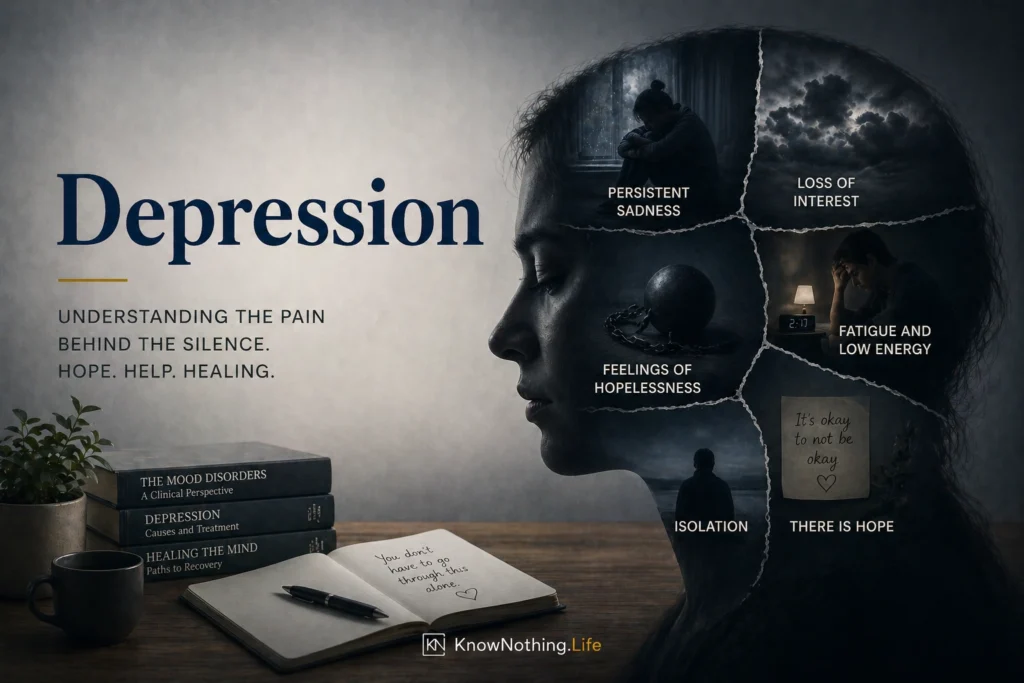
Depression is one of the most prevalent and debilitating psychological disorders, affecting millions of people worldwide. Characterized by persistent sadness, loss of interest or pleasure, and a range of cognitive and physical symptoms, depression extends far beyond ordinary fluctuations in mood. It alters how individuals think, feel, and function, often impairing their ability to engage in daily activities, maintain relationships, and pursue meaningful goals.
While sadness is a natural response to loss or adversity, depression represents a more enduring and pervasive condition. It is not simply a matter of willpower or attitude but a complex interplay of biological, psychological, and social factors. As Aaron Beck observed in Depression: Causes and Treatment, depression involves “systematic errors in thinking,” where individuals develop negative views of themselves, their world, and their future. This insight underscores the depth of the disorder, highlighting how depression reshapes perception and experience at multiple levels.
Symptoms and Clinical Features
Depression manifests through a wide range of symptoms that affect emotional, cognitive, and physical functioning. Core emotional symptoms include persistent sadness, feelings of emptiness, and a loss of interest in activities that were once enjoyable. This condition, known as anhedonia, is a defining feature of major depressive disorder and reflects a diminished capacity for pleasure.
Cognitive symptoms often involve negative thought patterns, such as self-criticism, hopelessness, and difficulty concentrating. Individuals may experience a pervasive sense of worthlessness or guilt, often disproportionate to actual circumstances. These cognitive distortions can create a feedback loop, reinforcing negative emotions and further impairing functioning. As Beck’s cognitive model suggests, these patterns are not random but systematic, shaping how individuals interpret their experiences.
Physical symptoms are also common, including changes in sleep, appetite, and energy levels. Some individuals experience insomnia or hypersomnia, while others may notice significant weight loss or gain. Fatigue and psychomotor changes, such as slowed movement or agitation, can further impact daily life. The combination of emotional, cognitive, and physical symptoms illustrates the comprehensive nature of depression, affecting the whole person rather than a single aspect of experience.
Biological Foundations
Biological perspectives on depression focus on the role of brain chemistry, genetics, and neurophysiology. Research has identified imbalances in neurotransmitters such as serotonin, dopamine, and norepinephrine, which are involved in mood regulation, motivation, and reward processing. These imbalances can disrupt normal emotional functioning, contributing to depressive symptoms.
Advances in neuroscience have also highlighted structural and functional differences in the brains of individuals with depression. Areas such as the prefrontal cortex and the amygdala are implicated in emotional regulation and stress response, with altered activity observed in these regions. Eric Kandel, in his work on the biological basis of mental processes, emphasized that psychological experiences are rooted in neural activity, bridging the gap between biology and psychology.
Genetic factors further contribute to vulnerability, with studies indicating that depression tends to run in families. However, genetic predisposition does not guarantee the development of the disorder; it interacts with environmental influences in complex ways. This interaction highlights the importance of considering both biological and experiential factors in understanding depression.
Cognitive and Behavioral Perspectives
Cognitive and behavioral theories provide a framework for understanding how thought patterns and behaviors contribute to depression. Beck’s cognitive model emphasizes the role of negative schemas—deeply ingrained beliefs about the self, world, and future. These schemas influence how individuals interpret events, often leading to pessimistic and self-defeating conclusions.
Martin Seligman offered a complementary perspective through his theory of learned helplessness. In Helplessness: On Depression, Development, and Death, Seligman demonstrated that individuals exposed to uncontrollable negative events may develop a sense of powerlessness, leading to depressive symptoms. This theory highlights the role of perceived control in emotional well-being, suggesting that a lack of agency can contribute to depression.
Behavioral approaches focus on the role of reinforcement and activity levels. Depression is often associated with reduced engagement in rewarding activities, leading to a decrease in positive reinforcement. This reduction can create a cycle in which low activity levels perpetuate low mood. Behavioral activation, a therapeutic approach derived from these principles, aims to break this cycle by encouraging individuals to re-engage with meaningful activities.
Psychodynamic and Emotional Perspectives
Psychodynamic theories emphasize the role of unconscious processes and early experiences in the development of depression. Sigmund Freud, in Mourning and Melancholia, distinguished between normal grief and pathological depression, suggesting that depression involves internalized loss and unresolved conflict. He argued that individuals may direct anger inward, leading to feelings of guilt and self-criticism.
Later theorists expanded on these ideas, focusing on interpersonal relationships and emotional development. Melanie Klein highlighted the role of early attachment experiences in shaping emotional patterns, suggesting that disruptions in these relationships can contribute to depressive tendencies. These perspectives emphasize the depth and complexity of emotional experience, exploring how past relationships influence present functioning.
While psychodynamic approaches are less empirically focused than cognitive-behavioral models, they provide valuable insights into the subjective experience of depression. By exploring underlying emotional conflicts and relational patterns, they offer a deeper understanding of the disorder and its origins.
Social and Environmental Influences
Depression does not occur in isolation; it is influenced by social and environmental factors that shape individual experiences. Stressful life events, such as loss, trauma, or major transitions, can trigger depressive episodes, particularly in individuals with underlying vulnerabilities. Chronic stress, including financial difficulties or social isolation, can also contribute to the development and persistence of depression.
Social support plays a critical role in mitigating these effects. Strong relationships can provide emotional resources and a sense of belonging, reducing the impact of stress. Conversely, a lack of support or negative interpersonal interactions can exacerbate depressive symptoms. George L. Engel proposed the biopsychosocial model, emphasizing the integration of biological, psychological, and social factors in understanding health and illness.
Cultural influences further shape how depression is experienced and expressed. In some cultures, emotional symptoms may be less emphasized, with individuals reporting physical complaints instead. These variations highlight the importance of context in understanding depression, underscoring the need for culturally sensitive approaches to assessment and treatment.
Treatment and Intervention
The treatment of depression involves a combination of psychological and pharmacological approaches tailored to individual needs. Cognitive-behavioral therapy (CBT) is one of the most widely used and effective treatments, focusing on modifying negative thought patterns and behaviors. By challenging cognitive distortions and encouraging behavioral activation, CBT helps individuals develop more adaptive ways of thinking and acting.
Pharmacological treatments, particularly antidepressant medications, play a significant role in managing moderate to severe depression. These medications work by regulating neurotransmitter activity, alleviating symptoms and improving mood. However, medication alone is often insufficient, and combined approaches that include psychotherapy tend to produce better outcomes.
Emerging treatments, such as mindfulness-based therapies and interpersonal therapy, offer additional options for addressing depression. These approaches emphasize present-moment awareness, emotional regulation, and relationship dynamics, reflecting the multifaceted nature of the disorder. The diversity of treatment methods highlights the importance of individualized care, recognizing that different individuals may respond to different interventions.
Conclusion
Depression is a complex and multifaceted disorder that affects individuals at emotional, cognitive, and physical levels. Its causes are rooted in a dynamic interplay of biological, psychological, and social factors, reflecting the complexity of human experience. Theories from Beck, Seligman, Freud, and others provide valuable frameworks for understanding the mechanisms underlying depression, while ongoing research continues to refine these perspectives.
Despite its challenges, depression is treatable, and many individuals experience significant improvement with appropriate intervention. Advances in therapy, medication, and integrated approaches offer hope for those affected, emphasizing the potential for recovery and growth. Ultimately, the study of depression not only deepens our understanding of mental illness but also highlights the resilience of the human spirit in the face of adversity.