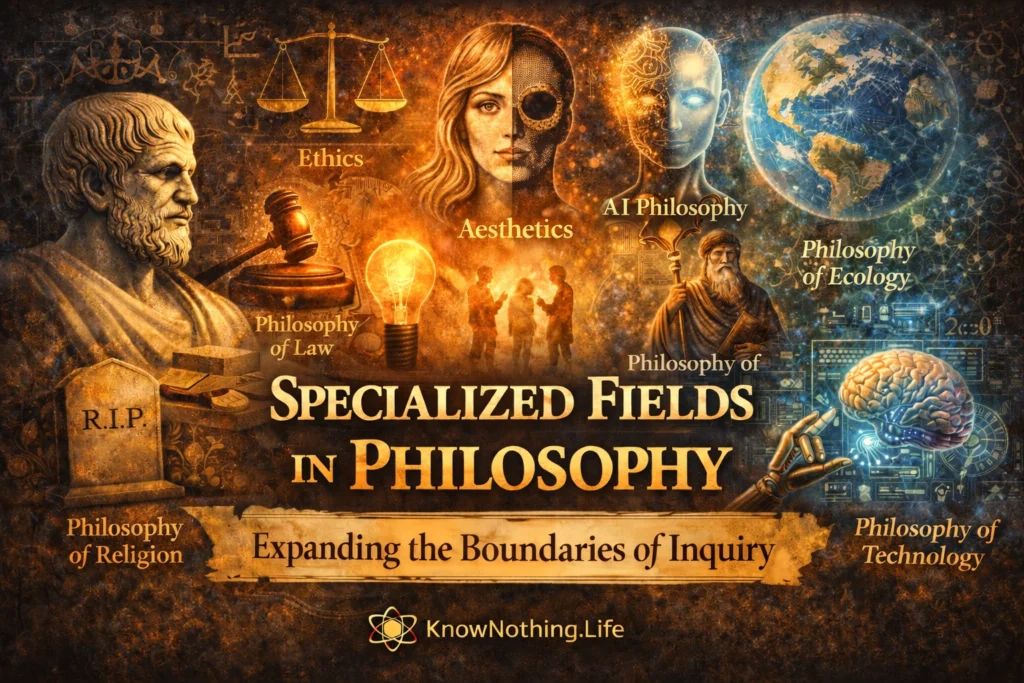
Philosophy has long been divided into core branches such as metaphysics, epistemology, ethics, and logic. Yet as intellectual inquiry has evolved, philosophy has expanded into a wide range of specialized fields that address increasingly specific questions. These fields apply philosophical methods to particular domains of human knowledge and experience, offering deeper insight into areas such as science, language, mind, politics, and technology. Rather than existing in isolation, they often intersect, forming a complex network of inquiry that reflects the diversity of modern thought.
Specialized fields in philosophy emerge when foundational questions are directed toward a specific subject matter. For example, the philosophy of science examines how scientific knowledge is generated and justified, while the philosophy of mind explores the nature of consciousness and cognition. Each field develops its own concepts, debates, and methodologies, yet all remain connected by a shared commitment to critical reasoning and conceptual clarity. This expansion has allowed philosophy to remain relevant in a rapidly changing intellectual landscape, engaging with developments across disciplines.
Philosophy of Science and Knowledge Systems
One of the most influential specialized fields is the philosophy of science, which investigates the methods, assumptions, and implications of scientific inquiry. It asks what distinguishes science from other forms of knowledge, how theories are tested, and whether scientific progress brings us closer to truth. Thinkers such as Karl Popper emphasized falsifiability as a criterion for scientific theories, while Thomas Kuhn highlighted the role of paradigms and revolutions in shaping scientific development.
This field also examines the relationship between observation and theory, exploring how data is interpreted within conceptual frameworks. Questions about realism and anti-realism—whether scientific theories describe reality or merely predict observations—remain central. By analyzing the structure and practice of science, philosophers contribute to a deeper understanding of how knowledge is constructed and validated.
Beyond science, philosophers have extended similar inquiries to other knowledge systems, including mathematics, history, and the social sciences. These investigations reveal that different domains may require distinct methods and standards of justification, challenging the idea of a single, unified model of knowledge.
Philosophy of Mind and Cognitive Science
The philosophy of mind is another major specialized field, focusing on the nature of mental states, consciousness, and cognition. It addresses questions about the relationship between mind and body, the nature of subjective experience, and the mechanisms underlying thought. From the dualism of René Descartes to contemporary physicalist theories, this field has produced a wide range of perspectives on how the mind fits into the natural world.
In recent decades, the philosophy of mind has become closely linked with cognitive science, an interdisciplinary field that includes psychology, neuroscience, and artificial intelligence. Philosophers such as Jerry Fodor have contributed to theories of mental representation and information processing, while others have explored embodied and extended models of cognition.
This field also engages with ethical and practical questions, particularly in relation to emerging technologies. As artificial intelligence systems become more advanced, philosophers are increasingly concerned with issues such as machine consciousness, moral responsibility, and the nature of intelligence itself. These debates highlight the ongoing relevance of philosophical inquiry in addressing contemporary challenges.
Philosophy of Language and Communication
The philosophy of language examines how meaning is constructed and communicated. It explores the relationship between words and the world, the structure of sentences, and the role of context in shaping interpretation. Foundational contributions from thinkers like Gottlob Frege and Ludwig Wittgenstein have influenced a wide range of disciplines, from linguistics to computer science.
This field addresses issues such as reference, truth, and the nature of linguistic understanding. It also investigates how language is used in social contexts, drawing on insights from pragmatics and discourse analysis. Philosophers such as J. L. Austin have shown that language is not merely descriptive but performative, capable of enacting social actions through speech.
The study of language is particularly important in an age of global communication and digital media. Questions about meaning, interpretation, and miscommunication are increasingly relevant, as language shapes not only individual understanding but also collective knowledge and cultural exchange.
Political Philosophy and Social Theory
Political philosophy focuses on the organization of society, the nature of justice, and the legitimacy of authority. It addresses fundamental questions about rights, freedom, equality, and the role of the state. From classical thinkers like Plato and Aristotle to modern theorists such as John Rawls, this field has shaped political thought and institutions.
Contemporary political philosophy often engages with issues such as global justice, human rights, and democratic governance. It also intersects with social theory, examining how power, culture, and identity influence social structures. Philosophers analyze concepts such as race, gender, and class, exploring how they shape experiences and opportunities.
This field is deeply connected to real-world concerns, influencing public policy and ethical decision-making. By providing frameworks for evaluating social arrangements, political philosophy contributes to ongoing debates about how societies should be organized and governed.
Ethics, Applied Philosophy, and Technology
Ethics is one of the oldest branches of philosophy, but it has also given rise to numerous specialized fields. Applied ethics examines moral issues in specific contexts, such as medicine, business, and environmental policy. Bioethics, for example, addresses questions about medical decision-making, genetic engineering, and end-of-life care, while environmental ethics explores our responsibilities toward the natural world.
The rapid development of technology has created new ethical challenges, leading to the emergence of fields such as the philosophy of technology and AI ethics. Philosophers consider issues such as privacy, surveillance, algorithmic bias, and the ethical implications of automation. These questions require careful analysis, as technological innovations often outpace existing ethical frameworks.
Philosophers in these areas aim to provide guidance for decision-making in complex and uncertain situations. By applying ethical principles to real-world problems, they bridge the gap between abstract theory and practical action.
Interdisciplinary Connections and Emerging Fields
One of the defining features of specialized fields in philosophy is their interdisciplinary nature. Philosophers increasingly collaborate with scientists, engineers, and scholars from other disciplines, bringing philosophical perspectives to bear on complex problems. This collaboration has led to the emergence of new fields, such as the philosophy of information, the philosophy of biology, and the philosophy of economics.
These emerging fields reflect the evolving landscape of knowledge, where traditional boundaries between disciplines are becoming less rigid. Philosophical inquiry adapts to new developments, addressing questions that arise from advances in science and technology. This adaptability ensures that philosophy remains a vital and dynamic field of study.
At the same time, interdisciplinary work raises new challenges. Philosophers must navigate different methodologies, terminologies, and standards of evidence, while maintaining the rigor and clarity that define philosophical inquiry. This process requires both openness and critical engagement, fostering a deeper understanding of complex issues.
Conclusion
Specialized fields in philosophy demonstrate the breadth and adaptability of philosophical inquiry. By applying foundational methods to specific domains, philosophers explore a wide range of questions about knowledge, language, mind, society, and technology. These fields not only deepen our understanding of particular subjects but also reveal the interconnectedness of different areas of thought.
From the philosophy of science to ethics and political theory, specialized fields continue to evolve, responding to new challenges and opportunities. They show that philosophy is not a static discipline but a living practice, capable of engaging with the complexities of the modern world. In doing so, they affirm the enduring relevance of philosophical reflection in shaping how we think, act, and understand reality.